Archive for category vanagon mods
Vanagon – extra sink in a Westy
Posted by albell in vanagon, vanagon mods on August 13, 2011
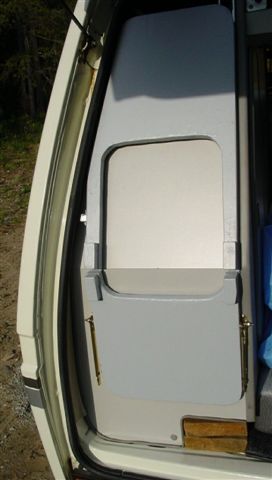
A friend sent these pics a while back.


Vanagon – pop top on!
Posted by albell in vanagon, vanagon mods on August 5, 2011
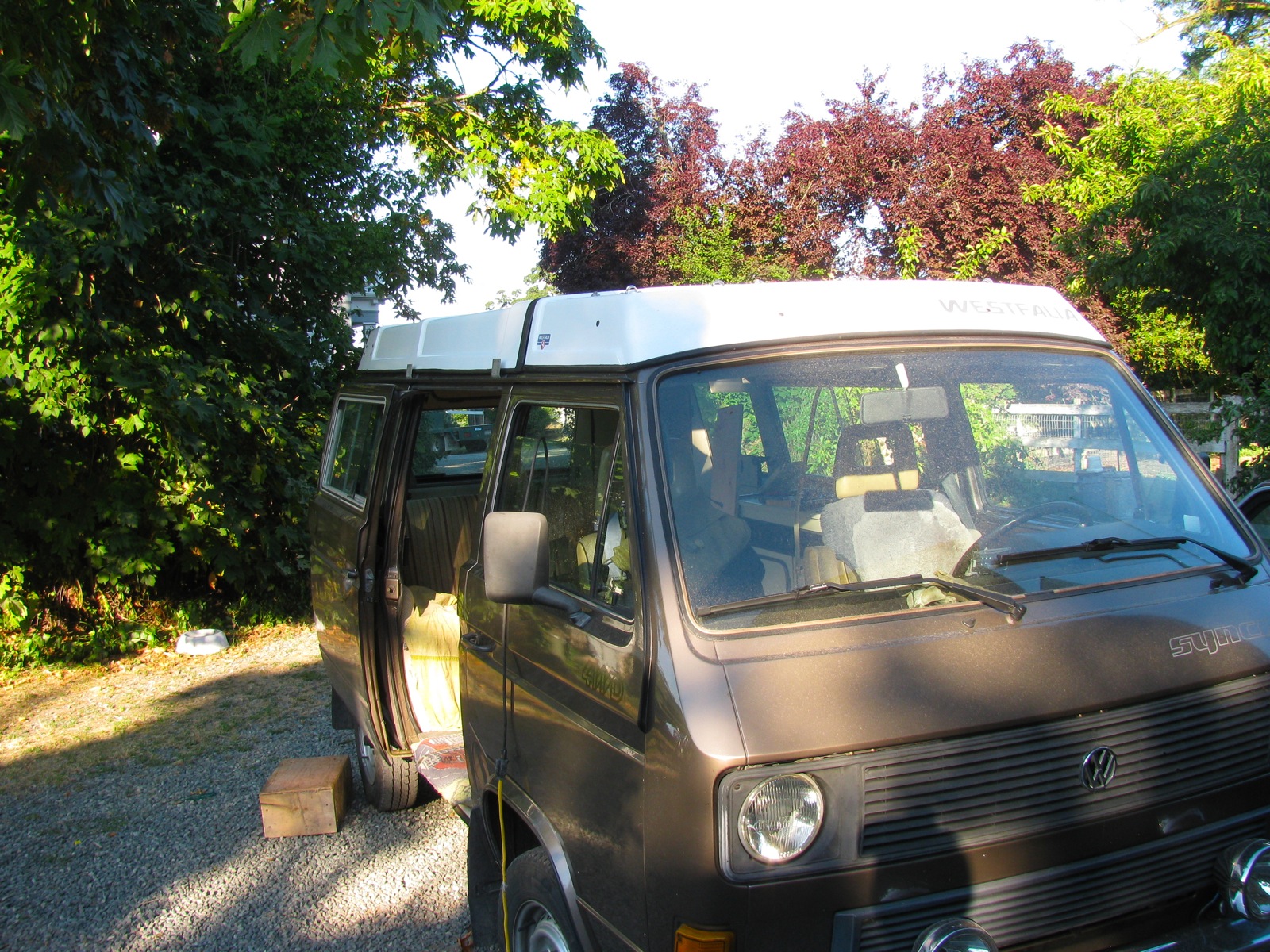
Finally! Not sitting quite right, especially on the passenger side where it looks like it has to come forward about 1/2″, and also sit down on the rear about 1/4″. I’m optimistic I can get it sitting right.
Vanagon – Westy upper bunk refinishing
Posted by albell in vanagon, vanagon mods on August 1, 2011
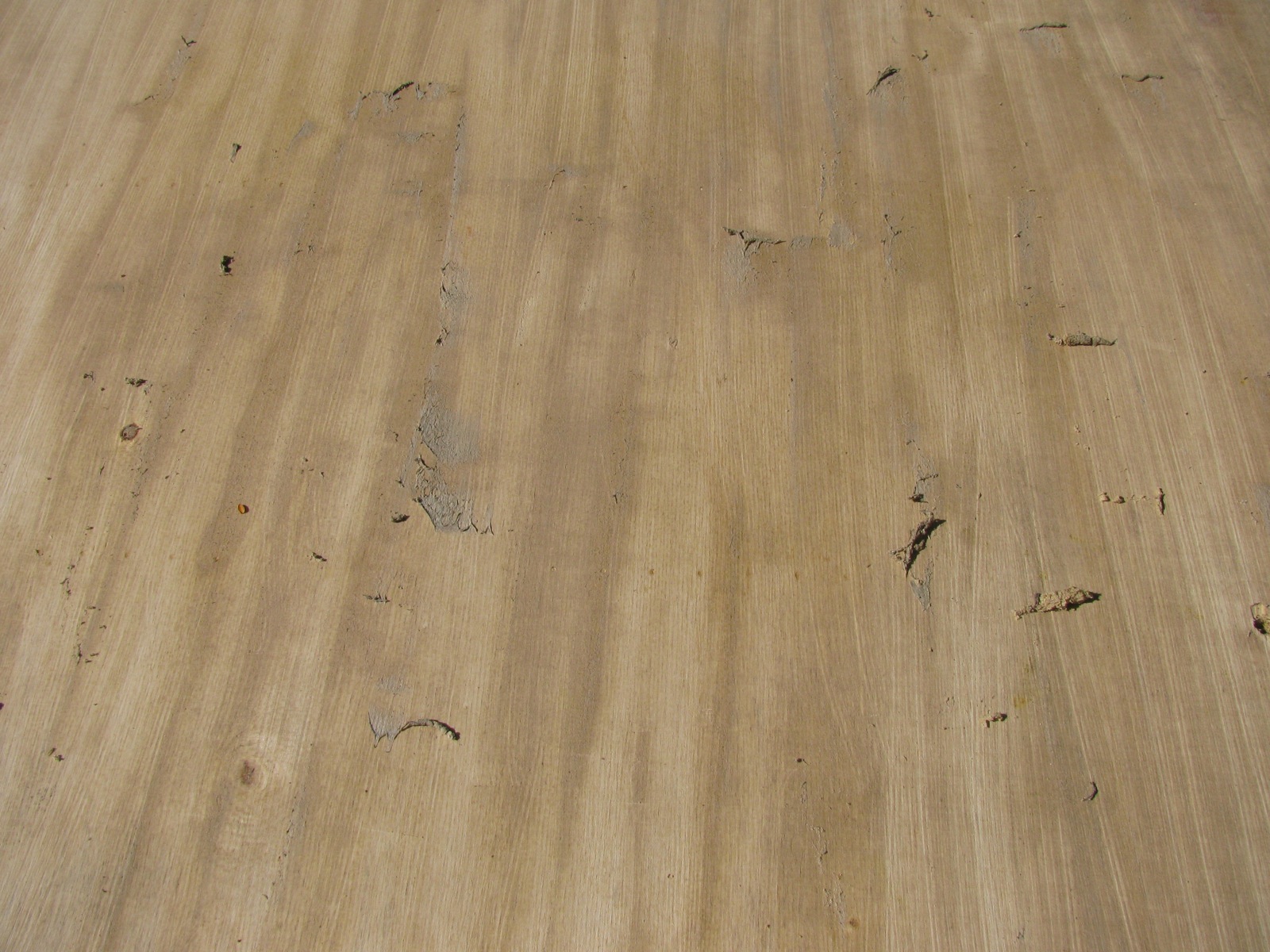
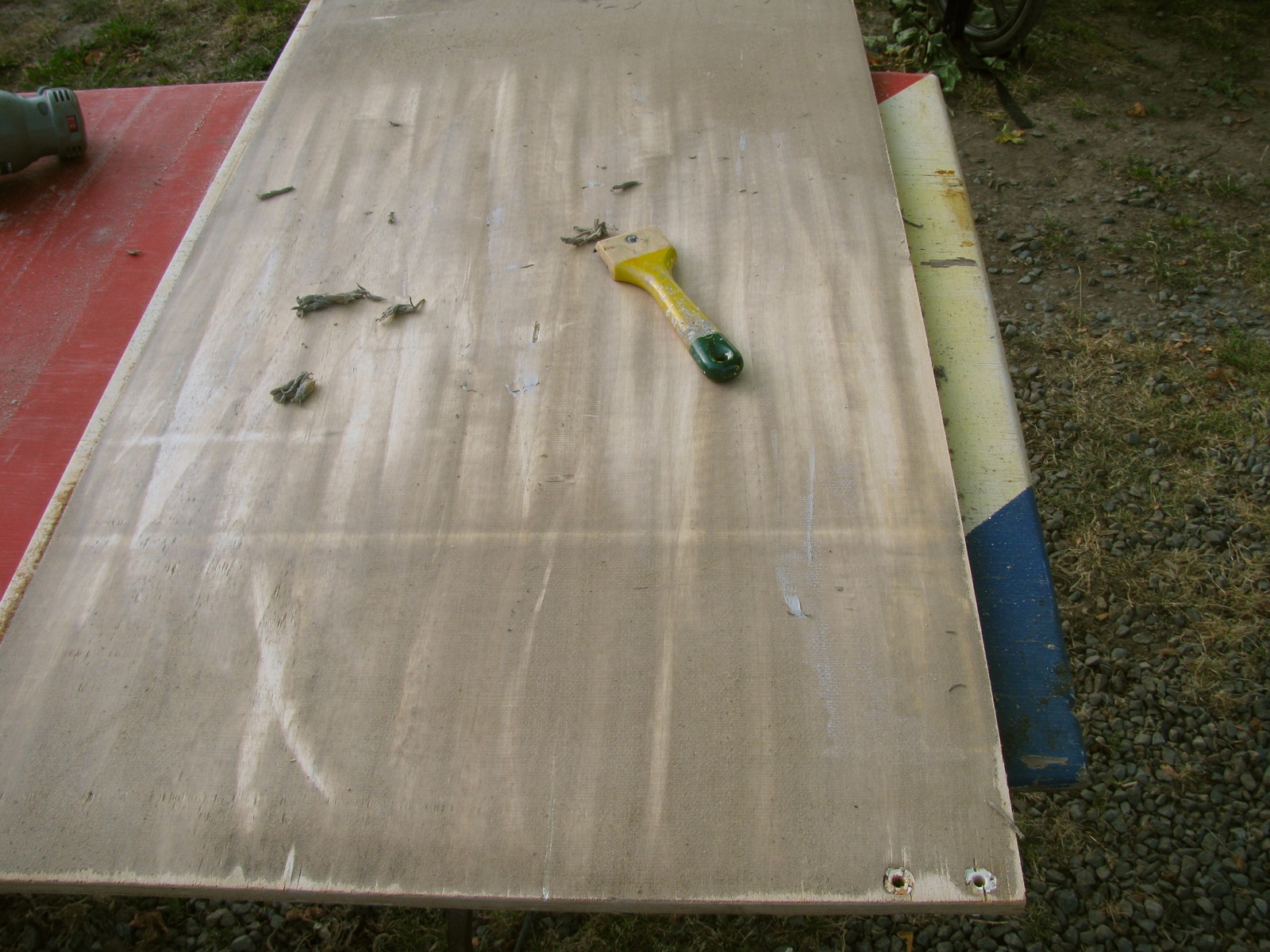
I installed and bolted down the wardrobe and upper cabinet to see how they interacted with the plywood liner. It all looks good and I took a break from that chore and set about cleaning up the upper bunk bed platforms. The plywood looked really manky, the paper had come off years ago and the glue residue had become stained and ugly. It was a real chore to remove the glue, I curse the engineer that specified glue that did not stick to the paper/vinyl coating but did did stick tenaciously to the plywood. I tried a few methods but the best was a sharp paint scraper followed by a random orbit sander (40 grit paper) then hand sanding with finer grit paper.
The big section that is bolted to the roof is really not visible when the sleeping pad is in place, but I still wanted it cleaned up and sealed with something. Again I turned to Sikkens Cetol 1. Following pics are self explanatory.


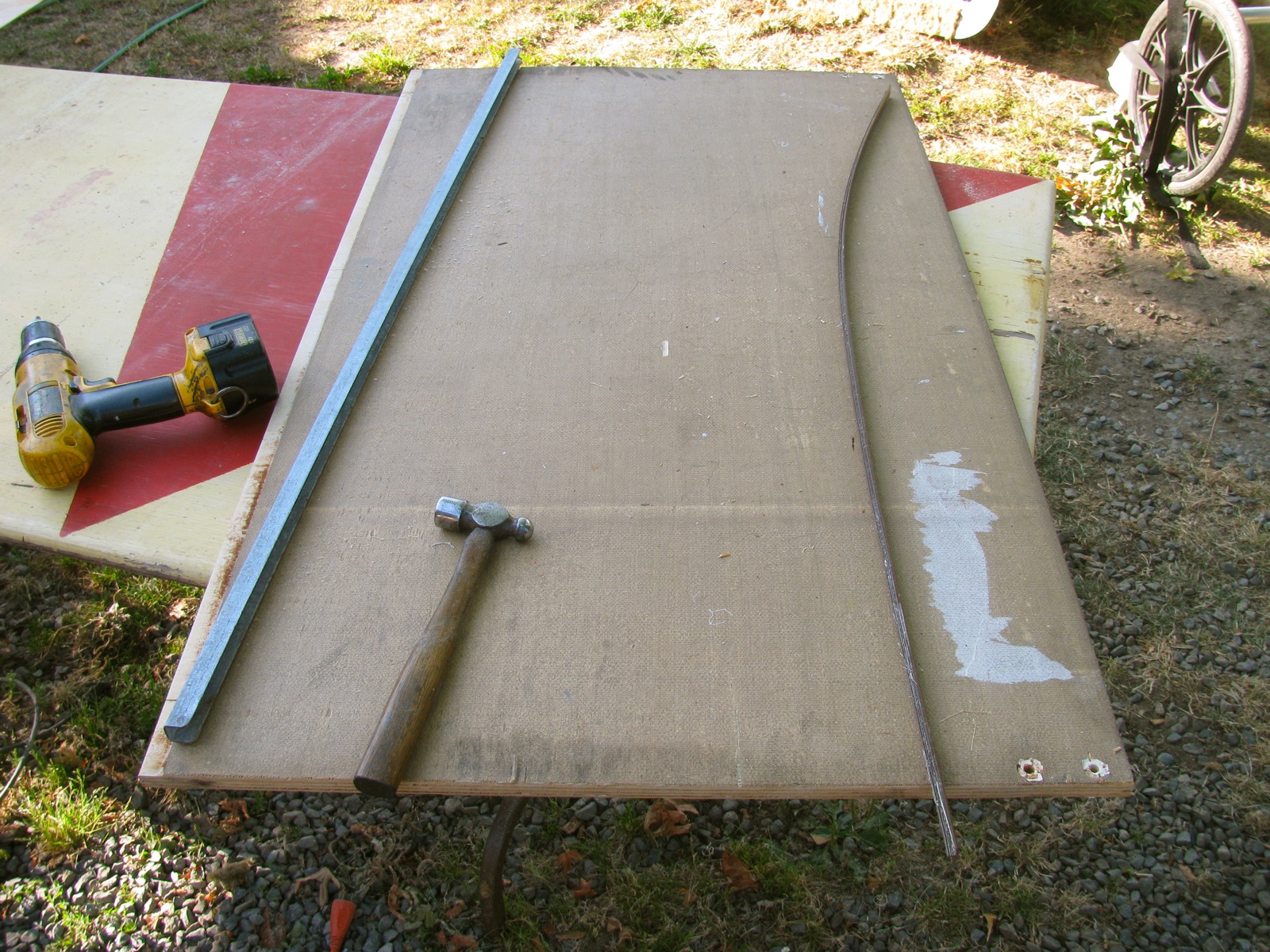
Both sides were finished. But I only some of the fold out section done. This section will be cut in half and additional hinges installed so it can be folded back over the rear section and clear the pop top. There is decreased headroom with the bed platform on top of the roof compared to the stock westy roof where the upper bunk rear section doubles as a ceiling. But more on that later when I get to it. The fold out section has a galvanized steel U-section edge on one end (held on by screws which also hold on snaps for the bunk pad), and a T-section vinyl moulding on the other end.

Unbelievably dirty eh?
And the scraping, one side…
then the other.
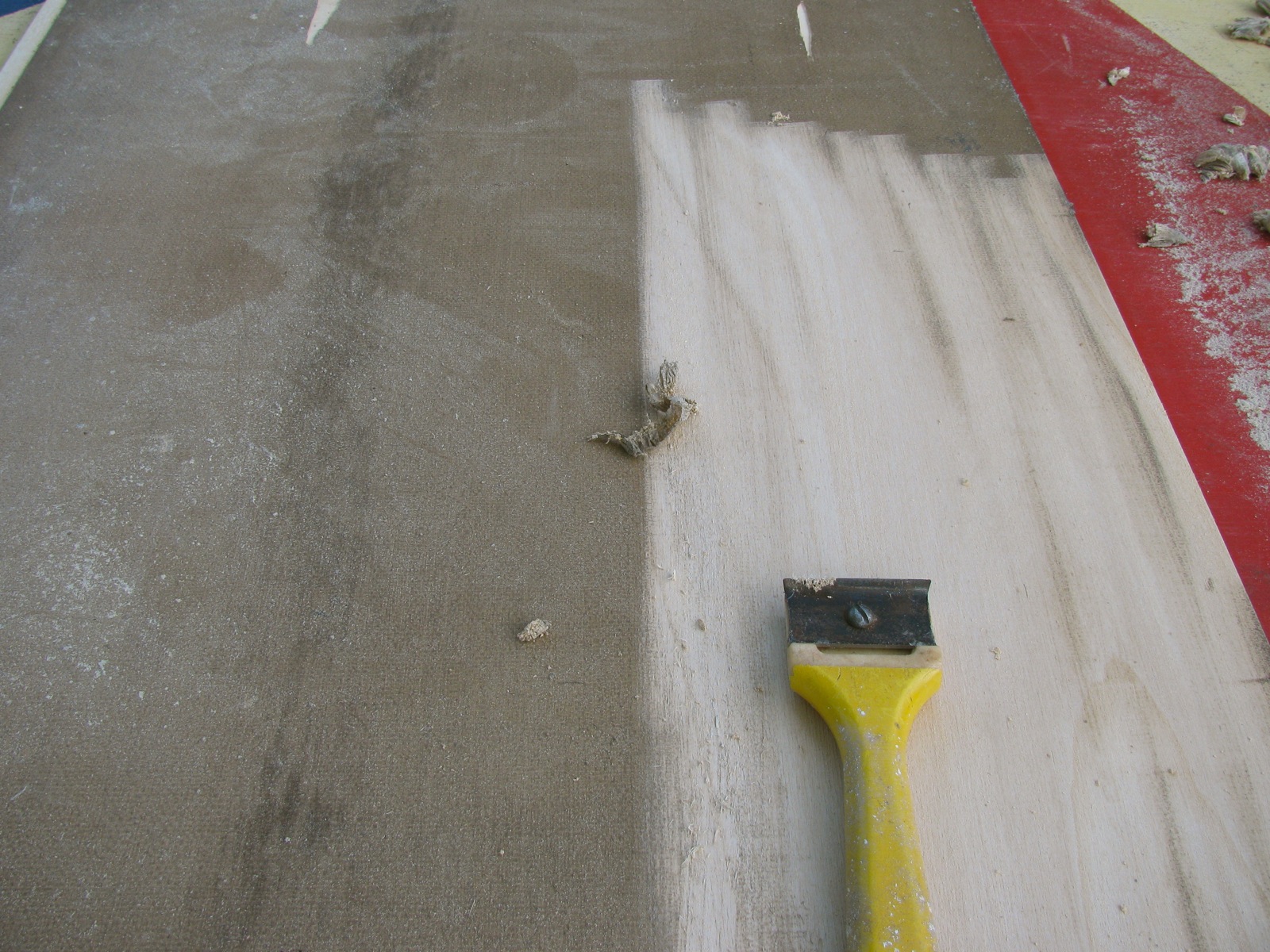
Another one of those unsatisfying days, very little actually installed in the van, but I can almost see the end of the project.
Vanagon – pop top hole trimming part three
Posted by albell in vanagon, vanagon mods on July 31, 2011
Not really much to show from the last couple of day’s work. What I have managed to do is fit the rear plywood headliner. This took many fitting and cutting iterations and the final result could have been arrived at sooner. I had a close fit in mind, but that was hard – wrestling and torturing the plywood into place, doesn’t like to bend in 2 planes at once – so the final result is more of a relaxed fit meaning I have to do more edge treatment. The following pics show the headliner in place but you can see it sags a little and I have clamps holding it in a curve at the front. Both issues will be dealt with by some wood battens, as yet to be designed 🙂
The rear wardrobe is not secured in these pics, but you can see how there will be a bit of a gap between the top of it and the headliner.


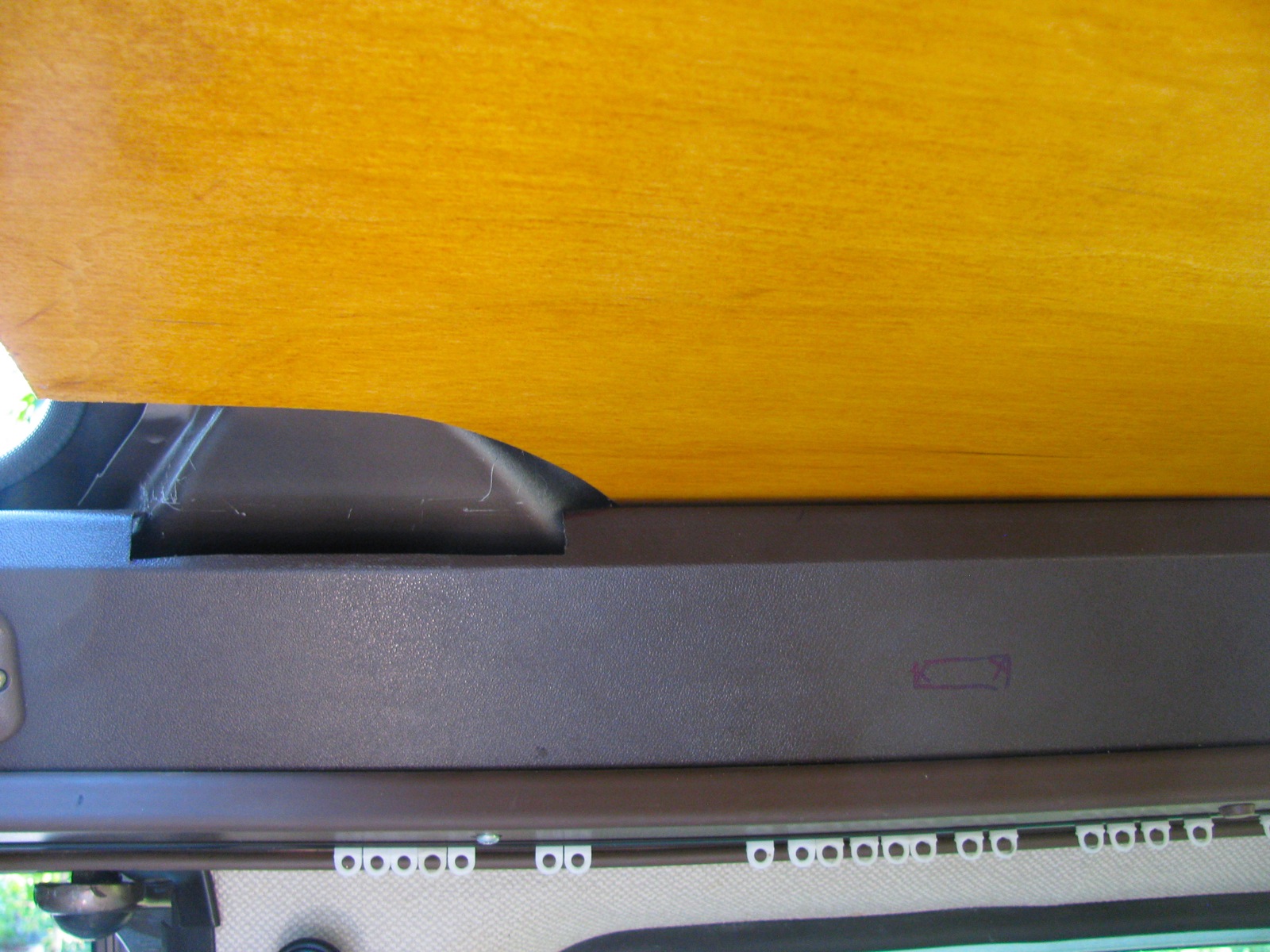
I also drilled and tapped (5 x 0.8 mm) the aluminum angle that support the door valence and the kitchen troughs. The stock westy uses sheet metal screws but seeing as the angle is 1/8″ thick, I needed to use machine screws. These are scavenged screws shown, if I get around to it I’ll buy some shiny new ones.

I used the wiring for the rear, driver’s side interior light to power the fluorescent light that is mounted to the underside of the trough. The trough was a bit tricky to install, the hidden ledger strip was a pain to position.
Doesn’t seem like I did much does it? The headliner was the time eater, applying the finish and cutting to shape. I did spend some time pondering the modified hinges for the fold out upper bunk, that is going to be fun as is figuring out how to finish those exposed curves in roof.
Leave you with a picture of the passenger’s side light on the front headliner. Makes a big difference having a light there, no, really it does.

Edit: Ed, if you are reading this, I’m waiting for more updates on your syncro project.
Vanagon – pop top hole trimming part two
Posted by albell in vanagon, vanagon mods on July 29, 2011
Past couple of days has been one step forward, two steps back. First problem was when I glued on some 1/4″ closed cell foam to the backside of the front headliner (for a bit of sound and thermal insulation) and then discovering that doing that had changed the arc that the panel springs into when installed. The result was slight bit of wavyness at the rear edge of the headliner, and a tiny bit at the front. I could have planed off a smidgen from each side of the panel but I’ve decided to see how it works out once all the screws are in place – the rear screws are in and that has helped, the front screws that also hold on the front window curtain are yet to to be installed. I wired in a passenger side light, tapping power and grounds from the driver’s side unit. The rear edge of the headliner was exposed and lay below the aluminum channel that I had screwed in place on the front edge of the cut out hole. I couldn’t find a satisfactory way of finishing that edge so I decided to make a new aluminum piece out of aluminum angle instead of channel. I should have done this from the start, the vertical leg of the angle mimics the turned down edge in the stock westy. Bending the angle was not as easy as the smaller (and thinner) channel, and the end result shows some dents from the bending jig. Here are some shots during test fittings.

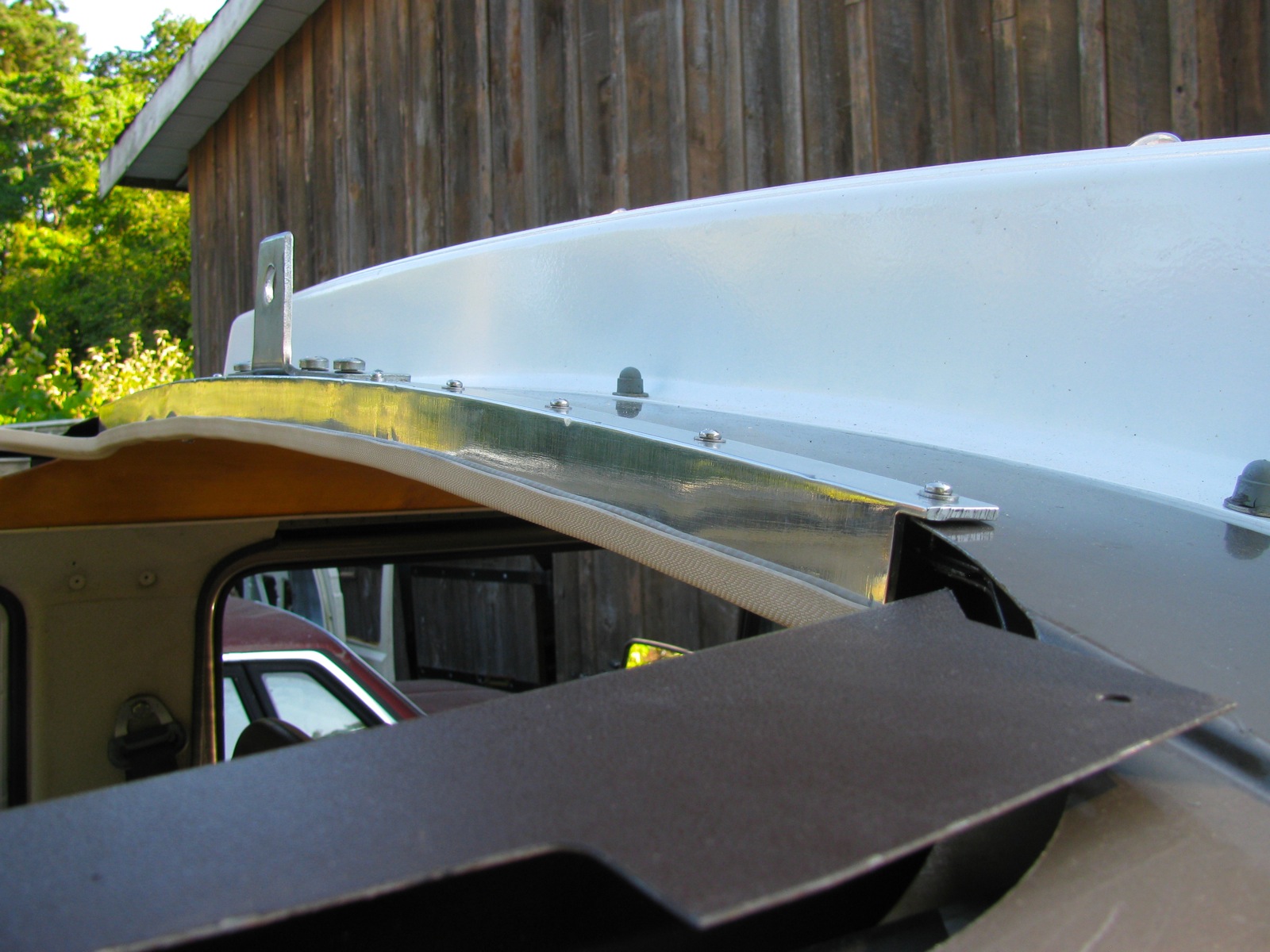
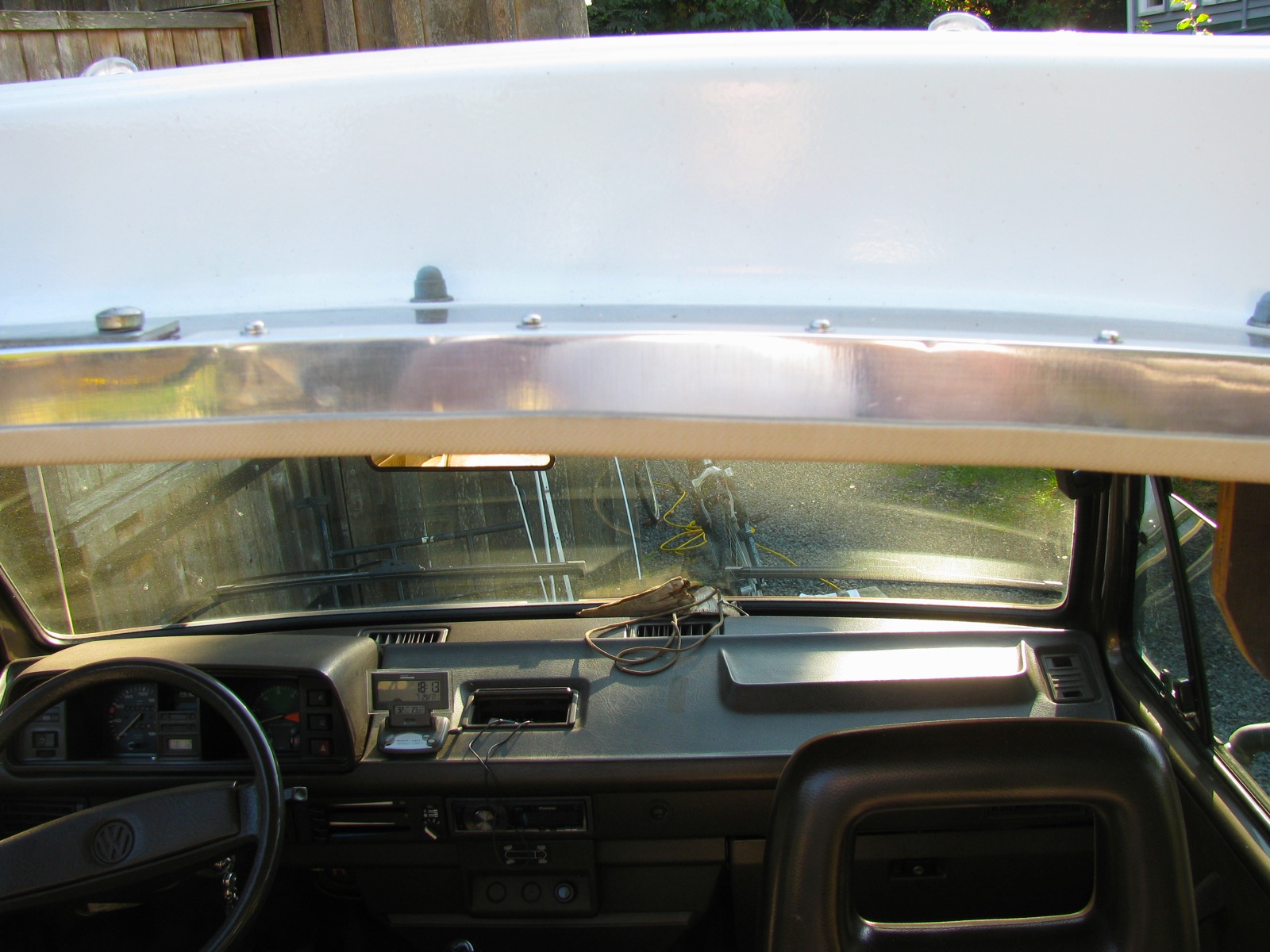
That stock westy flex moulding works out fine.

Still have to marry it to the corners

The slider door valence is secured by the hidden angled brackets, but still need to be screwed down on the aluminum angle and to the roof at the very front. I’ve not done that yet as I am still not sure about how to hide the exposed roof edge at the front corner.

Here is a shot of the mid to rear part of that valence in the van. Obvious that I haven’t got the rear headliner installed yet.
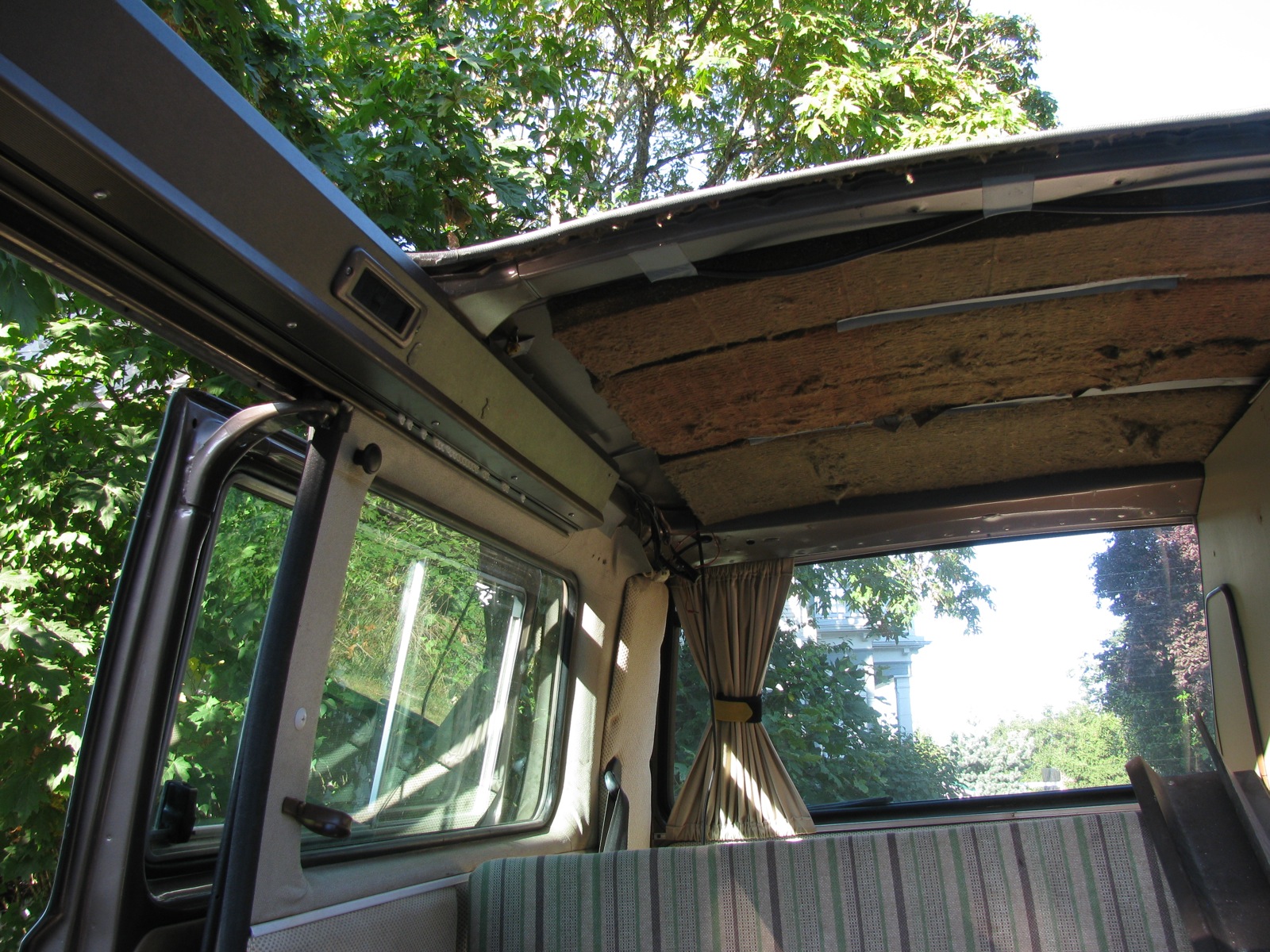
Vanagon – pop top hole trimming part one
Posted by albell in vanagon, vanagon mods on July 26, 2011
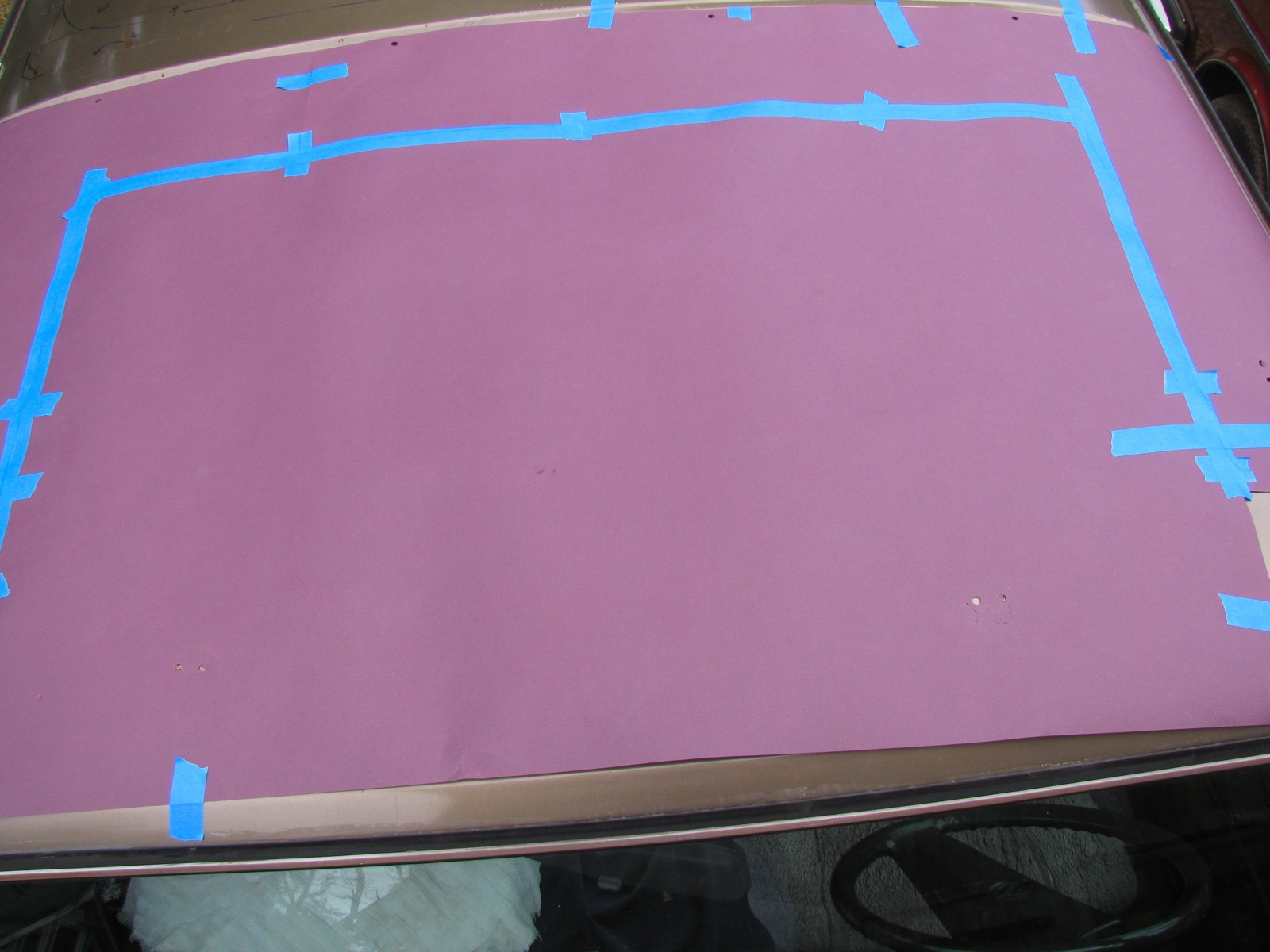
Trying various ways to trim, and somewhat strengthen, the edges of the sheet metal roof exposed by the pop top hole. Along each side there has to be a ledge to support both the bed and the pop top lifting assembly. At the front edge, you have to install the pop top latch (and support it) as well as merging the wooden headliner to the cut edge. At the rear edge, not much has to be done, just cover that metal edge. I’ll begin with the front edge. I decided to use some aluminum, U-shaped, to span that edge. I bent it to match the roof curve with a very rudimentary jig in the vice. Here it is practicing on a scrap bit. You squeeze a bit then move on a little, etc.
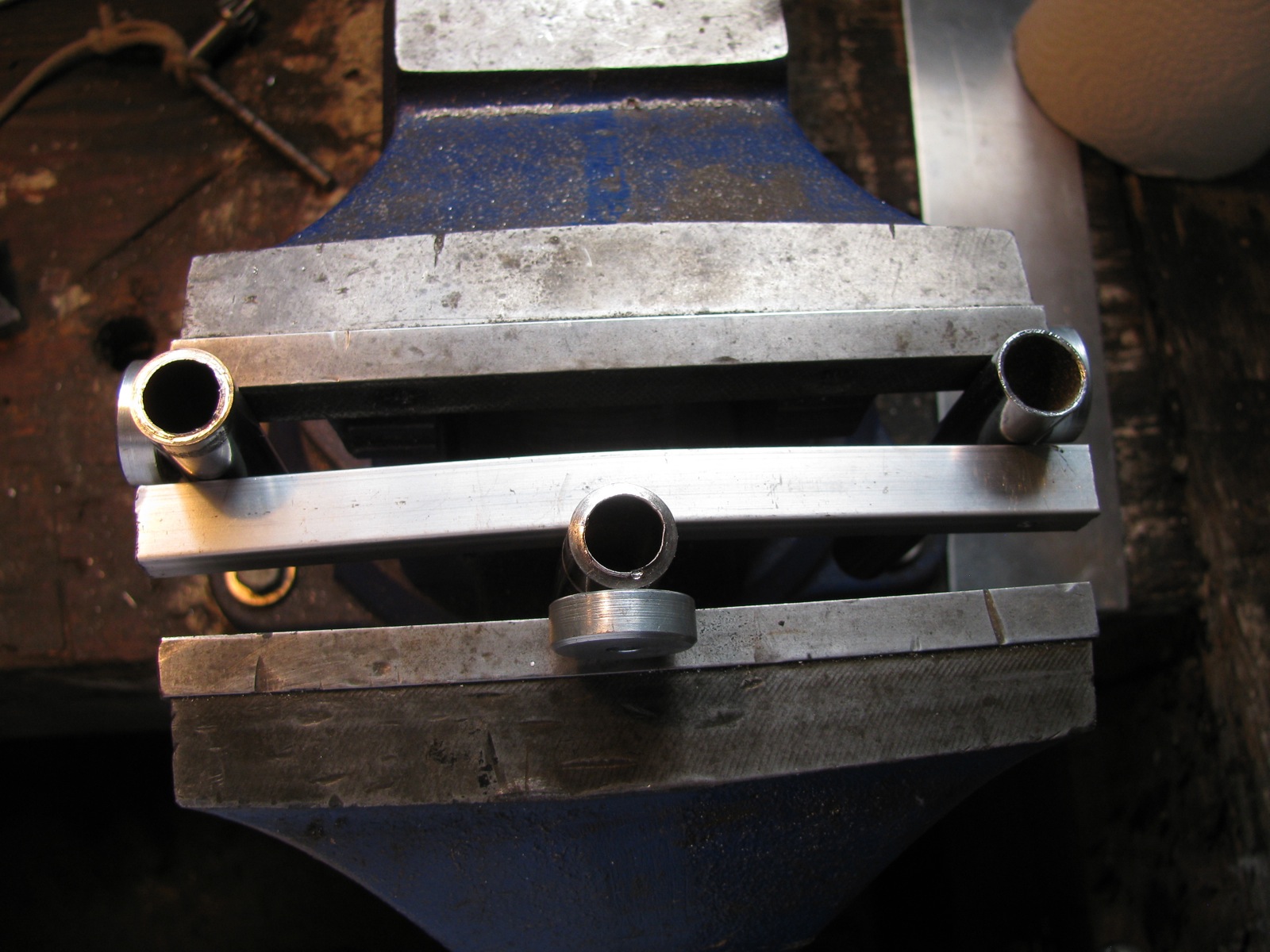
Of course I practiced with the U channel in the wrong orientation then proceeded to do the real bit the same way. Grr, had to straighten it out and re-do. But I got it done, drilled holes for some stainless sheet metal screws and a cut out around the latch. The plywood headliner comes to the rear edge of this channel, and I think will be gussied up with some edge moulding stuff, or something.

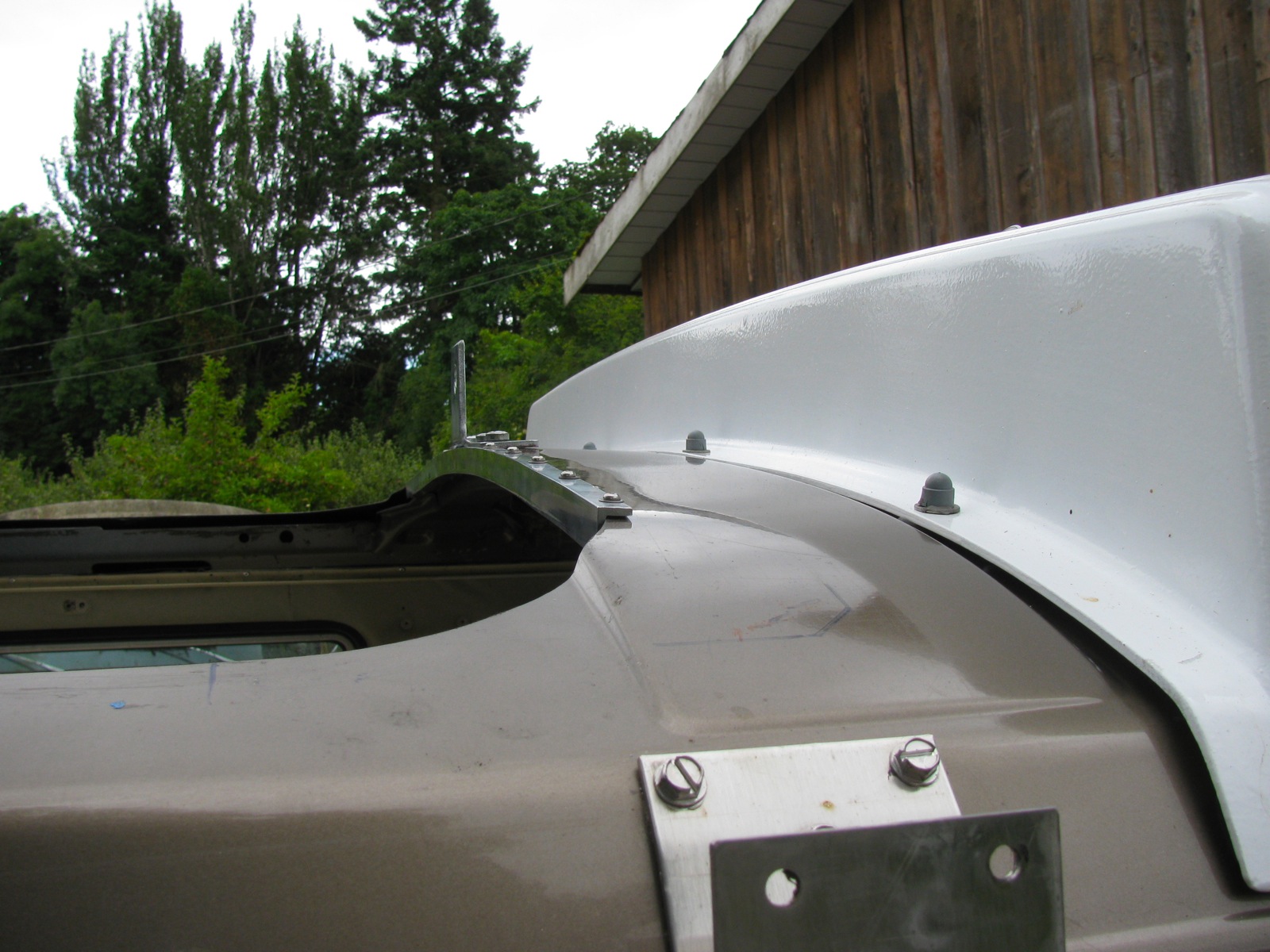
The latch has a backing plate, but whereas in the stock westy roof that backing plate lies in an area supported on one side by the crossmember flange, and on the other side by the turned down hole edge, on my van I don’t have the turned down edge and the crossmember flange is spaced away from the roof by about 1/4″. So I installed a 1/4″ thick bit of aluminum, the same shape as the backing plate, in that space. I didn’t take a picture of that but here is a shot of the backing plate (you can see the gap between the roof and the crossmember flange here). Well you can see a bit of that spacer in the pic below, and I should mention that the holes drilled through the roof are elongated side to side for latch adjustment. The latch plate itself has holes elongated front to rear.

You can see that with that intermediate plate the bolts just barely come through the backing plate.
Now some trial fits with the kitchen trough and the door valence. Door valence first.

See how I have to come up with some sort of trim and support for the corner? Same sort of thing with the trough (trough end cap is not in place).

Now onto the sides, I had to form a bit of aluminum angle to bridge the space between the box section and the roof. It was “just” a case of some cold forging.

Bending the angle to less than 90 degrees stretched the metal where I hammered, so the piece came out slightly curved. No big deal, it will pull back into shape when installed. I had to form a little hump to conform to the roof moulding.

Then clamped into place for trial fit.
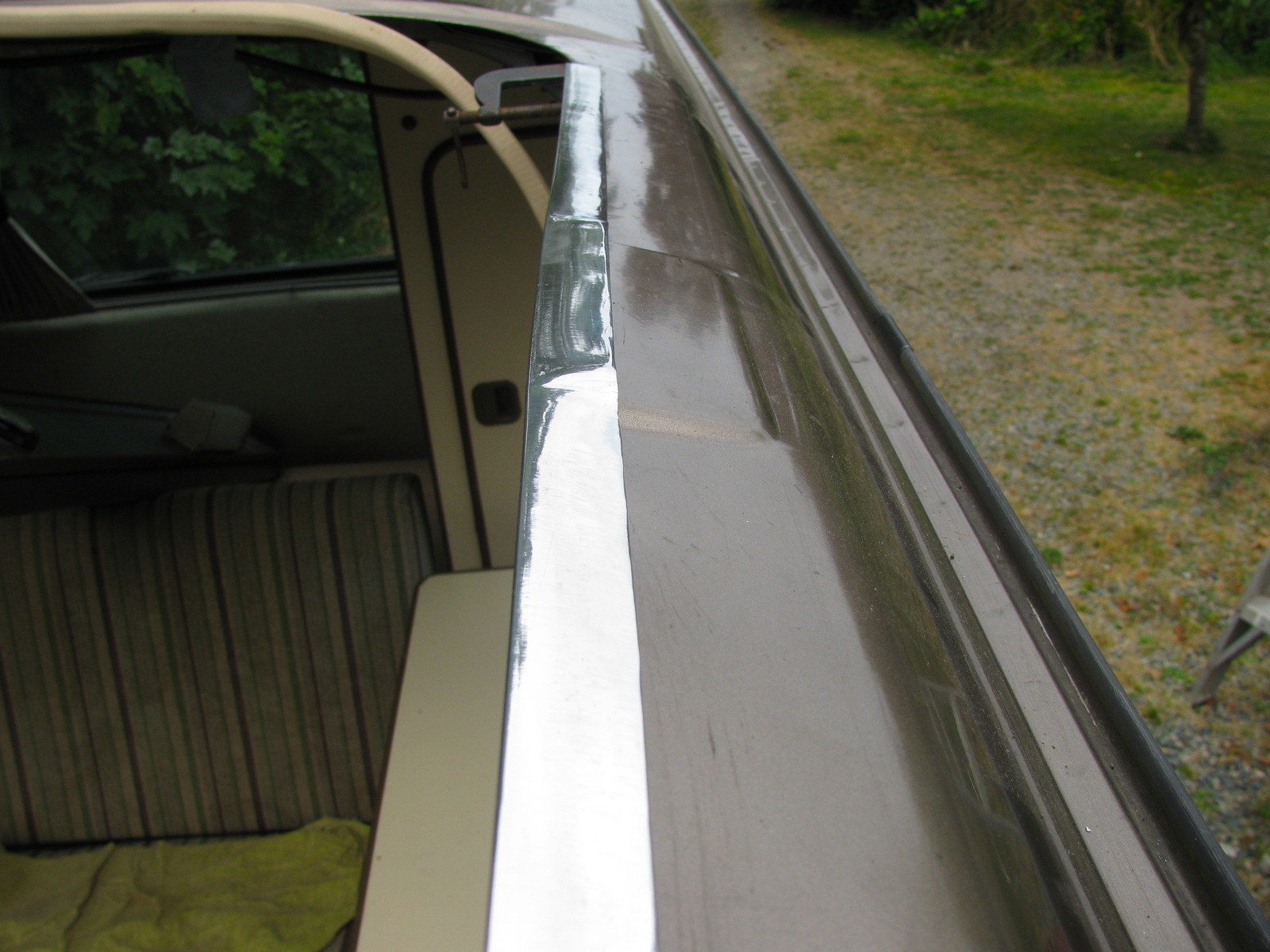
The crudely shaped portion over the roof moulding.
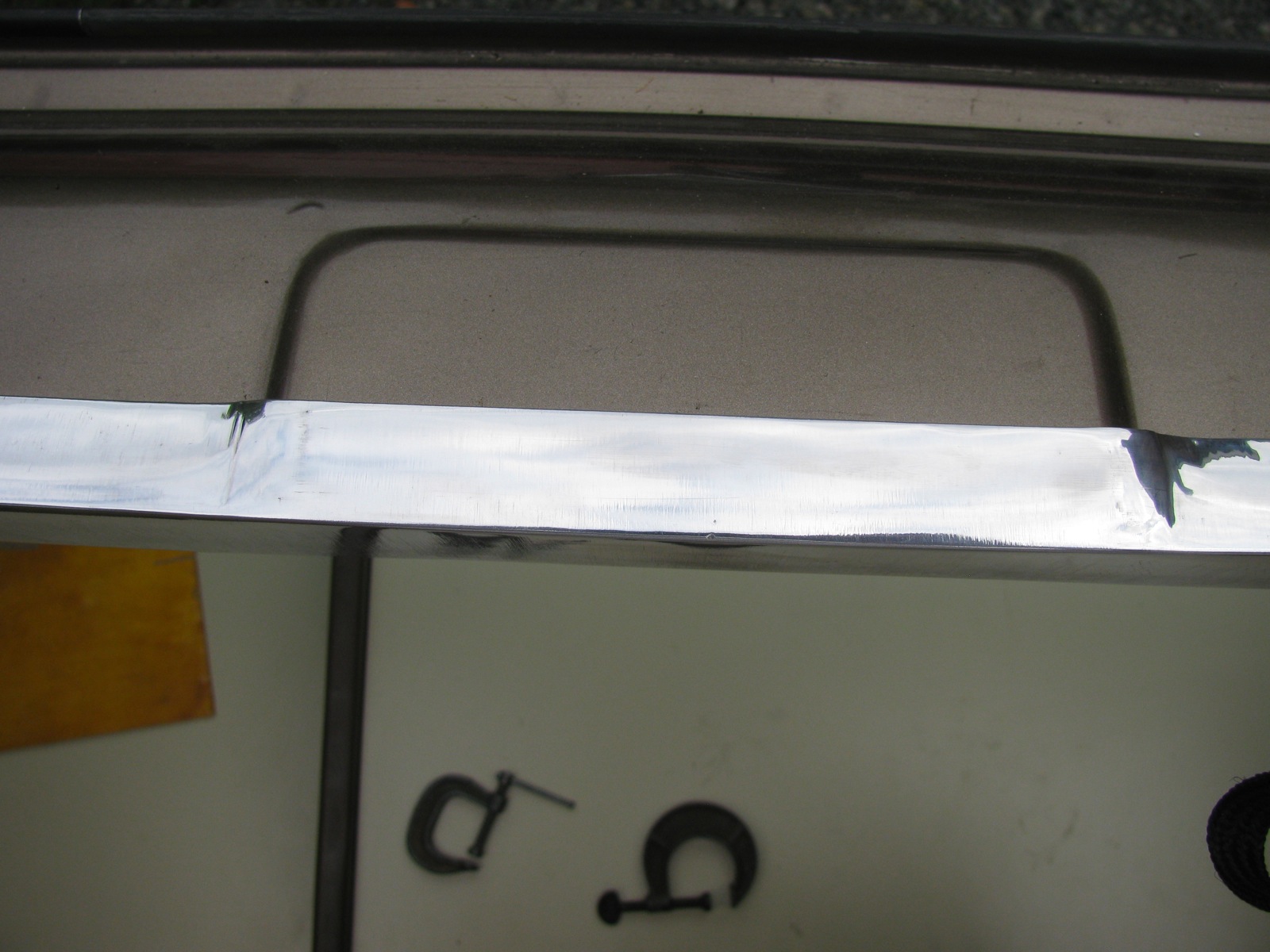
This angle will be pop riveted into bot the box section and the roof. Another aluminum angle will be pop riveted to the vertical part of this to provide the support base for the pop top lifting assembly and the bed extension support. More on that later.
Thanks
Posted by albell in vanagon, vanagon mods on July 25, 2011
I’ve been remiss not to thank all those who have commented and encouraged me with the pop top conversion project. At times I’m somewhat paralyzed with doubt and indecision during the process, and as I am pretty well working alone (my own choice I guess, I’m pig-headed) the feedback I get either in the comments here or by email have been very much appreciated.
I’m looking forward to doing this again, but with headroom.
Vanagon – mucking around after the pop top hole was cut
Posted by albell in vanagon, vanagon mods on July 24, 2011
Not as much progress as I would have liked today. Was warm for these parts, 27 C or so (yeah, not hot), and I mostly got a suntan on the back of my neck as I mulled over how to treat the cut opening. I am heading to copy what bquip did in this samba thread, but probably won’t laminate plywood for the ends as he did. I’m leaning more to aluminum all round. First thing I did was put on another coat of Sikkens Cetol 1 on the front headliner, this time with fine steel wool followed by a rub with a dry rag. Skipping ahead to the end of the day, the finish was dry and I rubbed on some wax and did a test fit.

The slight buckle at the front will be eliminated when I screw the headliner to the metal above the windscreen. These screws have double duty, they also attach snaps for the front curtain. Boy the picture sure shows up the flaws in the finish. I added a hole on the passenger side for another light. The rear sides are shown next. Actually these pics were taken when I did a first trial fit before the headliner was finished.


The exposed edges of the wood will be covered by trim moulding. I trimmed the roof a bit more on the sides so the roof was flush with the box section. I experimented with bending some aluminum angle to see how well I could match the angle between the roof and the box section. Just as bquip did, I will pop rivet the angle onto the roof and box section then attach another bit of angle to act as support for pop top lifting assembly and the fold out portion of the bed.
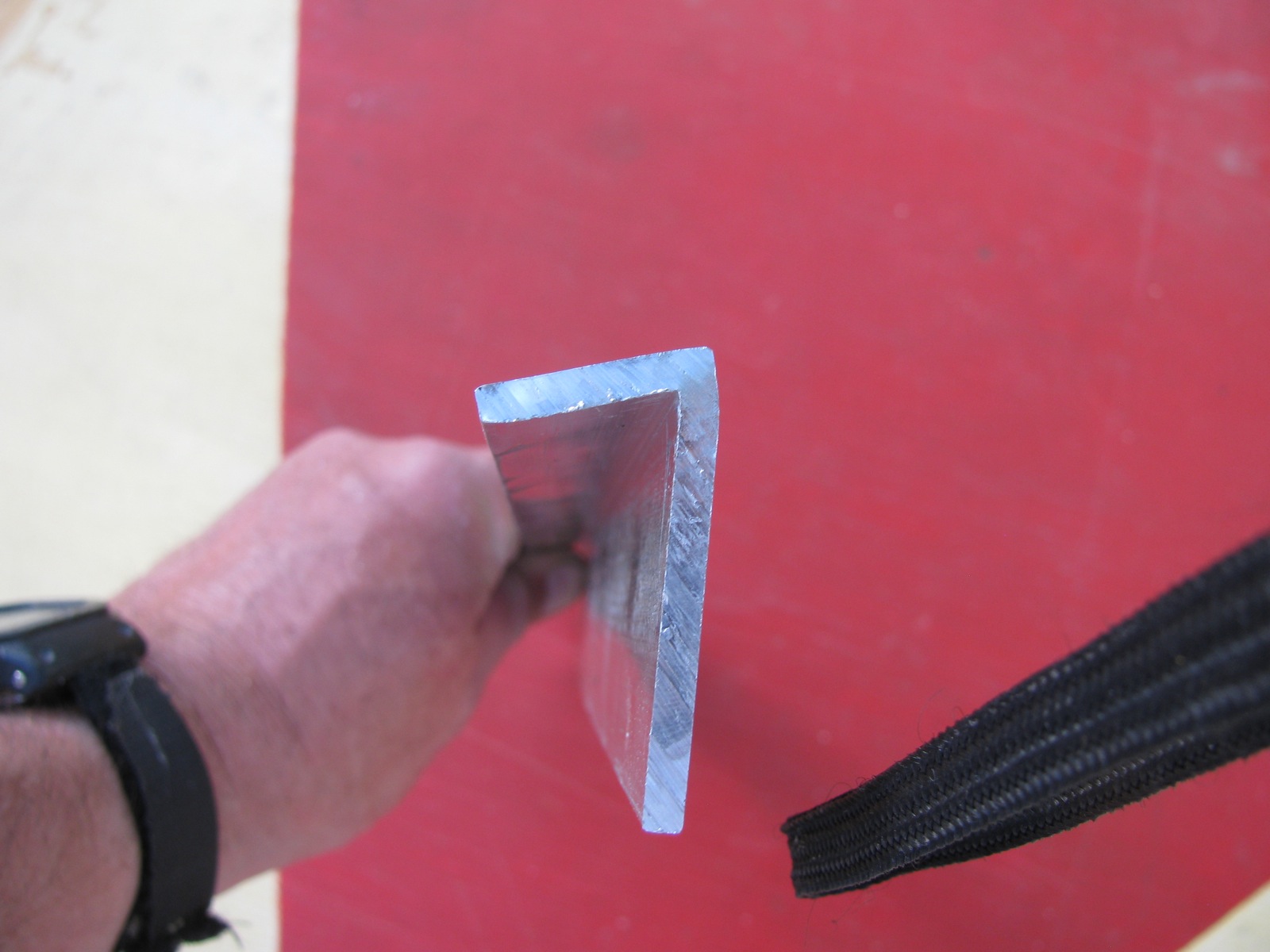

I’ll also have to form that angle so it conforms the the ridge on the roof skin (foreground in above pic). Those ledger strips I attached continue on to the rear of the van. I installed them even though I have the later model door valence and kitchen trough which hides the area above the strip (it is exposed on the earlier model westies). I did it so that I could try springing a plywood headliner in the rear. I’m not sure it will work easily, a test with a narrow bit of scrap shows that the wardrobe end interferes with the plywood. I’ll have to do some cutting of the headliner to make it fit. The plywood fits at the rear, shown here.
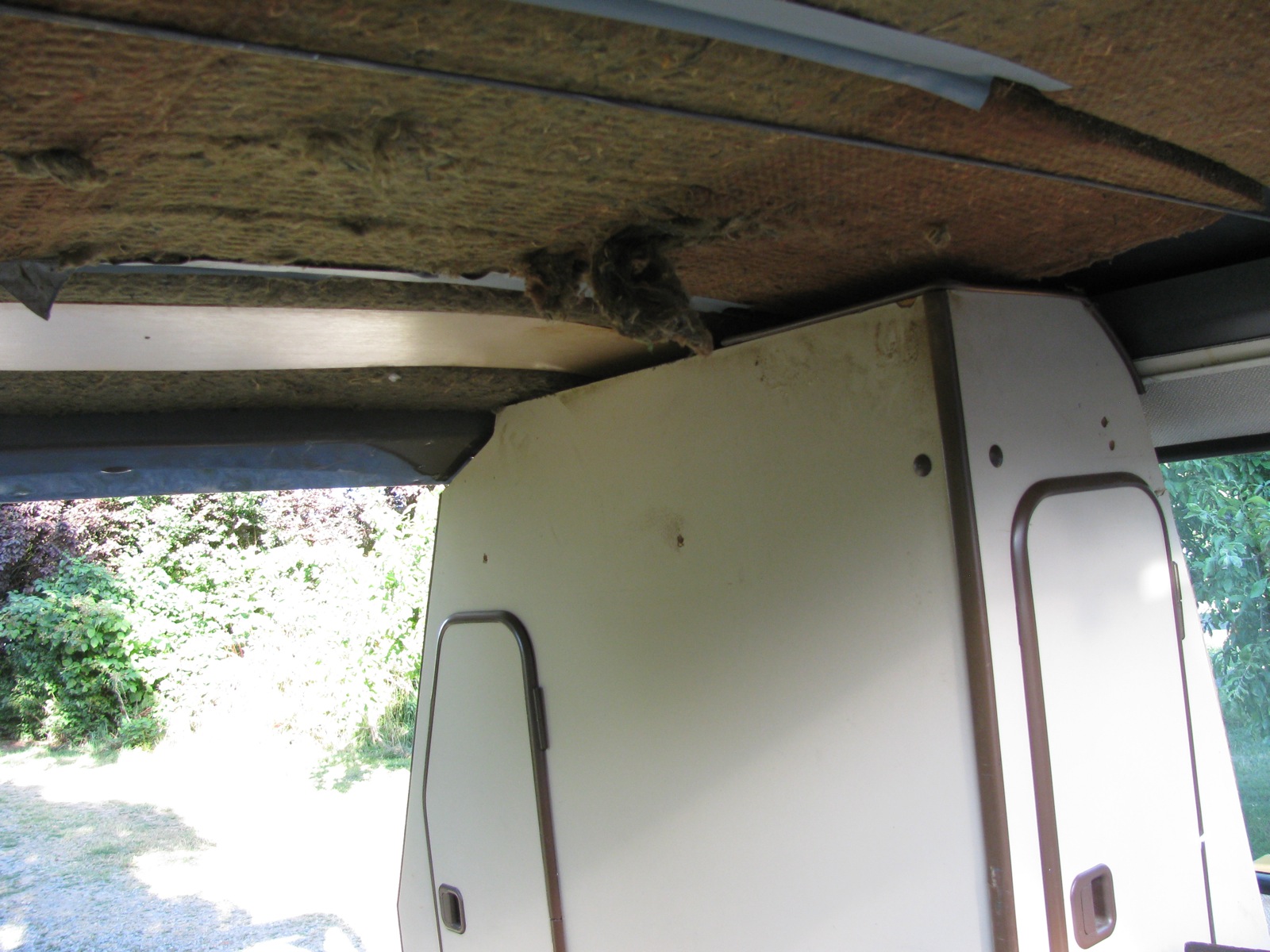
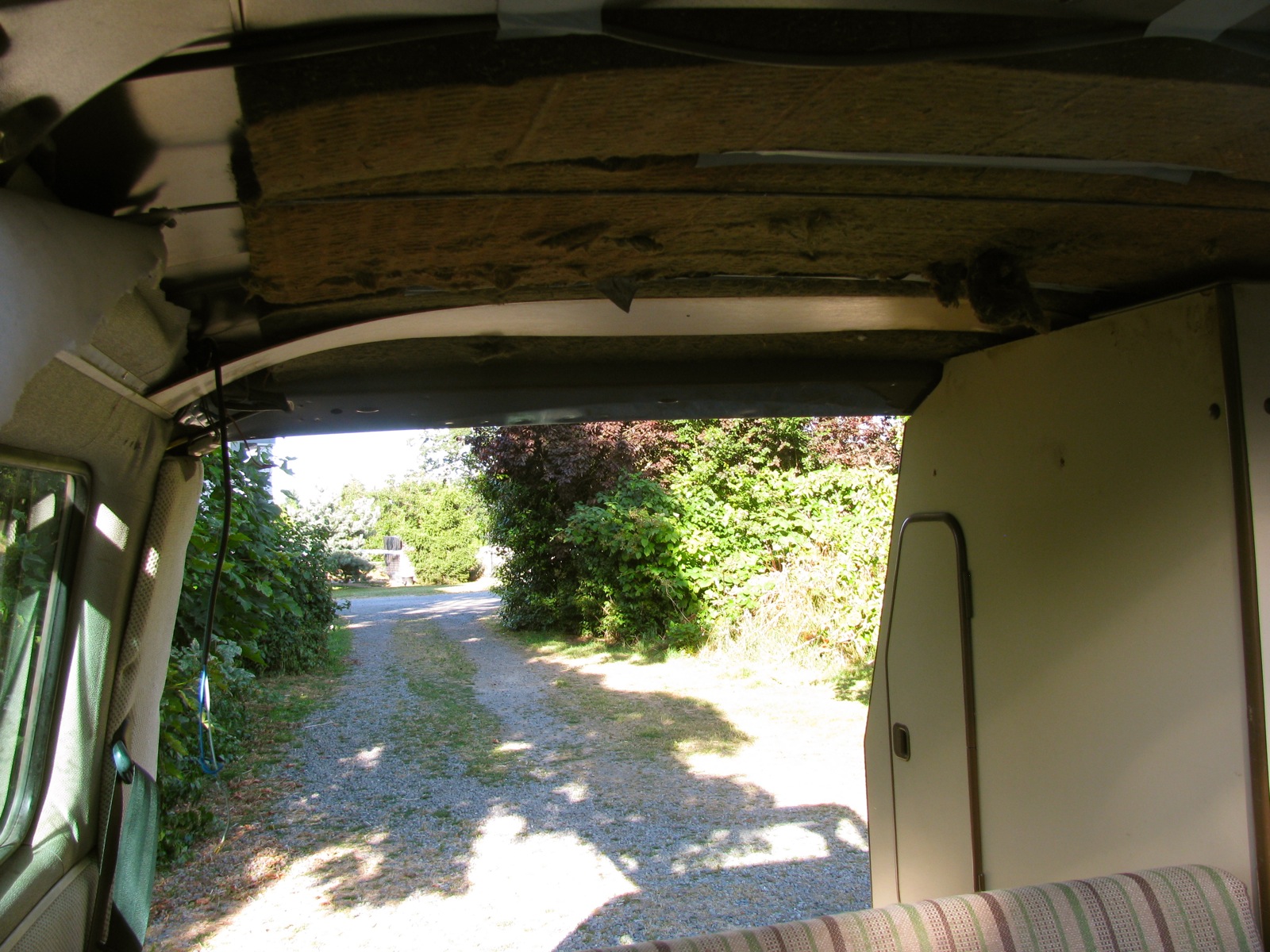
But not so well at this point.
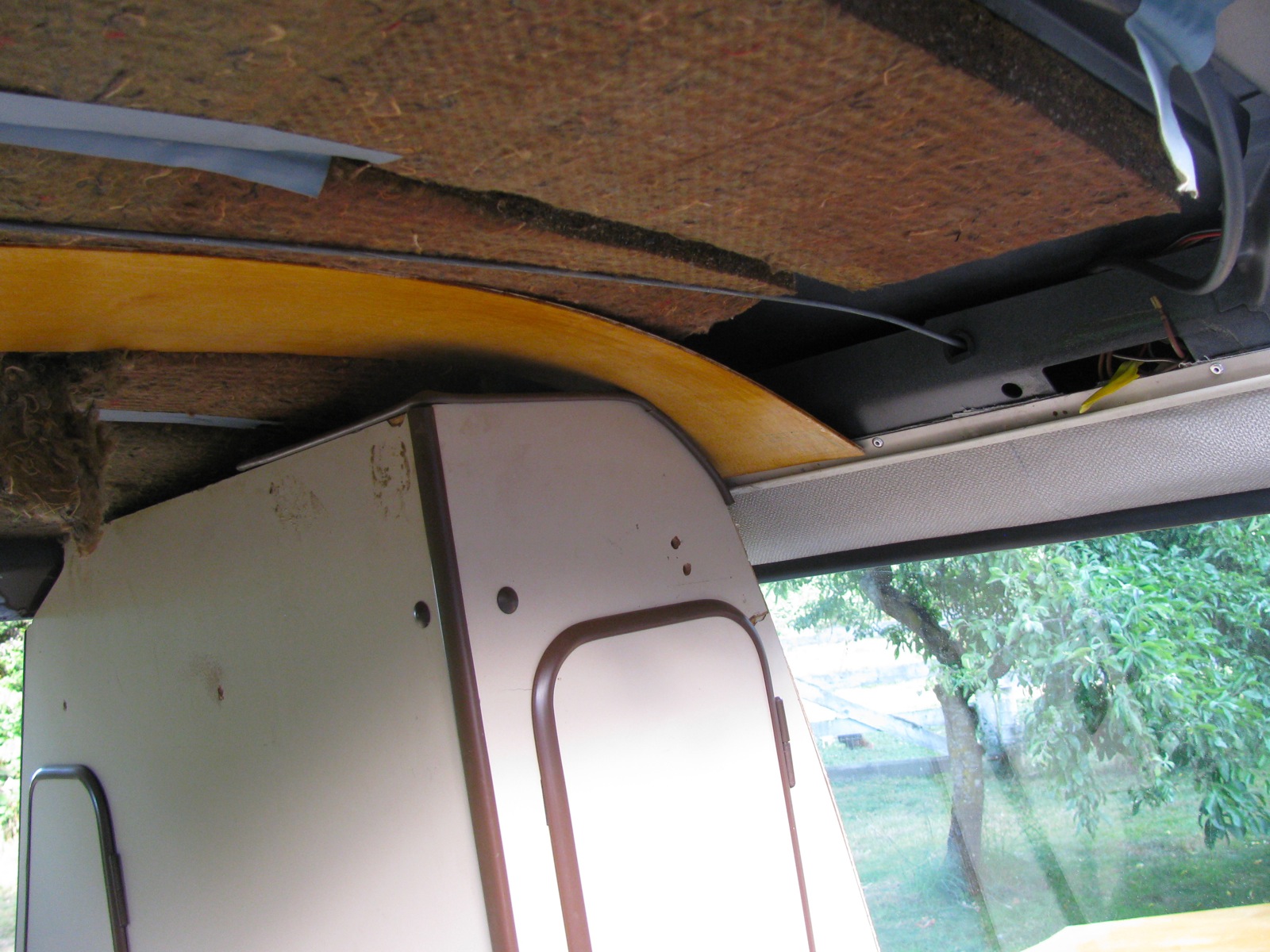
But I think I can make it work. Edit – I’m an idiot, I just realised that the “valences” (trough on kitchen side, and the one on the door side) will interfere on both sides. I think then I will fit the headliner into the gap between the roof and the box section, trimming at the forward end to fit around the cross member.
Vanagon – cutting the big hole in the roof
Posted by albell in vanagon, vanagon mods on July 23, 2011
After all my dithering, I finally did it, I cut the big hole in the roof of my ’86 syncro. But before we get to that I had to finish the plywood headliner for the front section of the van. Yesterday I gave it one coat of Sikkens Cetol 1, an oil/varnish finish. Today I traced out and cut it to shape. Then I rubbed it down with fine steel wool and applied another coat of Sikken (this time with a rag, as if applying tung oil). Sorry about the pics, they don’t show the colour right. Notice I cut out holes for lights on both sides.


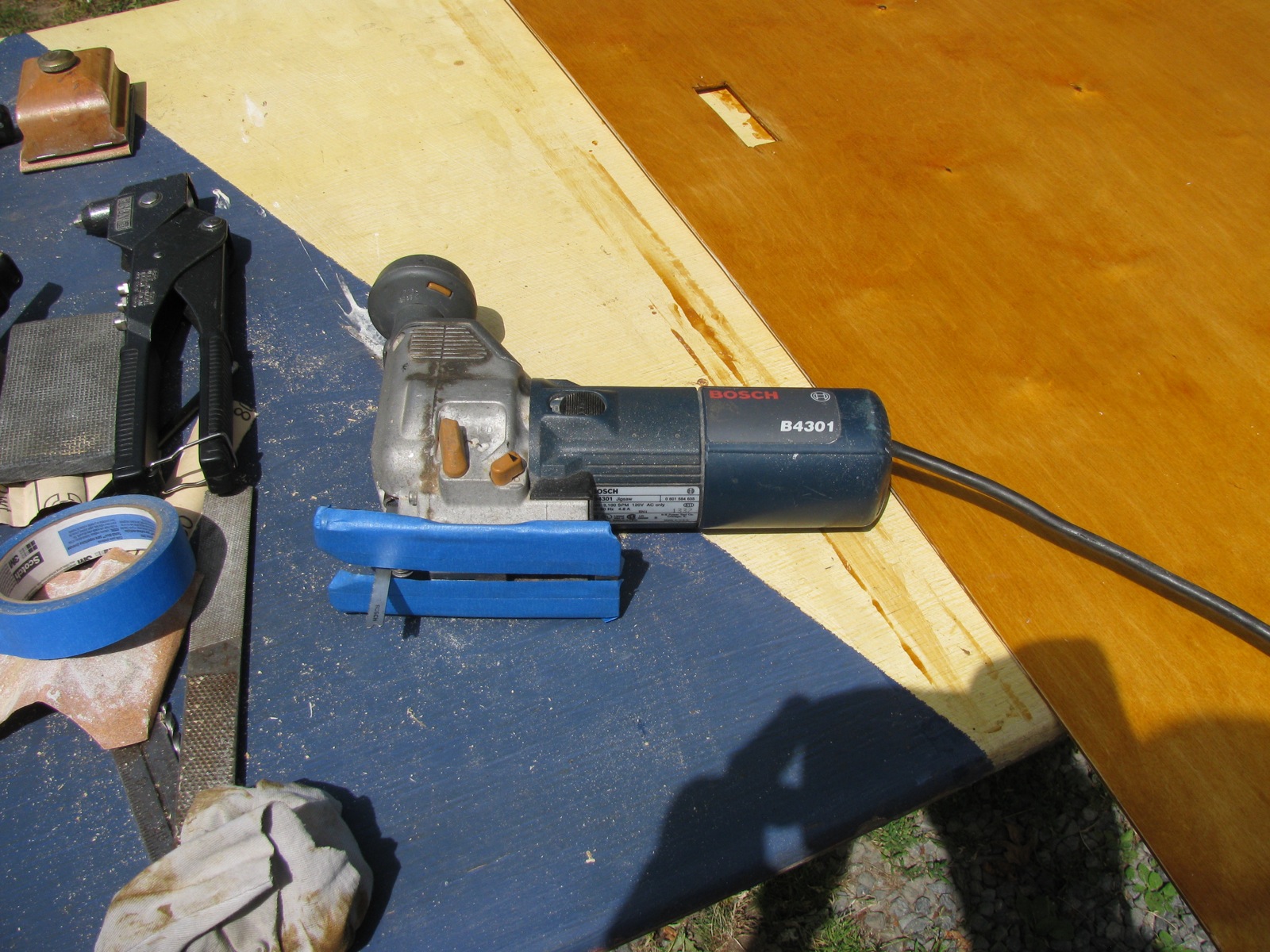
Change to a metal cutting blade and put some tape on the shoe of the saw to protect the roof paint.
Then drill a hole in the roof.
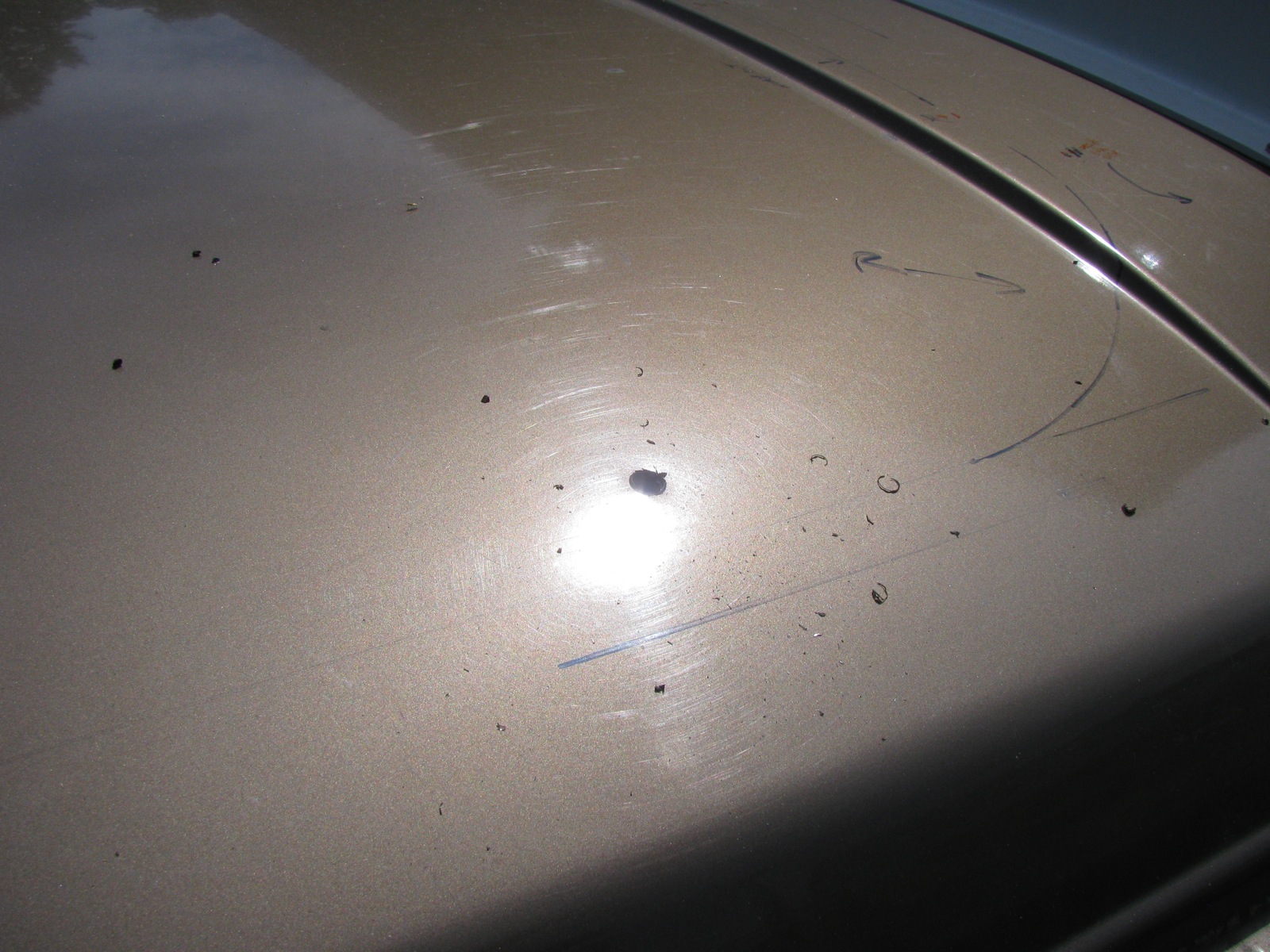
And start cutting.

“There is a crack in everything that’s how the sun gets in”

Onward and around and hey presto!
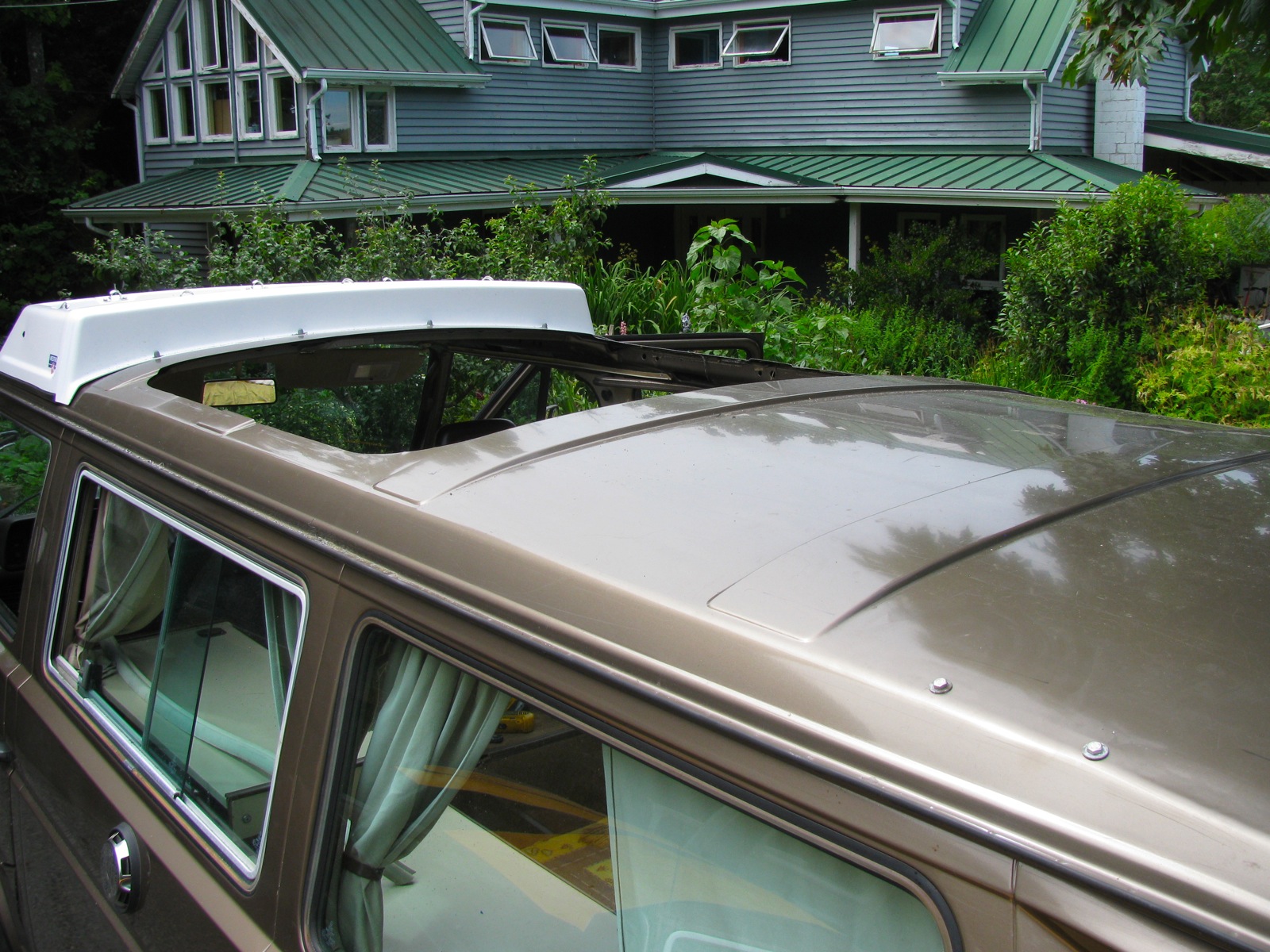
Phew! The cut was pretty good, even distances to the box sections on each side and looking good front and rear.


I can get the rest of that degraded sticky foam out now. In the westy roof, the box section (which double as air ducts) is welded to the roof between the cross members, in the passenger van it is not, and the gap is “sealed” with that foam.
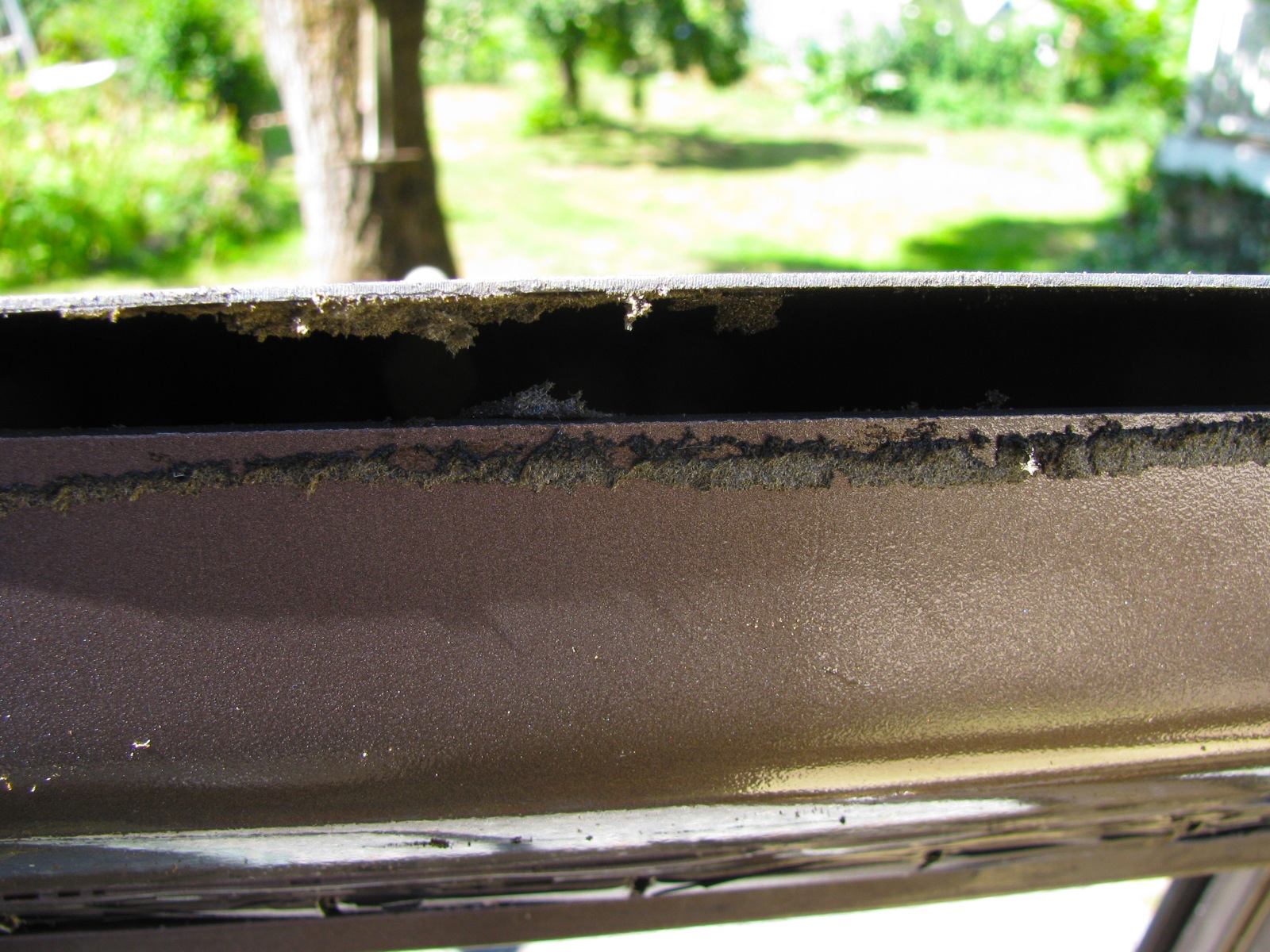
Detail of the rear transverse cut.
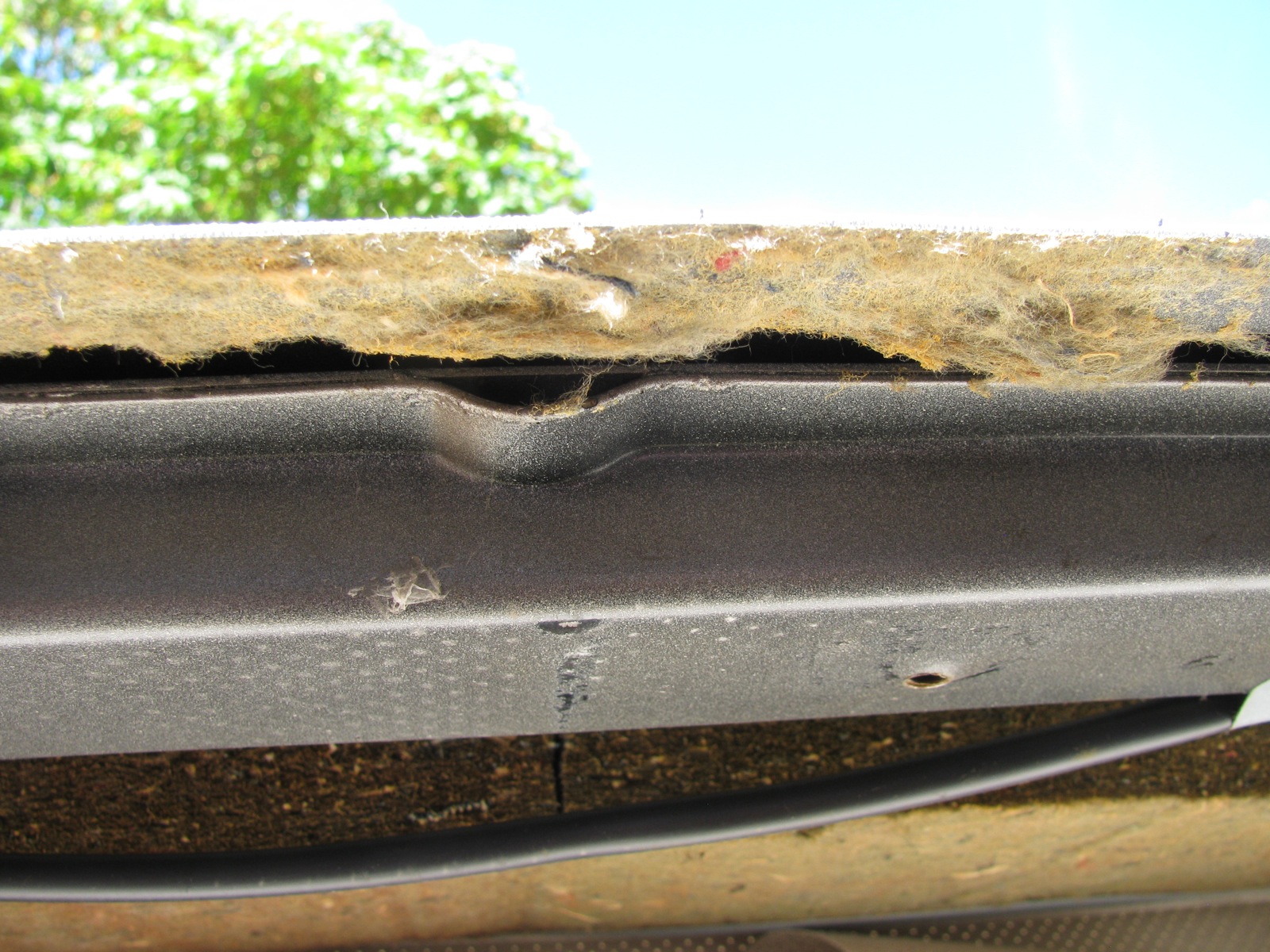
And the front transverse cut. The pop top latch placed there just to see what was what.

Then I pop riveted in place the ledger strips that holds the front headliner in place. You can see how it sits over the welded in fabric headliner attachment strip. It’s a short one on the passenger side and stops partway along and above the door upper track. It lies at a slight angle.

And on the driver’s side the strip is longer. In the westy, the strip holds up a narrow bit of headliner between the kitchen trough and the downturned edge of the roof opening.

You can see I trapped the remaining headliner up behind the strip. I’ll probably trim it to the upper edge of the strip. Directly below that strip is another one which helps hold in the kitchen trough. That one goes on tomorrow. Looking at the pics now makes me think I should use some strips of headliner to cover the old strip up front (if that makes any sense).
Vanagon – front headliner gone
Posted by albell in vanagon, vanagon mods on July 22, 2011
The other day when I was mounting the luggage rack I ripped the headliner beyond where it could be wrapped over the “soon to be cut” edge of the main pop top hole. I hummed and hawed, and finally decided to ditch the headliner and do what the factory did and put in a wooden headliner. I have my old westy headliner and I could have used that (I had covered it in fabric back in 2000 when I did a make-over on the old van), but I decided to make a new one and go with a warm wood look.
The local lumber yard had 1/8″ baltic birch in 5′ X 5′ sheets, so I went with that. The width of the headliner is greater than 48″ and I think the length needed is a bit more than 48″ also, so a standard sized sheet of plywood is not convenient. I bought some brush on clear lacquer and tried it one one side. It was ok, but the pale finish which I thought would look “clean” had a raw feel. So I used some Sikkens oil/varnish coating that I had in the barn. That gave the birch a very homey old style look, so good bye eurolook and hello log cabin. Here are the uncut panels with one coat on.

I attacked that awful insulation above the old headliner with a scraper and a vacuum cleaner.

This vintage Nilfisk is quiet and its exhaust is clean.

In the westy, the wooden headliner is held on to the side of the roof by bent ledger strips riveted to the body. The fabric headliner in the passenger van is held in place by a different type of ledger strip spot welded to the body in pretty well the same place. It never ends does it? Just like renovating an old house, surprises await. I’ll take pics of this when I put the wooden headliner in place.
Vanagon – luggage rack on
Posted by albell in vanagon, vanagon mods on July 20, 2011
It wasn’t making a template using my ’82 westy as source…
Nor was it drilling all the holes…

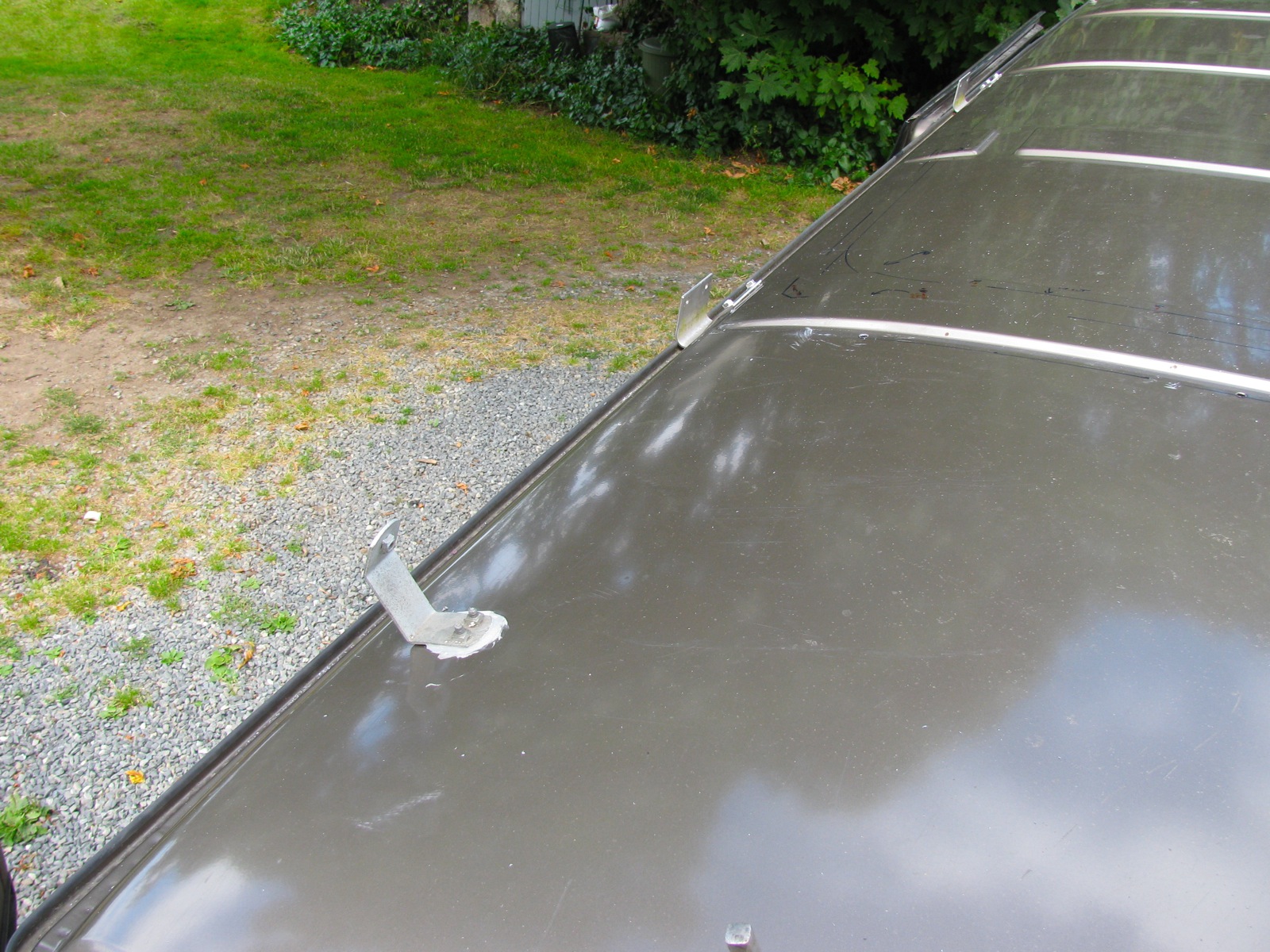
The side brackets went on smoothly (note, I used dum-dum mastic under all the brackets and on the heads of the bolts).
And it wasn’t the dogs, either getting under foot or acting sullen as in this pic…

It was the driver’s side front bracket that took me an hour to attach. One hole was slightly out of line, ended up drilling it a tad larger.

It is a bit of a stretch to reach the front bolts with the headliner in, and I wanted to keep the front headliner intact back to where the main pop top hole will be cut, but my frustration (it was hot in there!) and my leaning in ripped the fekkin liner. Looks like I will be putting in a board type headliner there sooner than I had planned.
But the bugger is on, and it looks ok. The brackets lined up quite well with the holes in the rack, and only one of the holes at the rear of the rack (where the double rubber washers go) was out of alignment about 3 mm.

Vanagon – removing the headliner before cutting the roof
Posted by albell in vanagon, vanagon mods on July 18, 2011
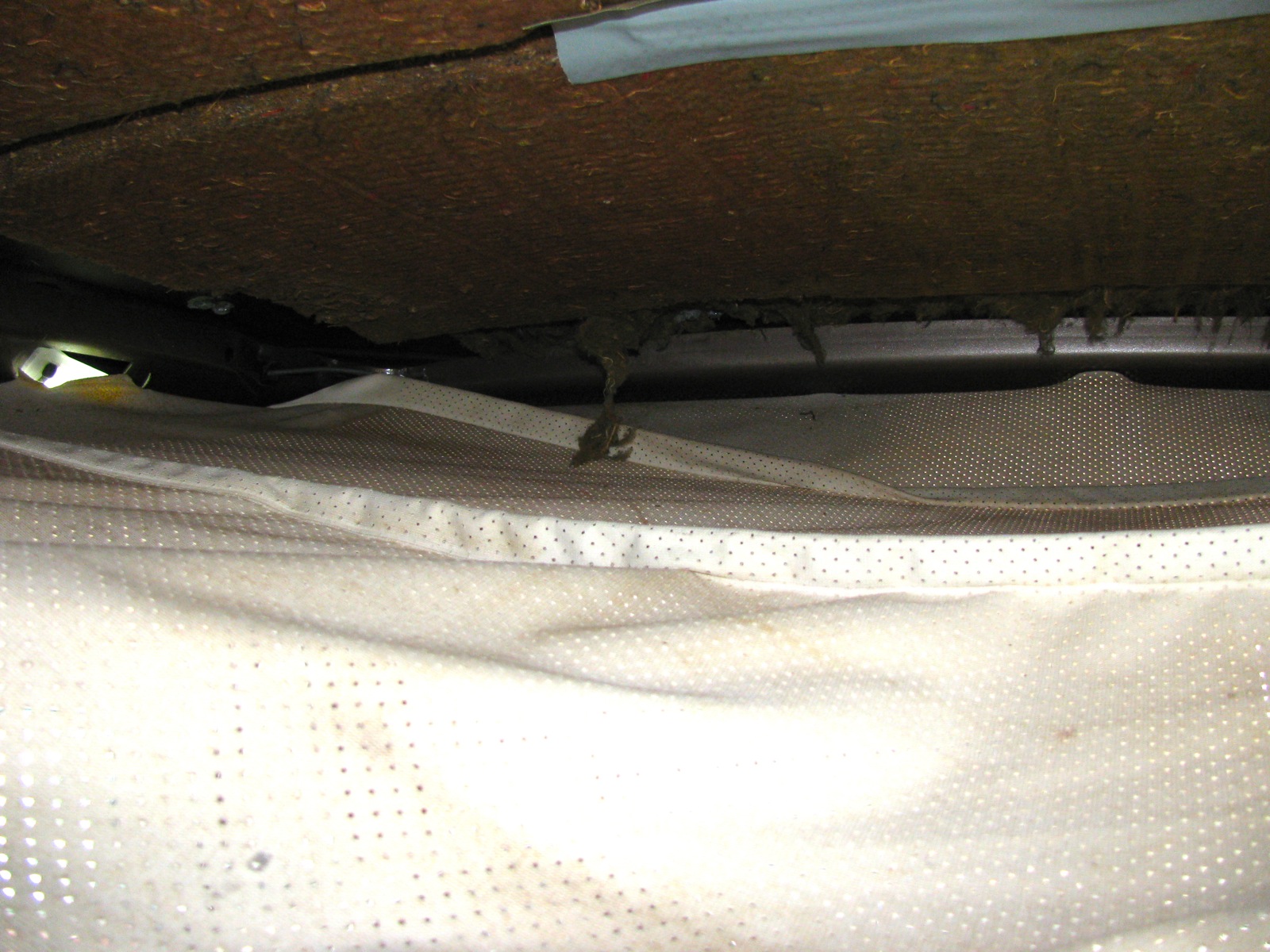
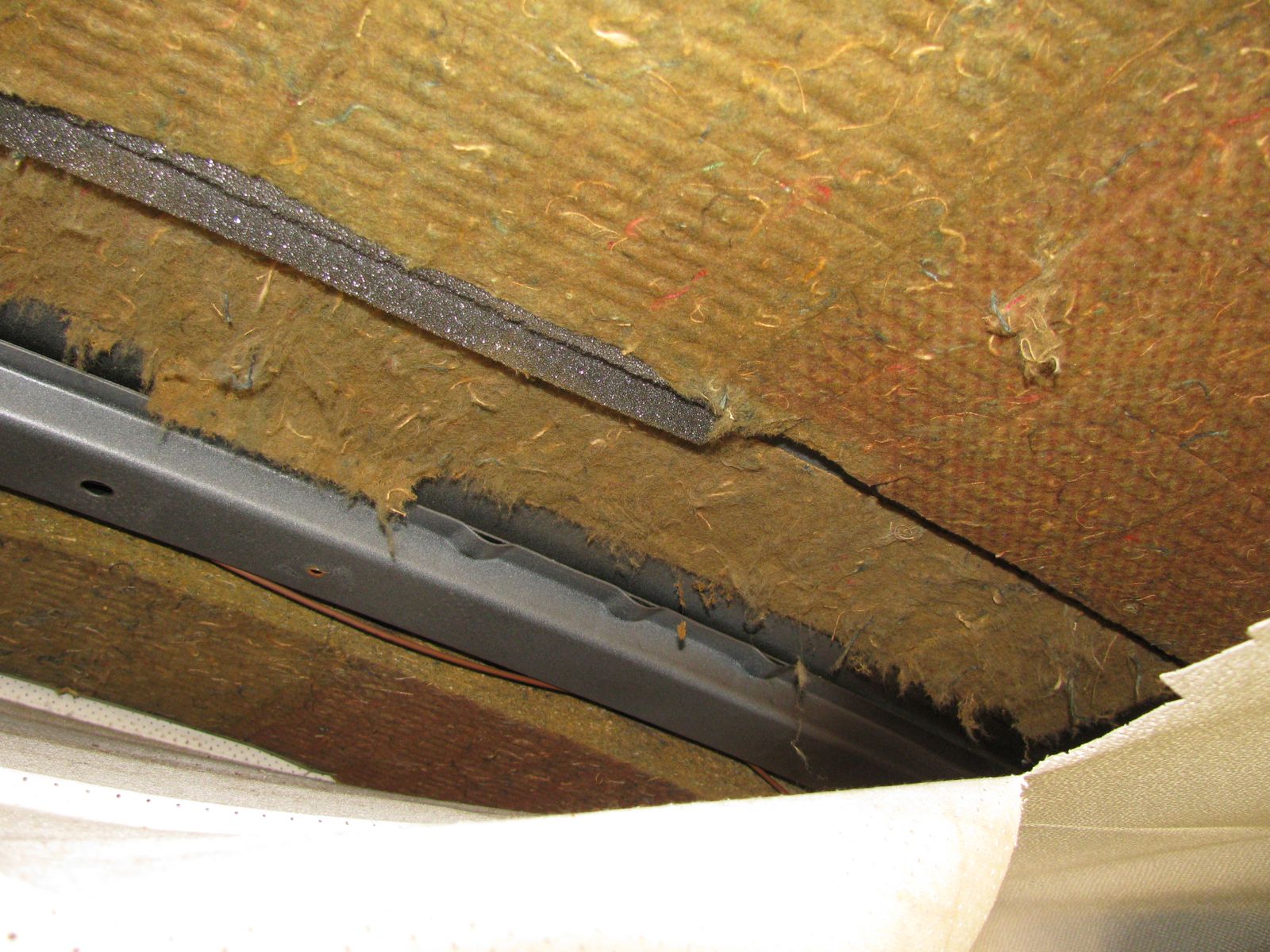
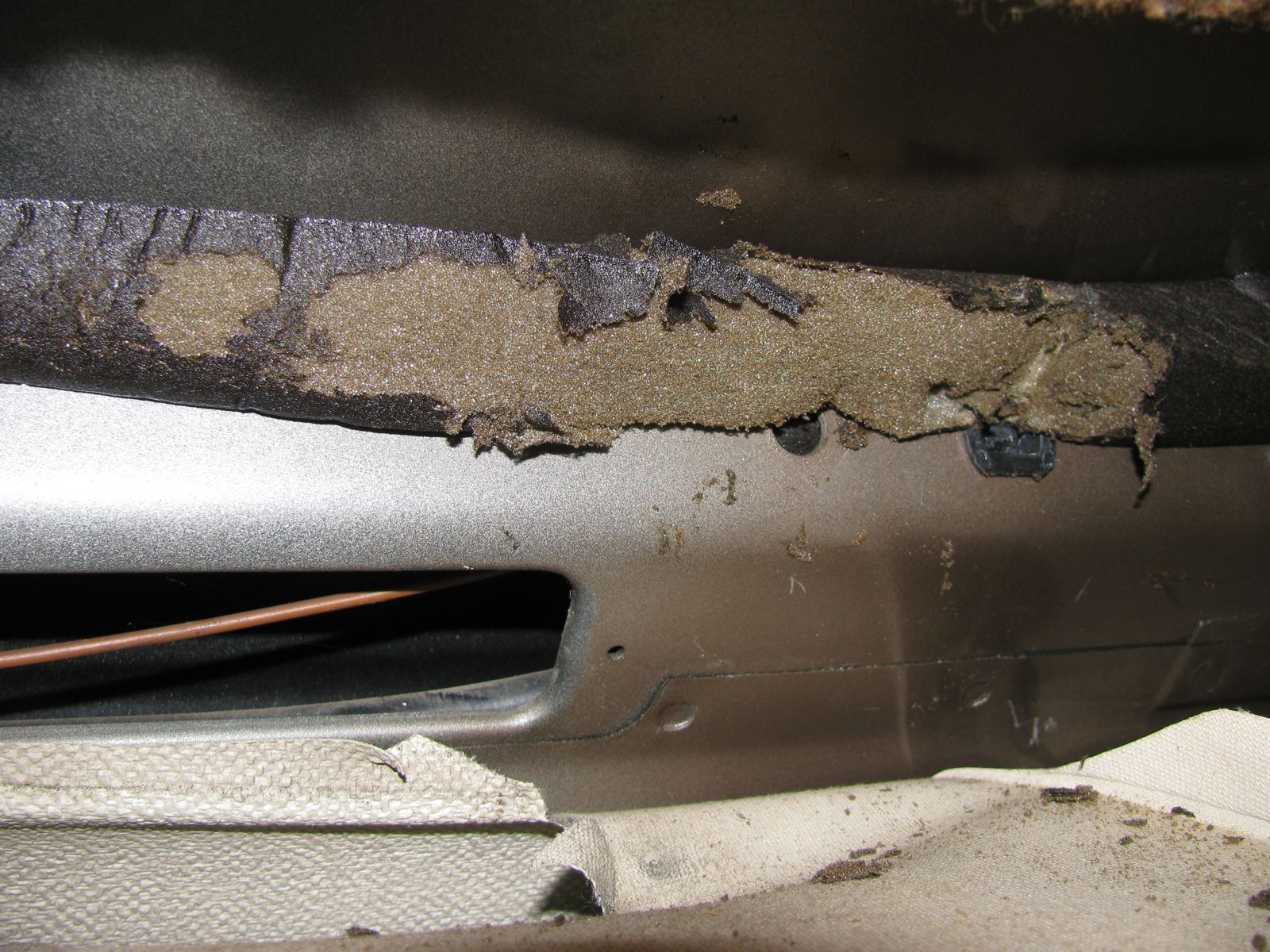
I cut into the headliner in the area where the roof will be cut out. I had to remove 2 wire supports and some of the glued on insulation. I should have worn a dust mask, the fibrous insulation is a bit dusty. Be sure to leave a good amount of uncut headliner at the perimeter so you have lots to play with when finishing the cut edges of the hole. Looks like I am going to make that hole tomorrow.


Vanagon – pop top hinge install – making holes
Posted by albell in vanagon, vanagon mods on July 18, 2011
I marked out the hole locations on the roof and drilled them. Made the holes oversize a bit, about 3/8″ diameter. I admit to dicking around and procrastinating with this pop top install project, but now that I have actually removed a little metal from the roof I’m committed.

Then I hammered down the metal where the hinge sits, just a little bit so that the hinge sits vertical by itself. I did a nicer job on the left side than the right which was my first attempt. I scratched the paint on that side and had to use some touch up paint. Added insult to injury was the paint spattering.


I thought that installing the threaded backing plates would be a pain, but it turned out to be very easily. I used double sided tape to stick on a bit of aluminum flashing to the backing plate so that I could maneuver the plate up inside. I could stand on a box outside looking through the drilled holes and reach around in the van to move the plate into position. I had the notion that I could squirt some caulk in the drilled holes so that the plate could be stuck onto the inside surface of the roof, but as it turned out the plate wedged in tight and doesn’t move out of position.


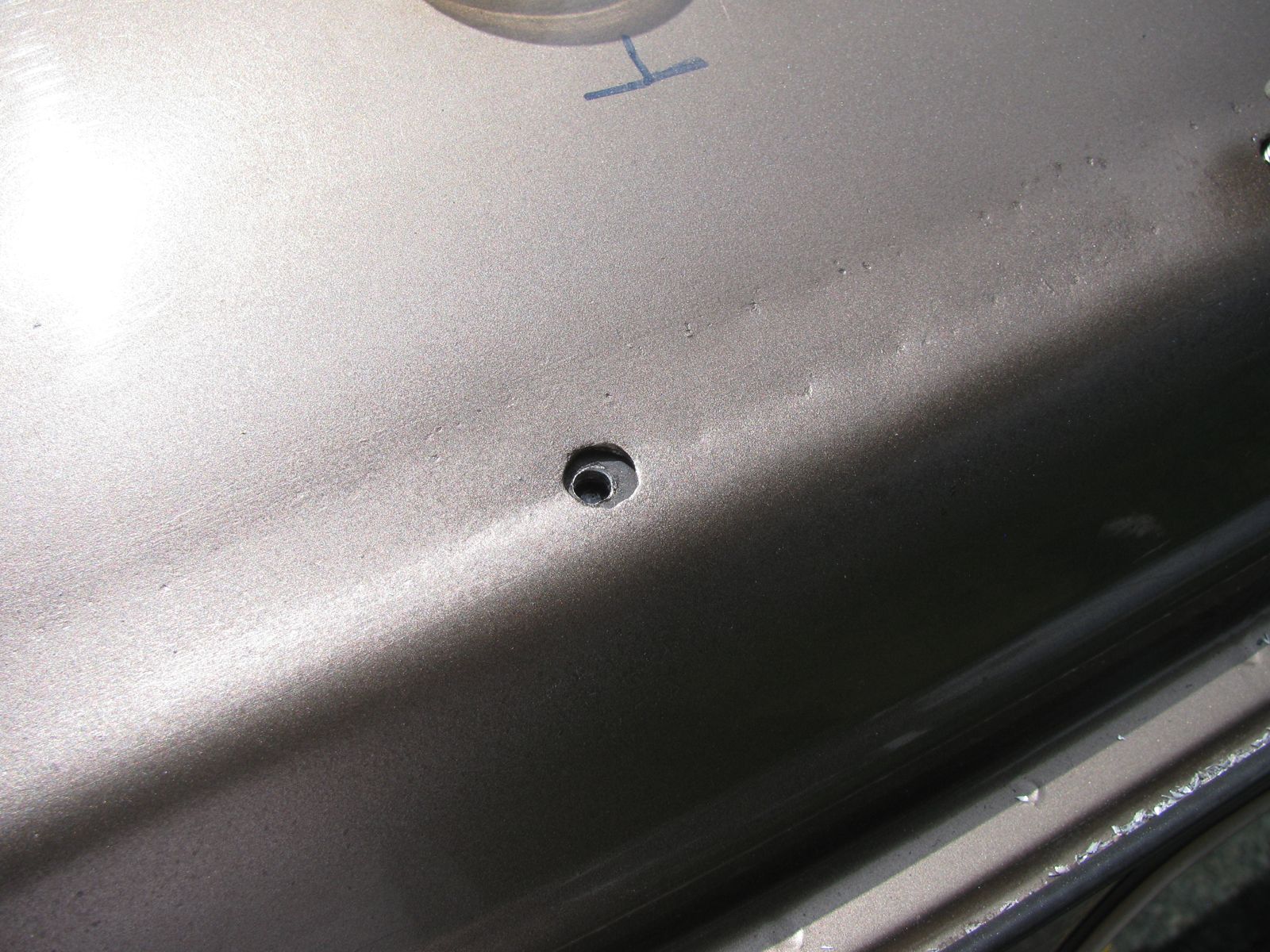

Ok, so next step is to go over the big hole dimensions and then… cut it out.
Vanagon – pop top hinge install – layout
Posted by albell in vanagon, vanagon mods on July 16, 2011
Slowly, I’m getting ready to cut a hole in the top of my syncro and put on a westy pop top roof. I’ve linked to the basic idea in a previous post. I’m fussing over where the rear hinge is attached. This Samba thread has some good info. I copied the hinge bolt locations from the roof of my ’82 Westy and used a plexiglass template to transfer the hole locations.

This where the holes transfer on the right hand side.
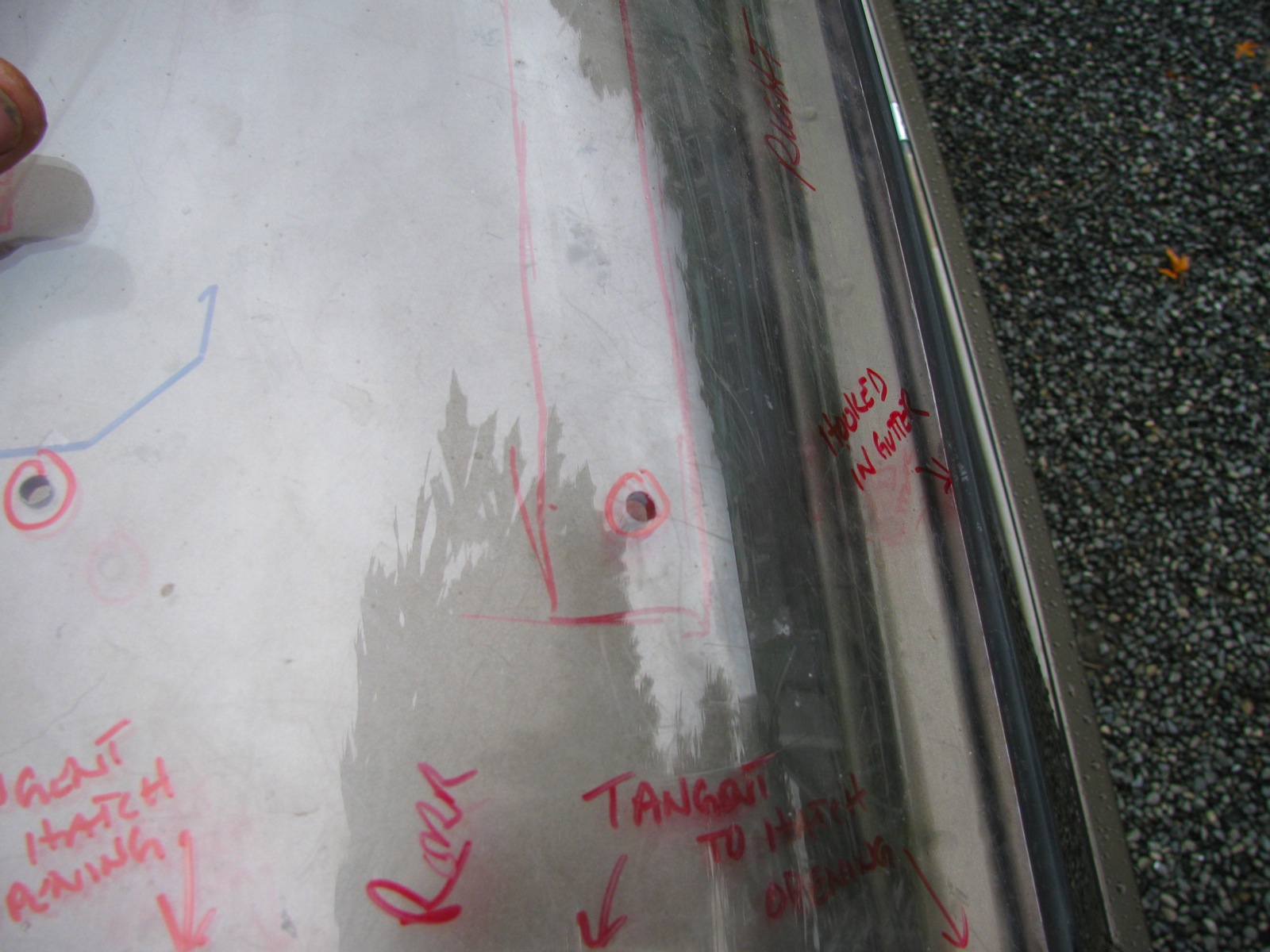
And some rough measurements.

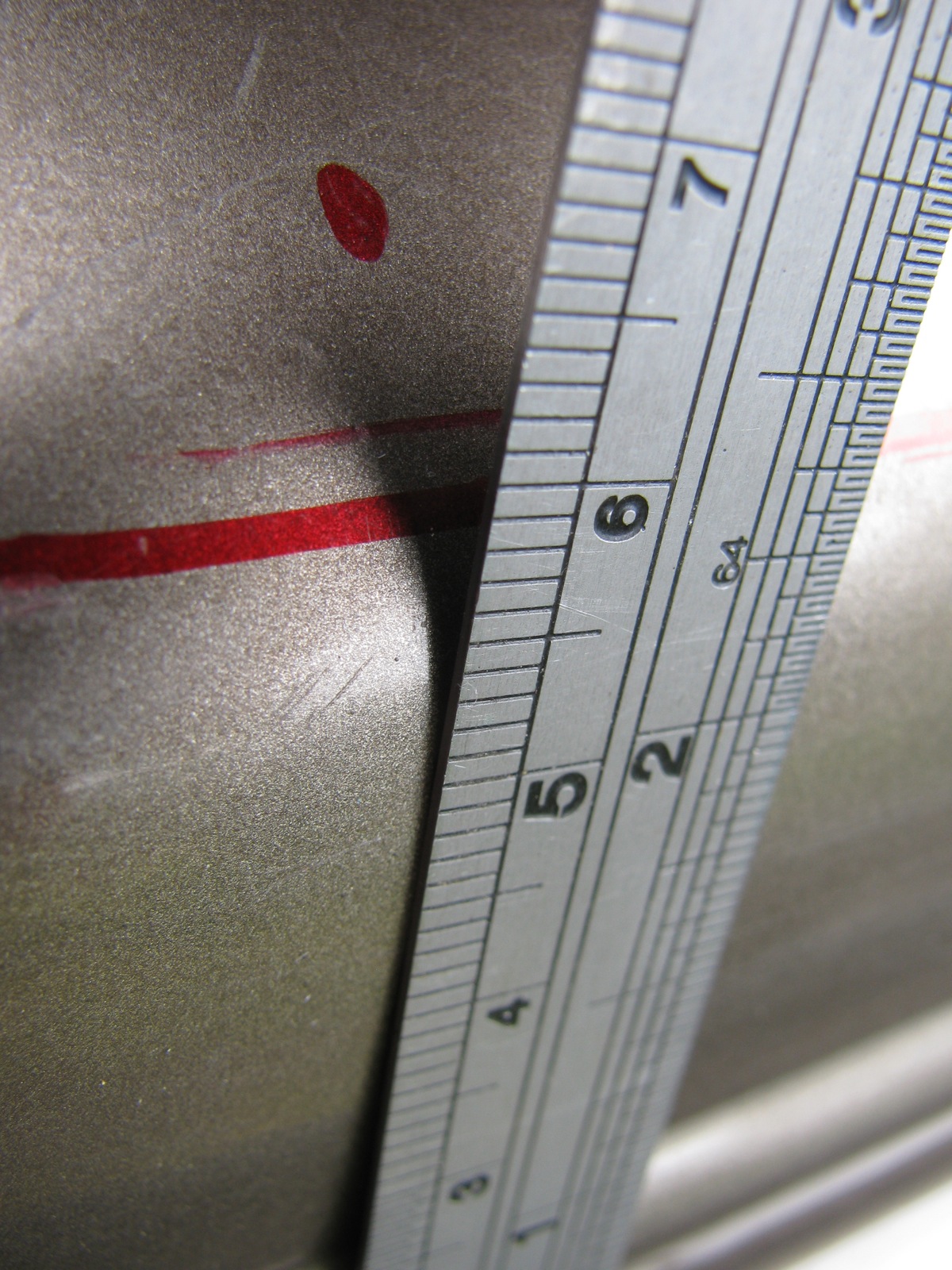
The measurements are within a millimetre or two of what was posted on the Samba. I’m still unresolved whether to flatten out the hinge area, but I am leaning that way.
Vanagon – pop top assist struts
Posted by albell in vanagon, vanagon mods on July 12, 2011
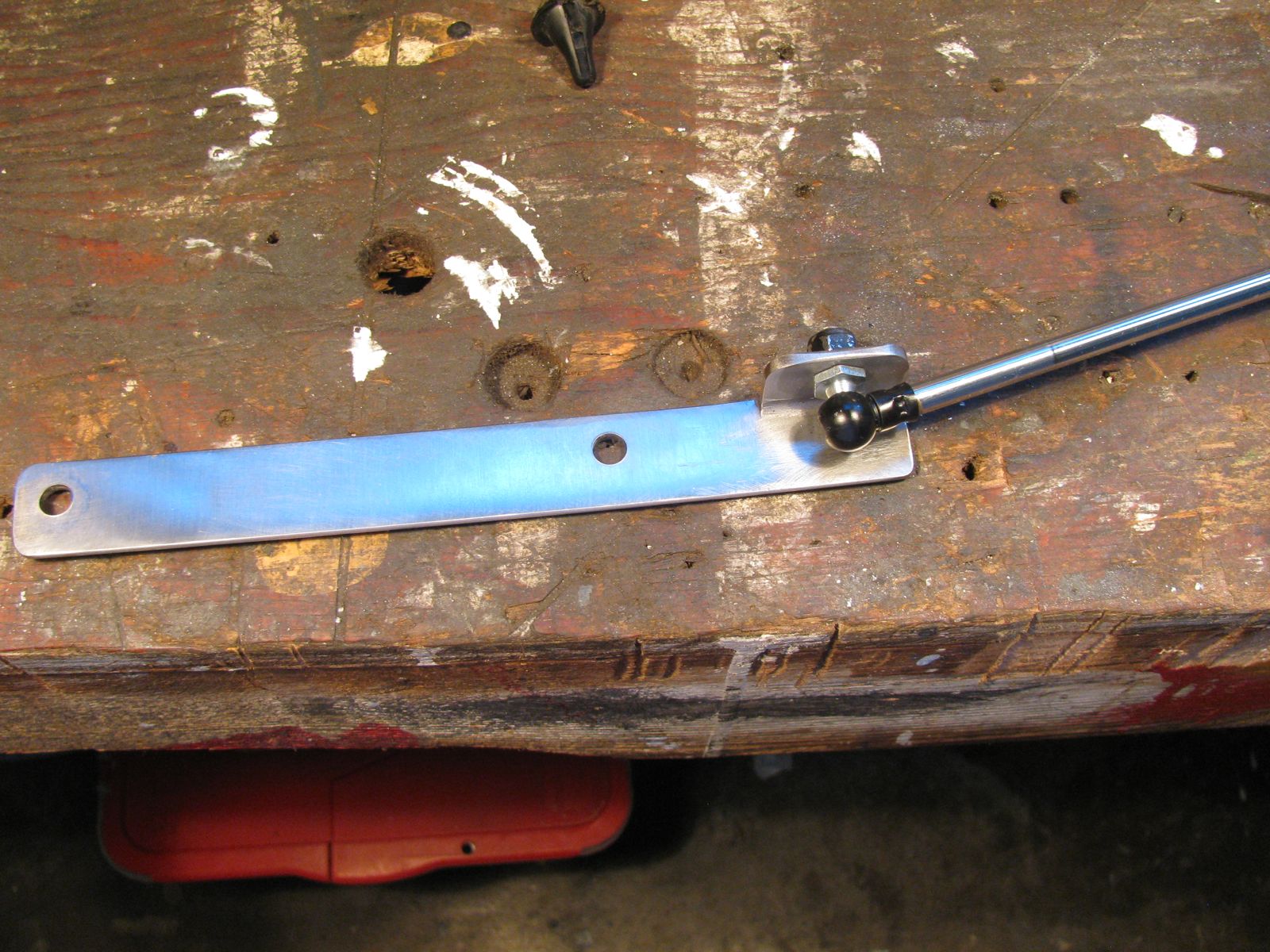
“Jack Bombay” makes a great kit for attaching gas charged struts to the pop top lifting mechanism to help lift the top. I have helped install 2 of his kits onto friends vans, and I recommend buying the kit from him. But, a friend gave me 4 ball end attachment bits and I had some old but still fairly strong rear hatch struts, therefore to save face I had a go at making my own set up. All I can say is if you don’t have a welder, then it is really not worthwhile doing it. I made mine from stainless steel angle, hacksaw, grinder, belt sander, files, and sweat.
Below is one on the rear hinge. There is a black steel strip underneath the hinge base (barely visible) which is the tapped backing plate I will be using when I attach the hinges to the roof of my syncro. I have not angled the tab where the ball end is screwed on, Jack Bombay’s kit has it angled towards the tent a few degrees, I forgot to do it until I saw this picture. But the lack of angle does not seem to make any difference. Get the idea that I was tired of this little project?
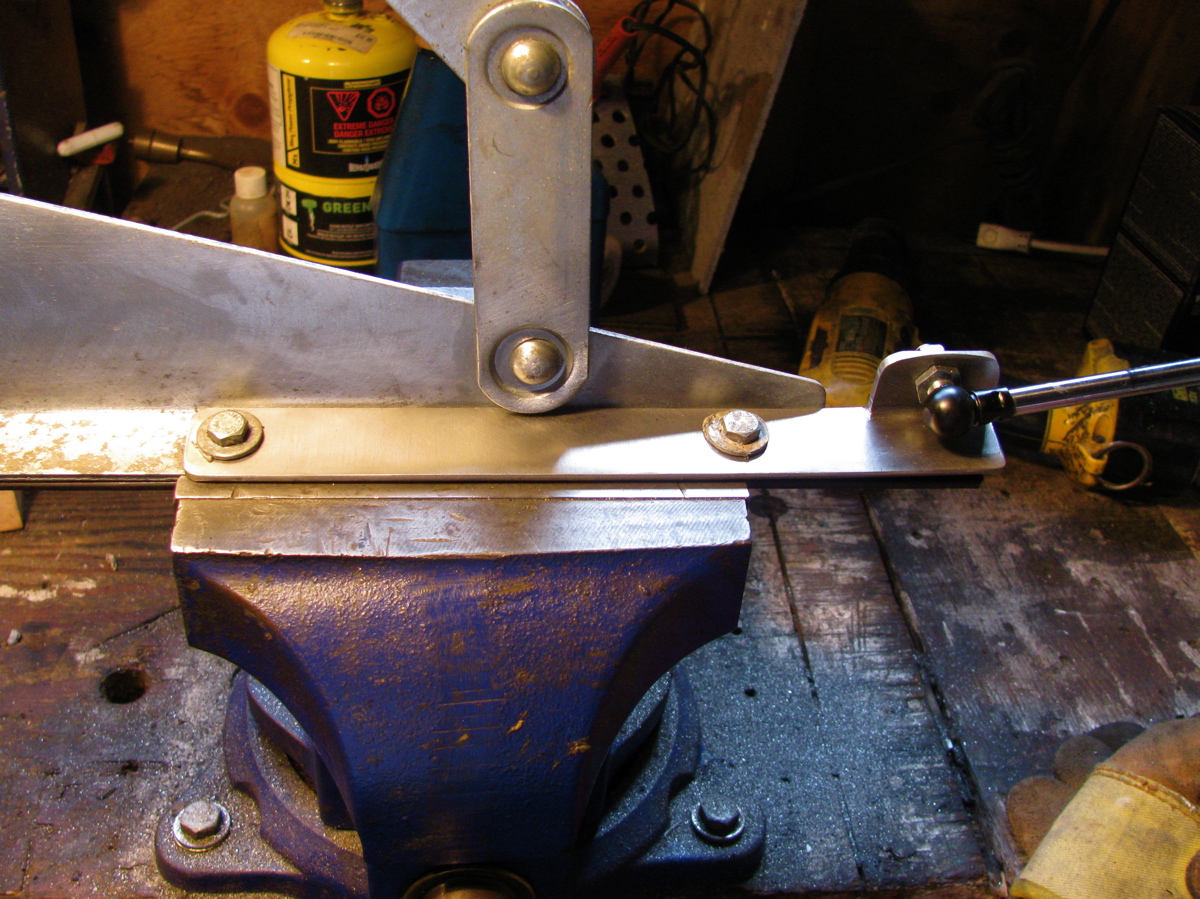
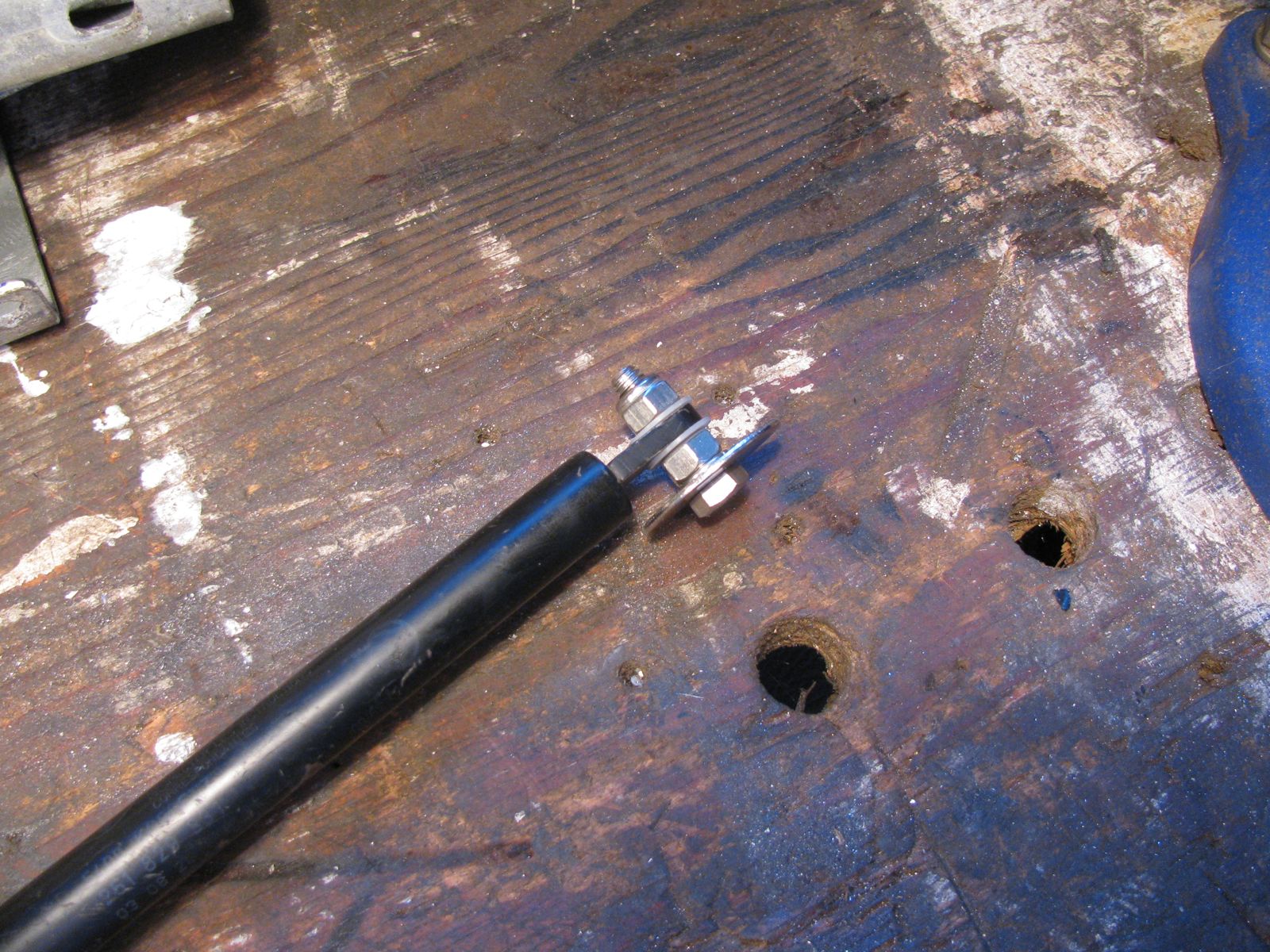
More pics, showing the pop top end of the struts. These struts do not have a ball at that end, so I am using a bolt, nuts and washer arrangement. I hope there will be enough lateral play in the set up so that it won’t bind (was no need to worry, worked perfectly).
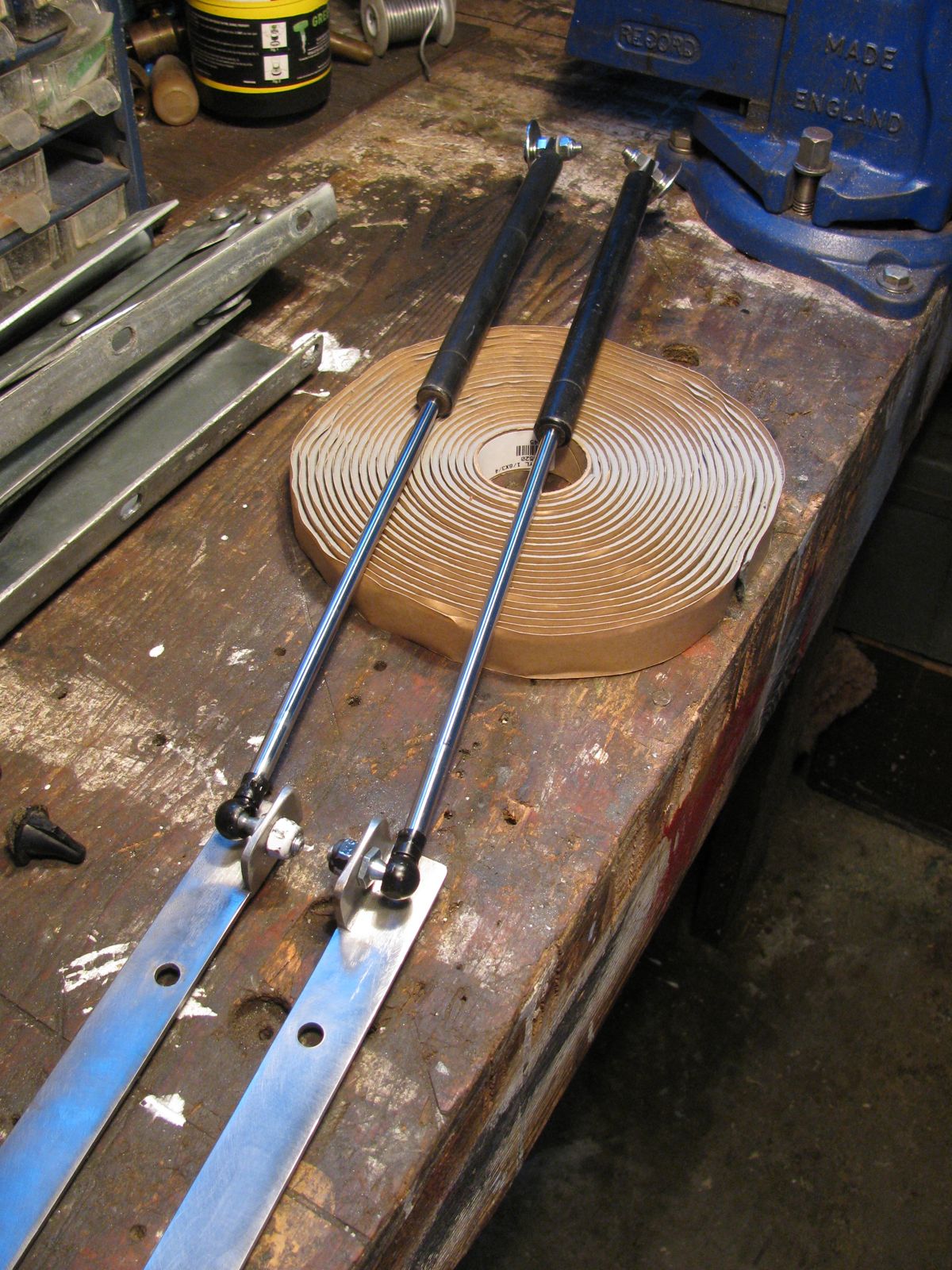
That’s a roll of “dum-dum”, a butyl based non-hardening mastic that I will use to seal bolt penetrations in the steel roof, and on the underside of the pop top canvas lower securing track where it goes over the raised portions of the roof.
Vanagon – pop top insulation
Posted by albell in vanagon, vanagon mods on July 12, 2011
Well I’ve finished my experiment with trying a new kind of pop top ceiling treatment. An earlier post showed how I had stripped the old worn flocking off the ceiling and I had the idea of attaching a closed cell foam ceiling treatment. I did not want to glue the foam directly to the top, but rather have it removable. What I ended up with is not what I had envisioned, but isn’t that often the case?
I attached (screws every 20cm) some 1/2″ X 1/2″ aluminum box section to the sides of the top, that moulding that the canvas attaches to. This will be to support steel straps across the ceiling that the foam is glued to. The also will serve as a wiring chase.

Here is a shot of the aluminum box tubing at the front, same thing is happening on the sides and rear.
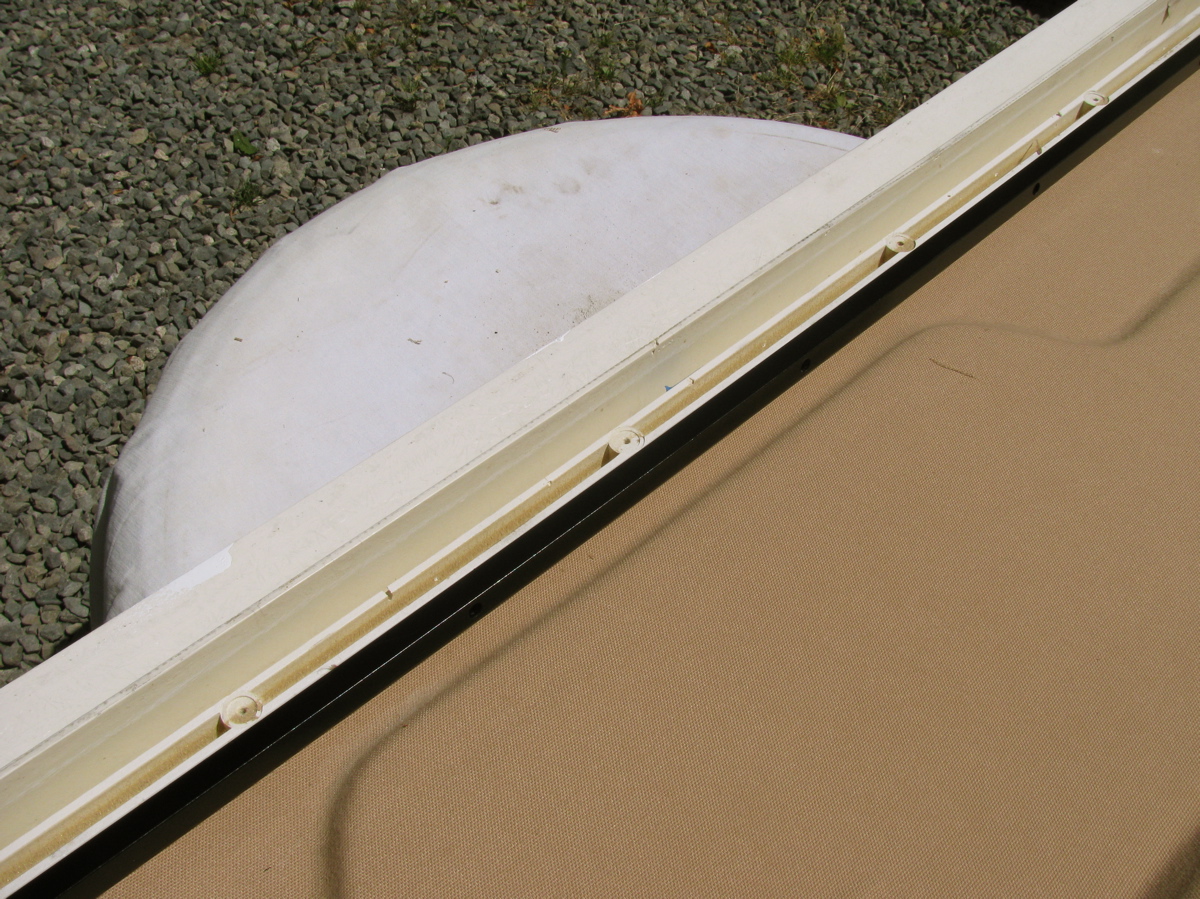
The difficult decision was how to treat the skylight, latch, and pop top strut attachment points. I decided to cut generous openings in the foam and then cover the exposed ceiling with the same polyester fabric I used to cover the foam.

I used 3M 77 spray adhesive to glue the fabric to the ceiling and the foam. It wasn’t 100% effective, I have some spots were the fabric did not adhere. It is probably user error. The fabric was glued to the foam, and the steel straps to the the other side of the foam. I used some velcro to hold the areas around the cut outs, you can see how the “pad” is not tight to the top in the pic, it is better with the velcro.
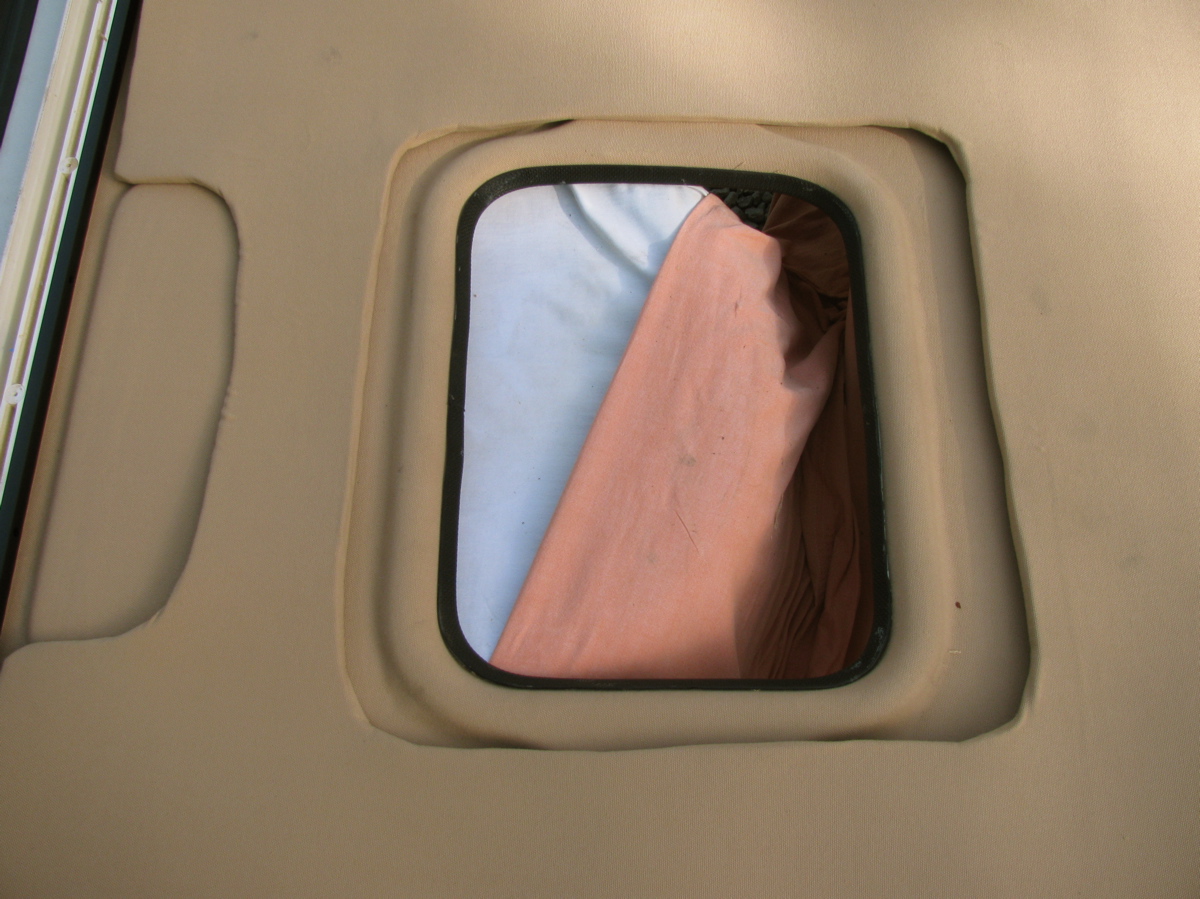
After a couple of days, more wrinkles appeared, grrr. The aluminum section on the left hand side is not attached in the following pic.
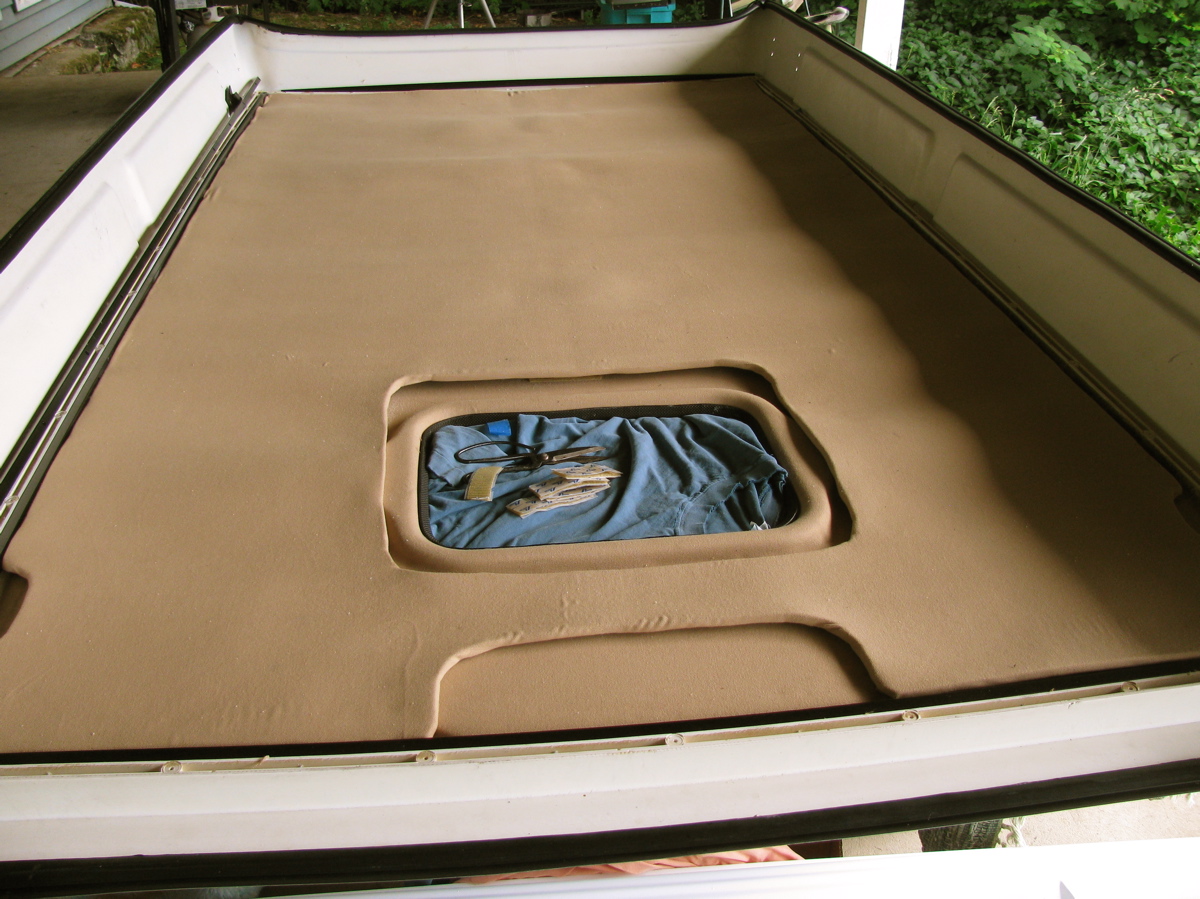
Well live and learn. I’m really tempted to glue on some tan short pile indoor/outdoor carpet to the roof and only use the foam pad in winter. Oh, and another curve was thrown my way with this project, the foam expands and contracts with heat a lot more than I imagined. It meant that the pad could not be closely fitted and probably contributes to the wrinkling.
Vanagon – aux. light post updated
Posted by albell in vanagon, vanagon mods on June 18, 2011
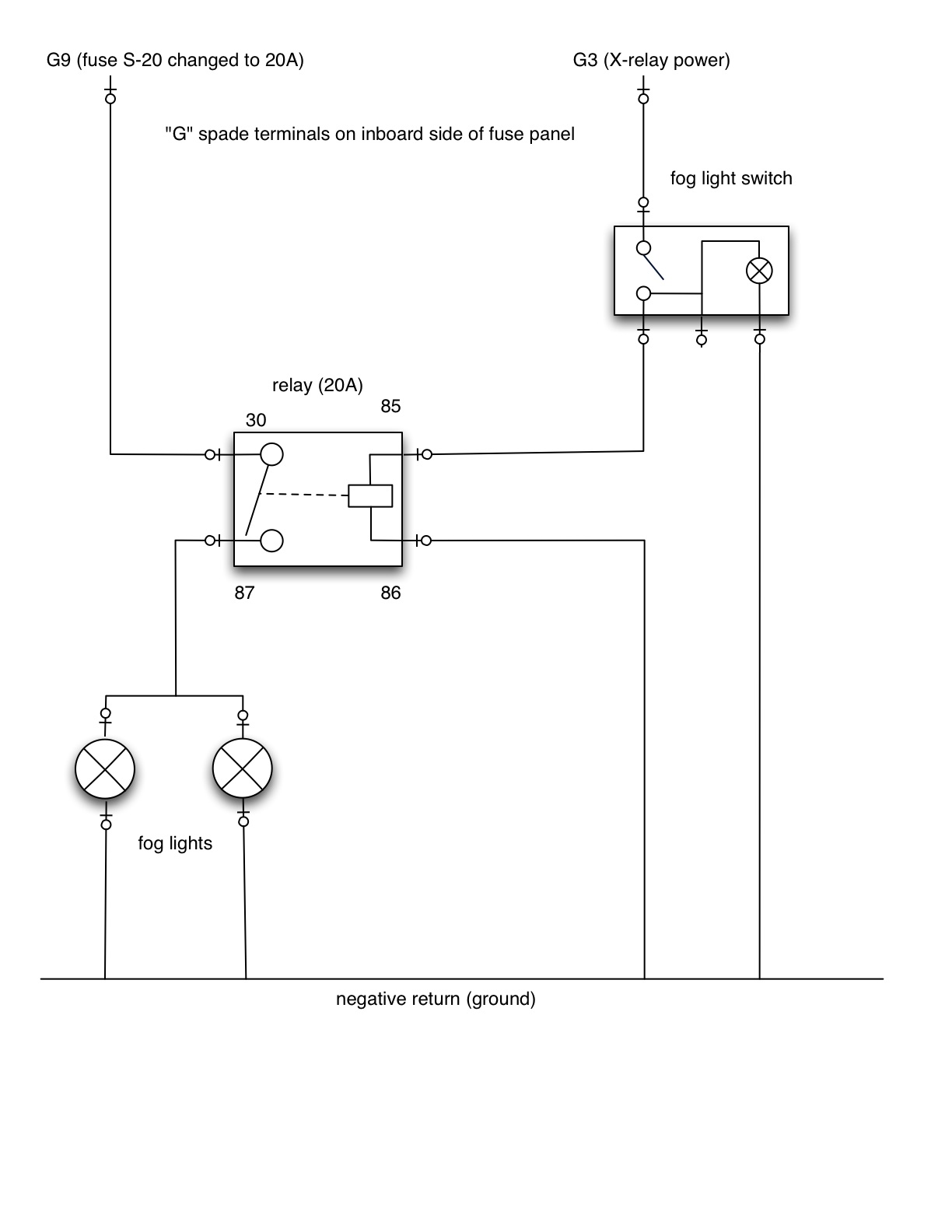
I added my circuit diagram to my post on how I wired my aux. lights. Here it is if you don’t want to click on that link. Note: the diagram for the fog light switch is not correct in that the 3 position switch does not have the internals wired as shown, but the diagram works for the purpose now.
Vanagon – westy luggage rack footman’s loops
Posted by albell in vanagon, vanagon mods on June 14, 2011
When the pop top was on my old ’82 westy I replaced the stock footman’s loops with some stainless eye straps, 2″ Harken, from West Marine, about $2.50 each. Here is Tiny URL to the catalogue page. I find them much better than stock, easier to run rope or attach bungees. The 2″ size fits pretty closely to the stock holes in the luggage rack. When I put them on originally (7 years ago?) I just had to enlarge the holes in the rack with a 5/16″ drill so that 1/4″ stainless bolts would fit. I dug out an old stock loop for a comparison.


Vanagon – Frank G.’s instrument cluster mod
Posted by albell in vanagon, vanagon mods on June 14, 2011
Another article from my old website
Frank writes:
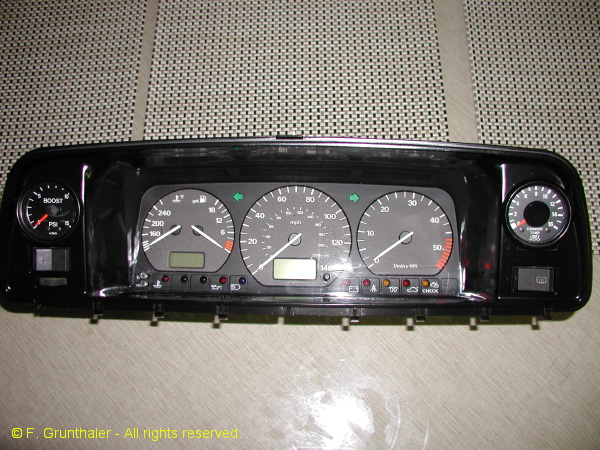
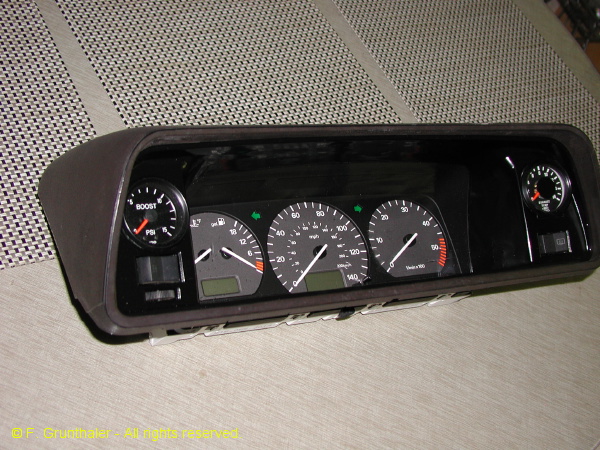
Just finished building a new Vanagon Instrument cluster for my TDi conversion project. I’ve always disliked the Vanagon instrument pod. The center section really offended my sense of completeness. Just looked fake. When I decided to divert the 2.0 Turbo Audi project to the TDI, I decided to do something about it. The result combines the instrument cluster from the 1997 Passat TDI (contributes the gauge faces and front cluster face), a 1995 Passat GLs (contributes the MFA processor calibrated for the 4 cylinder engine), a vanagon cluster, the bezel from a ’97 Passat and a set of VDO gauges.
I’m using the wiper (controls the MFA) and turn signal stalks (controls the cruise control) on the steering column from the 1995 Passat GLS 4-cylinder. Here in the cluster, the temperature and fuel gauges are combined, with separate speedometer and tachometer. The warning light group contains the typical diesel functions. There are two unused light ports. I’m doing transfer logos for them and adding my two color (red/green) LED’s. One of the lights monitors the radiator fan speed (green for low, red for high). The other follows the auxiliary lights with green for Fog on and red for the driving lights. The MFA monitors among the standard features, the engine oil temperature, the average fuel consumption, the instantaneous fuel consumption and the external air temperature. This LCD screen also displays the digital clock.
In the bezel, I add a boost gauge and a pyrometer for EGT measurements. In the lower dash plane I have two gauges, one on either side of the column. To the left, oil pressure and to the right, oil temperature monitored after the oil coolers. In the lower heater face panel, I have a set of five gauges monitoring voltage on the primary circuit, voltage on the auxiliary battery circuit, the pressure in the radiator coolant circuit, an analog clock and an LED compass direction gauge.
The speedo drive is electronic. I took the rear mount out of an old Jetta speedo cluster I had, cut it up tp keep the frame and the Hall magnet wheel. Then mounted them in a box to take the place of the EGR counter. I use the 3 wire speedo hall sensor from the G/J series. Its a bolt up (or screw up) to the speedo frame. A variable pulse counter frequency adjuster (circuit supplied by my son) will allow variable adjustment for a dead on speedometer regardless of tires and state of wear. Precision wirewound pot for frequency conversion adjustment. Calibrate with simple GPS.
Further notes on fabrication…
On the master cylinder reservoir interference issue … it was in the way and I wanted to maintain the visual angles, so I took it out! I then used a master cylinder reservoir from a ’90’s Mazda pickup. It comes (from your local P&P yard) with a remote mounting bracket. I rotated it so the long axis is parallel to the windshield long axis. It comes with a built-in level sensor that I wired into the VW harness. I can’t remember if the vanagon originally came with the level sensor built in of if I added it to the vanagon reservoir and modded the harness years ago. For the inlet lines to master cylinder, I believe I used the plastic barb adaptors from a Super Beetle. I use an inline T to tap off the clutch feed. I mounted the reservoir in the same general area as the original Vanagon unit and aligned the inlet so that the plastic drip shield fit again (anal-retentive, I know). Clears the back of the cluster as if it were designed to do so! This solution should work for any cluster one would like to put in!
On the choice of cluster…. Well to start with, I have always thought (going back to March of ’82 when I placed the order for Westfalia for factory delivery) that the instrument cluster was a tacky design. The fake molded sensor lights particularly irritated me! I later years, I added the tach, the oil pressure warning circuits, the VSS speed sensor and redesigned the warning light package to give right and left turn signal lights, added cruise control lights, finally adding multicolor LEDs to the fake center section to monitor radiator fan speed, intercooler fan speeds, fog and driving lights and A/C control parameters. But I never liked the look of the thing.
When I decided to TDi the Vanagon, my orders to the salvage yard were that I wanted it all – engine, hoses, all wires and sensors. To my surprise, they included the speedometer cluster. The three gauge pattern carried the same info as the Vanagon cluster, but much more cleanly. The row of sensor lights along the bottom of the cluster was very tasteful and, the LCD display made it possible to add the MFA (multifunction display) to the package. I noticed immediately that the size of the Passat cluster was just a bit larger than the vanagon center section, so I decided it was time to generate a cluster that was good on the eyes and technically compatible with the Vanagon. The MFA was a key part of the equation, since I could integrate a miles per gallon function together with monitors for oil temperature and all OBD II sensed engine variables (the son is hacking the MFA controller to display all VAG.com accessible info). So, while the A4 cluster is nice and the later sport clusters from the Passat and G/J series are very impressive, they were somehow not in the same design paradigm as the classic Vanagon shape. The approach I used is compatible with any cluster. I chose not to go the digital monitor approach or to rebuild with aftermarket gauges (VDO or other), although the 9 gauge custom cluster seen here on the list recently pushed me from design to implementation.
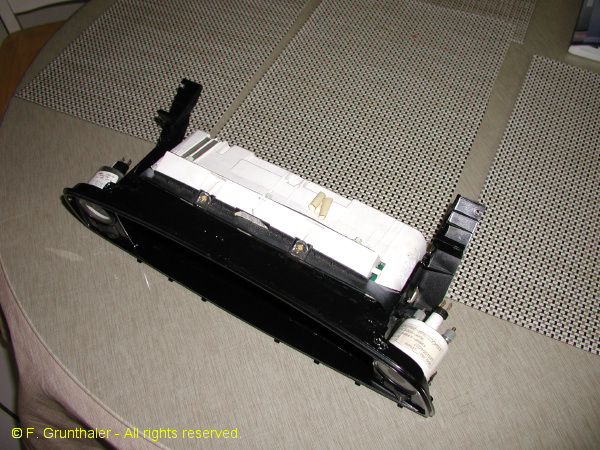
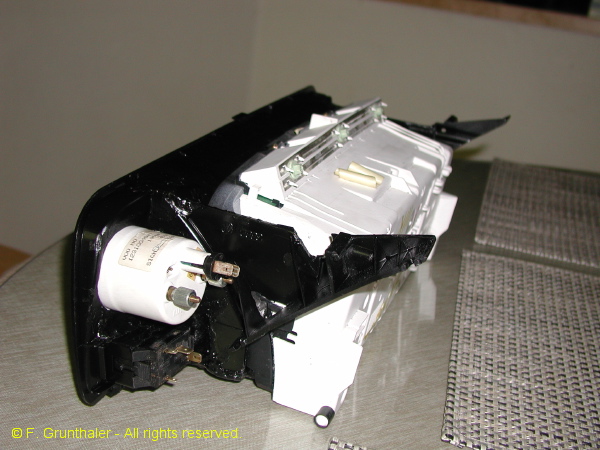
Key details … Needed – Dremel tool, JB Weld, ’97 Passat instrument bezel, ’95 to ’97 Passat instrument cluster, one or more Vanagon instrument cluster bezels, flexible bumper spray paint, 20+ hours, high quality source of KMZT-FMin garage. To begin, I cut away all the instrument pod from the plastic vanagon bezel to a distance of about 1 inch from the front face. I cut off the bezel support pieces so I could reassemble them to the cluster in the end. I then took the plastic ’97 instrument bezel and used it to shape the remaining vanagon bezel surface. When I has the shape right (easier than it sounds with the Dremel tool) I bonded the passat bezel to the vanagon plastic. This left a series of open areas since the smooth transitions at the top and sides were not a part of the Vanagon shape. These areas were filled with JB Weld then smoothed and shaped by hand with various wet/dry sanding papers. On the back side of the Vanagon cluster, I removed the plastic shell support for everything except for the light switch and the lowest switch position on the right. I then filled and smoothed the front surface in preparation for cutting the two 2 1/16 gauges that I wanted as part of the cluster. I then bonded the cluster support pi eces from the original vanagon bezel to the revised unit. I set the positions in a jig, heat treated the plastic for a slightly different takeoff angel to meet the original mount point without stress. These support pieces were about 0.250 inches further to the right and left than the original. I then fitted the Passat cluster (took off some interfering tabs) and reinforced the remaining structure with JB Weld. The gauge holes and switch areas were then clearanced and a final sanding polish performed before painting with the flexible semi-gloss black. The paint removed fine sanding damage with a high film strength drying surface. Did a test fit and all was well including the latched top pod cover.
On the instrument cluster mods … I added the boost (0-30 psi) and EGT gauges in an excellent 270 degree sweep unit made by Speedhut. The MFA cluster (not part of the original Passat TDi cluster) was pieced together from a ’95 Passat GLs (4 cylinder motor) cluster with turn signal (has cruise control switch) and wiper (has MFA controller) stalks from same. (This idea came from Chris Bell on the TDIClub list). The tach sensing was correct for the TDi engine. The temperature gauge is appropriate for the sensor on the engine. The gas gauge worked for full scale to empty due to VW internal standardization policy! The speedo sensor is electronic. I cut up a GTi speedo cluster to get the Hall effect sensor wheel and mount shell. Added a VW three wire VSS sensor and turned it all into a 2.0 x 2.0 x 1.5 inch adaptor that pops onto the end of the Vanagon speedometer cable. I convert the pulses from this Hall sensor packet to the frequency (pulses per mile) needed by the Passat cluster with either a Dakota Digital pulse frequency converter of a circuit for variable calibration designed by my son. In the custom circuit, we would calibrate the speedometer with a GPS system and thereby lock it on for any tire combination.



Vanagon – hacking switches to add LED lights
Posted by albell in vanagon, vanagon mods on June 9, 2011
A couple of kludges here, adding LED lights to the headlight switch and the rear defogger switch. I did this to bug my friend Simon 🙂
First the headlight switch. There are two kinds of switch, one has a white plastic insert in the hole on the back of the switch and one doesn’t. It’s the former that can be illuminated.
Here is a view of the back of the switch removed from the connector and you can make out the white plastic in the hole. Disregard that purple wire soldered to the spade connector, that was a failed experiment.

For a more professional way of installing a lamp into the switch look at this Samba thread. I didn’t have the little bulb holding clips shown in that thread, so I did it a little differently.
Now switch focus from the switch to the connector with all the wires coming out of it, sitting there in dash.
I used a bare bulb white LED and a resistor. The LED fits nicely into the hole in the switch connector and I opened the slots at the base of the hole with an awl so the legs of the LED would fit through. I then could push the LED into the hole and the legs of the LED poked through the other side. I soldered a wire onto one leg and a resistor onto the other. I forget the resistor value at the moment, but you can read the code in the picture. I soldered the other end of the resistor to the black and yellow wire coming into the switch connector. That wire is connected to the X-relay current path, so it get power when the key is on. The purple wire grounds the LED through the handbrake on warning light connecter, the brown wire on that white connector in the picture.
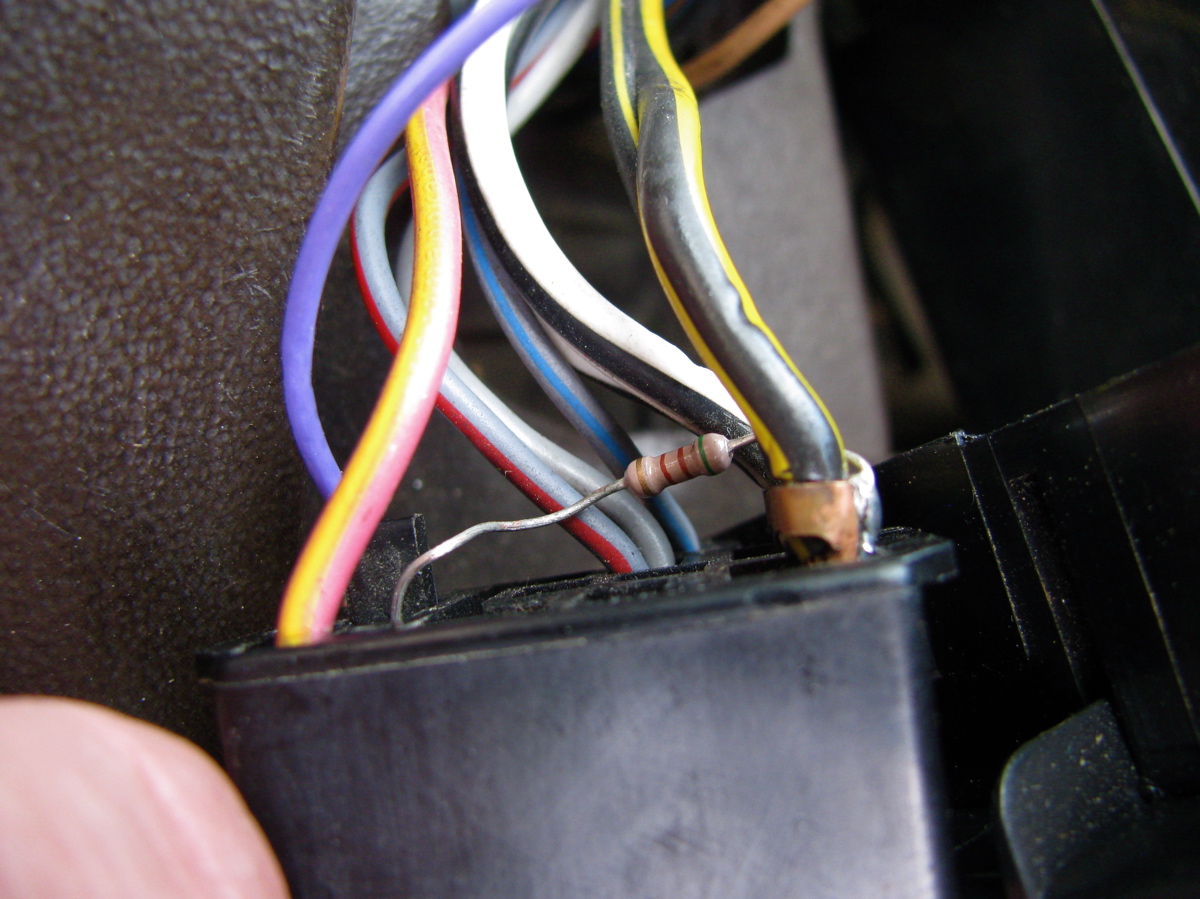
I chose to power the LED from the X-relay track for the reason that I wanted the headlight switch to illuminate when I turned the key, not when I switched on the lights (which seems rather redundant).
Here is the LED powered before the connector is mated to the switch.
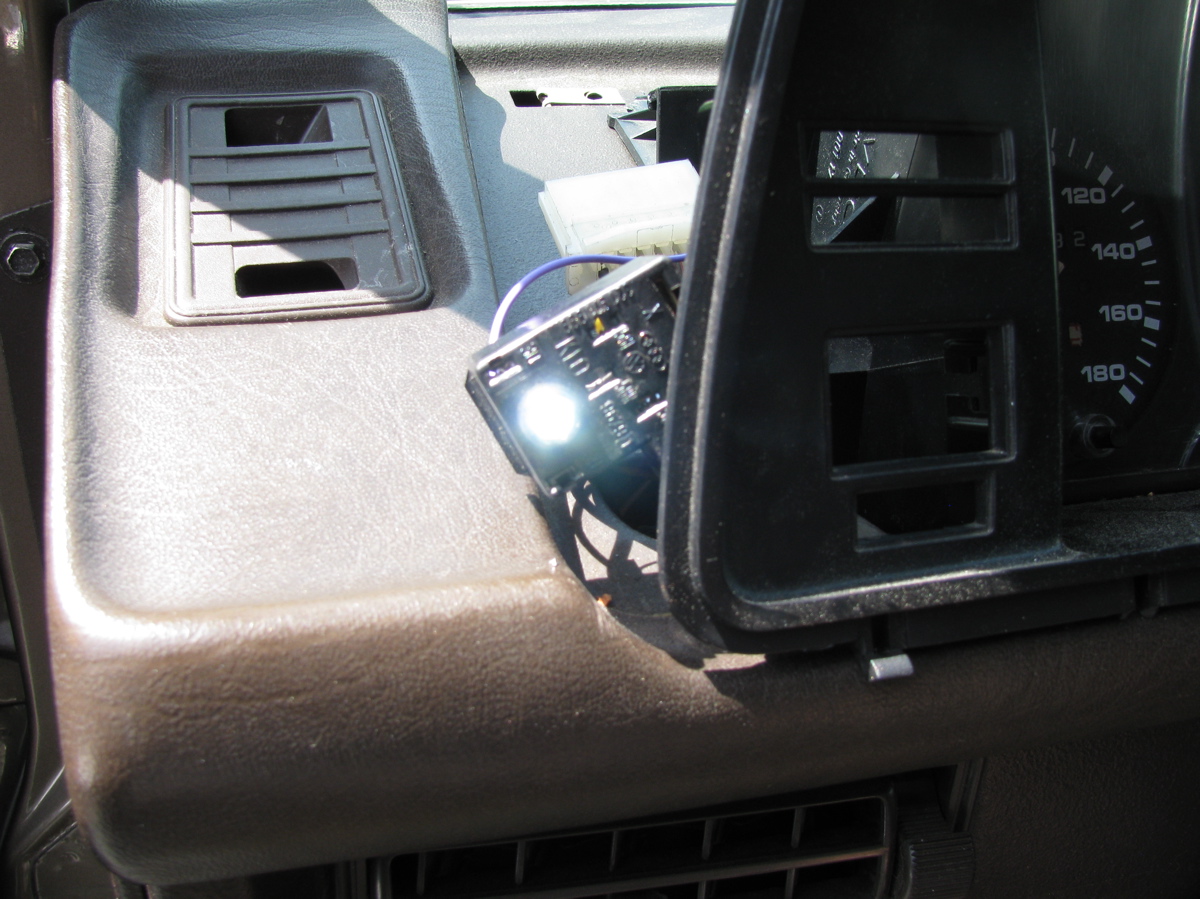
Seems pretty bright. The icon on the switch is noticeably lit up even in daylight. I’ll see if it is too bright tonight.
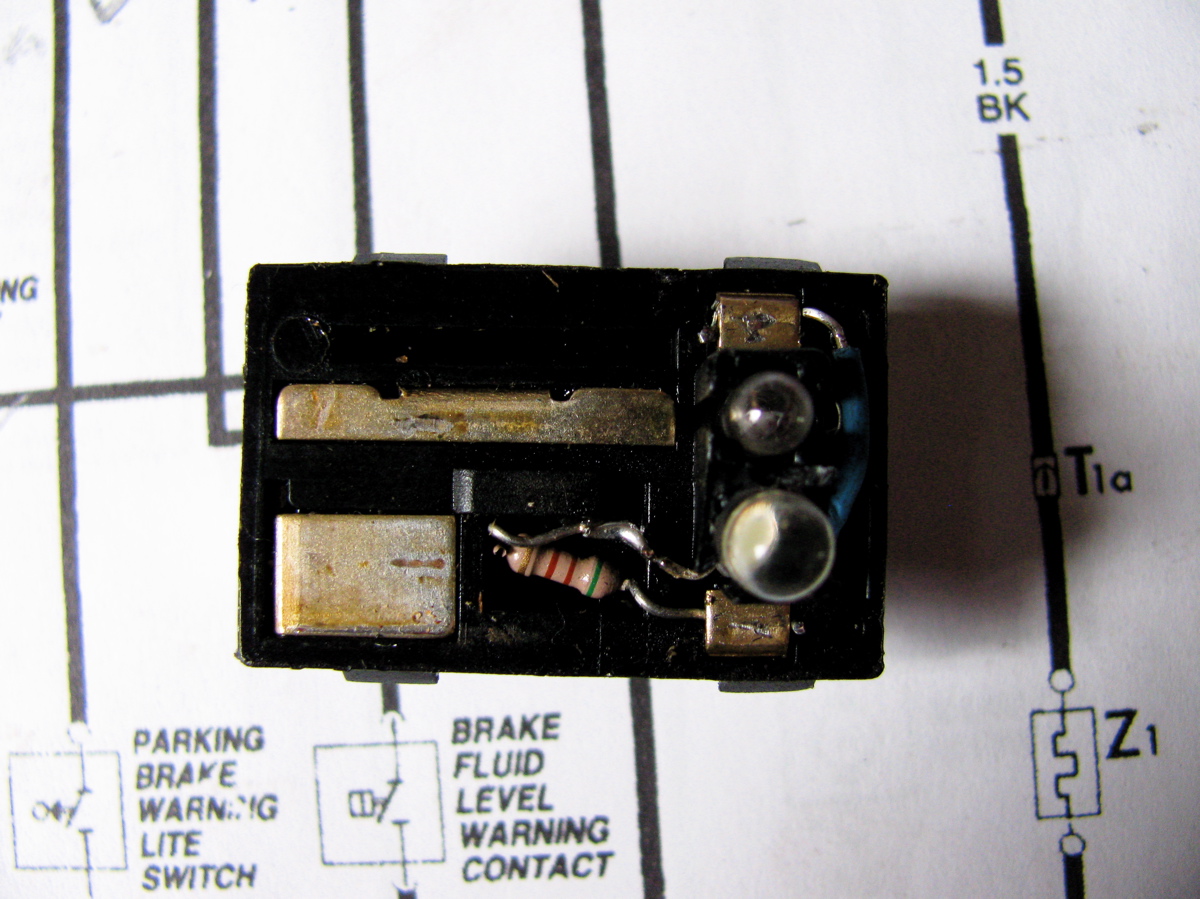
The next kludge is the rear defogger light. There are two tiny little bulbs inside the switch, one to light up the tiny amber dot on the side of the switch when the defogger is on, and one to light up the switch when the headlights/running lights are on. The latter was burned out in my switch. I pulled the back of the switch off (careful, springs and one ball bearing inside), and I put in a LED instead of an incandescent bulb. During the process I broke a little plastic shield that prevents the switch illumination light from also lighting up the little amber dot. One of the pictures shows the shield off, I glued it back on before reassembly of the switch. The leads of the bulbs in the switch are connected to the brass trace by simply being tucked under them. You can pry the trace up and slip the lead of the new bulbs under, then press the trace down again. The resistor can be tucked into a recess in the plastic. I have the negative leg of the LED tucked under the brass at the bottom, which is the “31” spade on the switch, and the positive leg curves up (covered in blue heat shrink) to tuck under the brass at the top, which is the “56b” spade (powered by the headlight dimmer switch). The switch goes back together pretty easily.

Vanagon – westy skylight lifting mech. cover repaint and new knob
Posted by albell in vanagon, vanagon mods on June 8, 2011
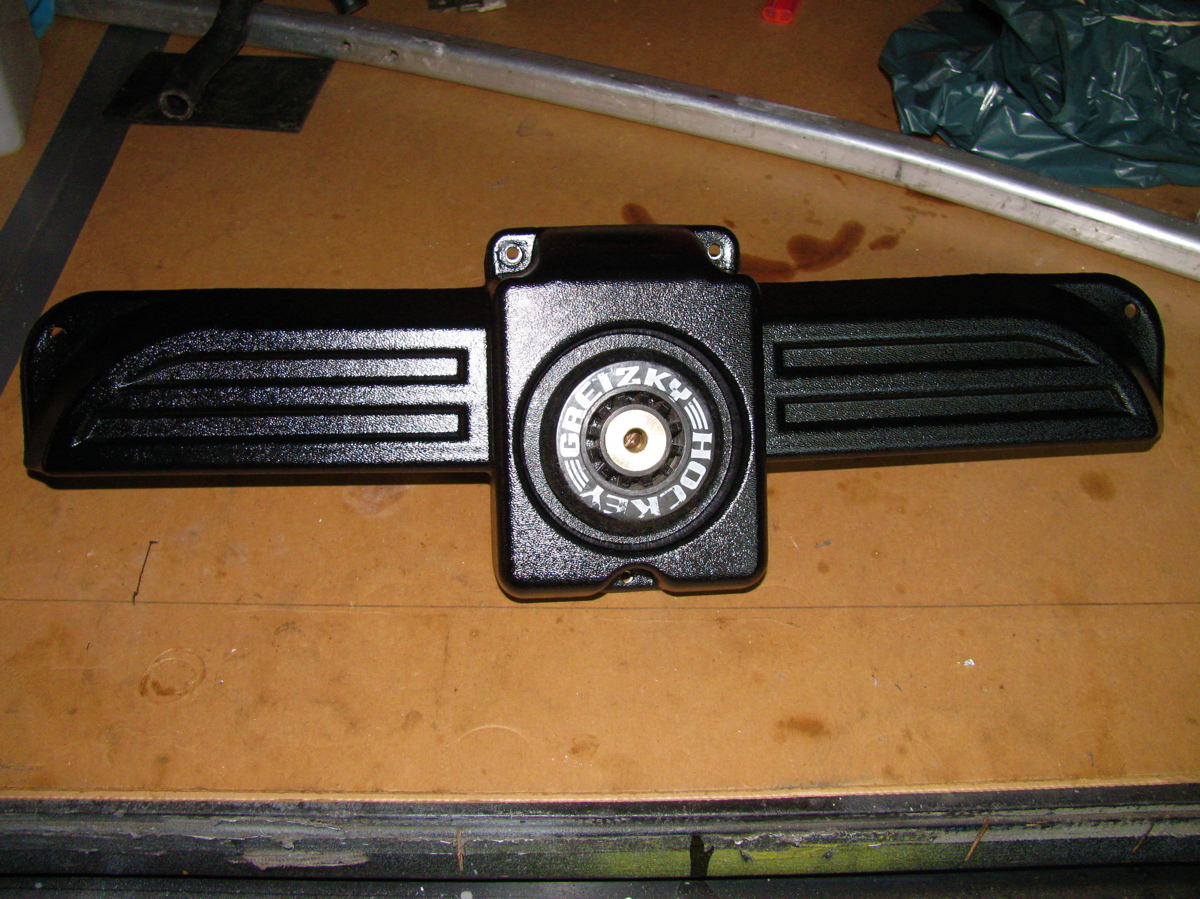
That old Delta Six Industries plastic doesn’t age well. I repainted the cover with Krylon Fusion satin black and at same time made a new knob from an old inline skate wheel and a bit of brass.
Vanagon – heckklappen-aufsteller (rear hatch propped open gizmo)
Posted by albell in vanagon, vanagon mods on June 8, 2011
I had a go at making one of those gizmos that allows you to have the rear hatch open a crack, but still locked. I used the plans on this page, specifically this pdf. As shown on that same page, you can make an easier version from a turnbuckle. My attempt is pretty crude, but it works. The D shaped hole goes over the post on the van body, and round hole engages the latch on the hatch.


Vanagon pop top insulation idea
Posted by albell in vanagon, vanagon mods on June 6, 2011
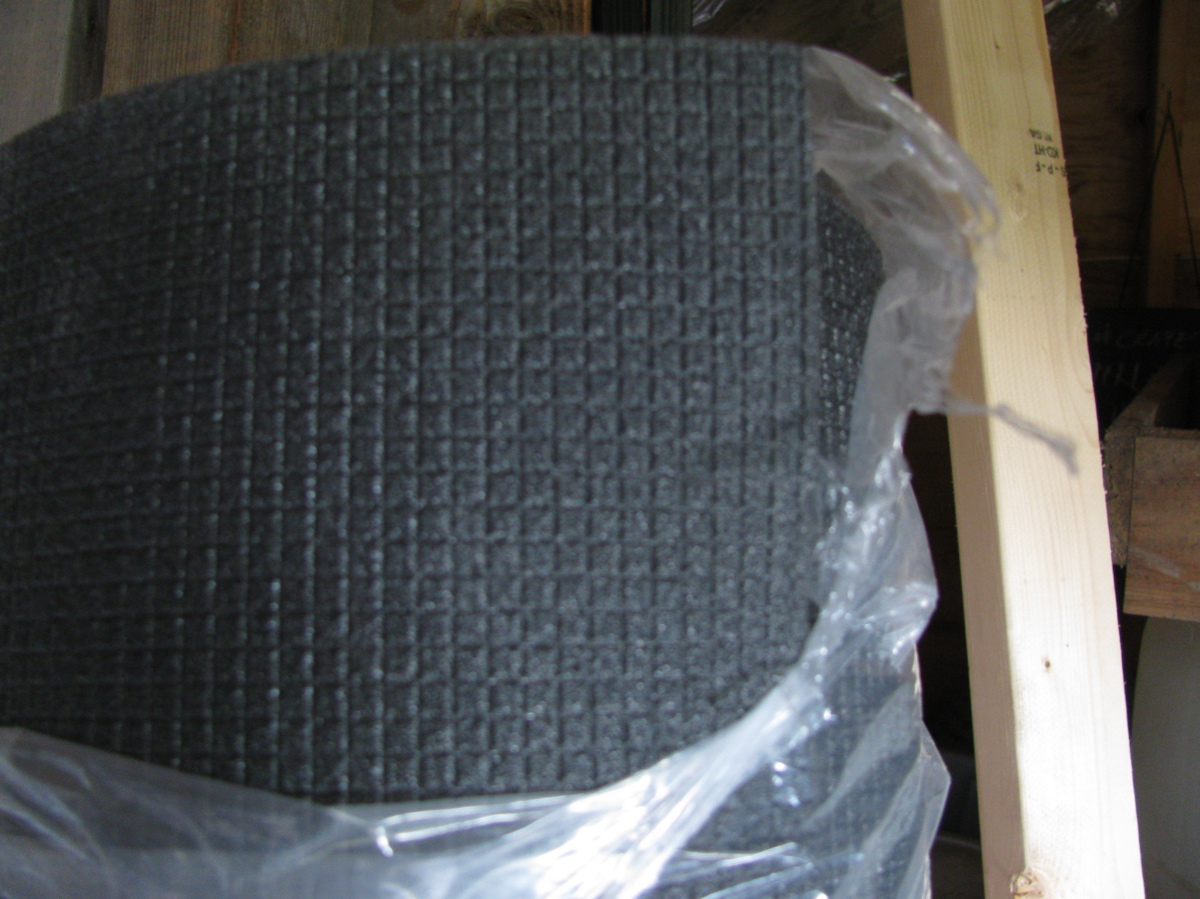
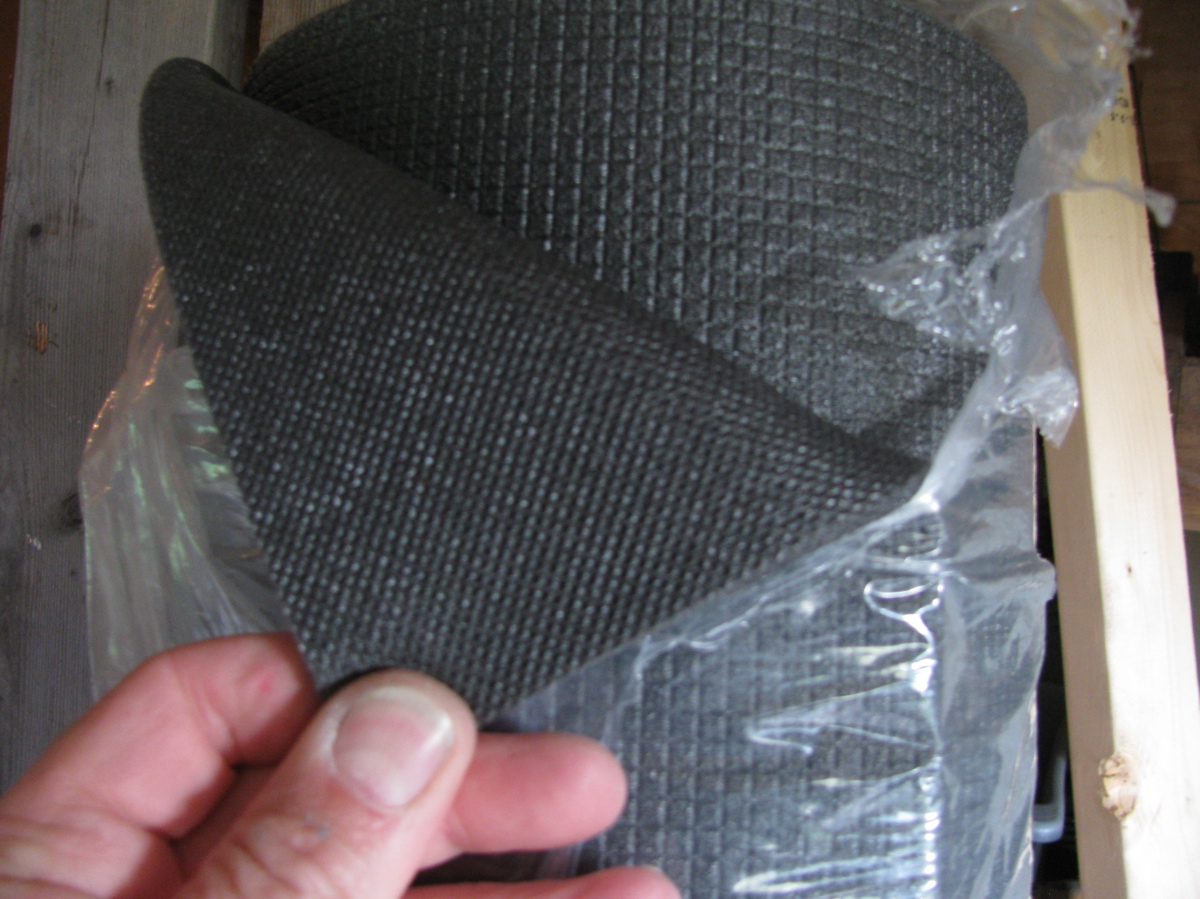
I’m planning on gluing in this stuff on the ceiling of the pop top. It is about 3/8″ thick polyethylene closed cell foam. I’m still at a loss whether I should cover it after install, and with what. One guy on the samba insulated with refletrix then covered with fleece. No pictures of that and I can’t imagine how that would look.

Vanagon pop top work – final coat of paint
Posted by albell in vanagon, vanagon mods on June 6, 2011
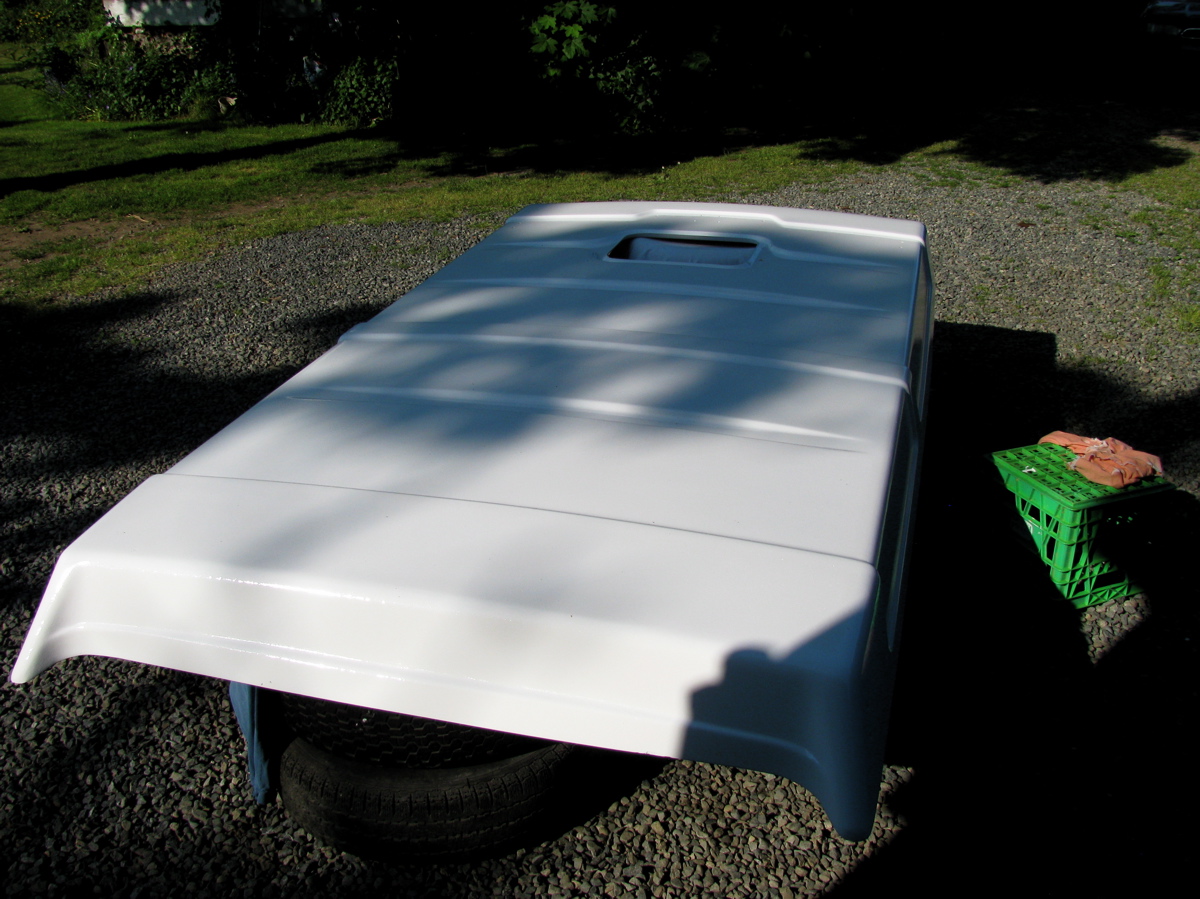
Scuffed up the first coat and put on the second, both the luggage rack and main top. The dust and bugs were out today, and painting white on white in the sun was difficult, almost got snow blindness.


And a close up of the surface

I’ll let the paint harden for a few days before I do anything else with the top (seals, decals, hardware).
Vanagon pop top work – first coat on top
Posted by albell in vanagon, vanagon mods on June 5, 2011
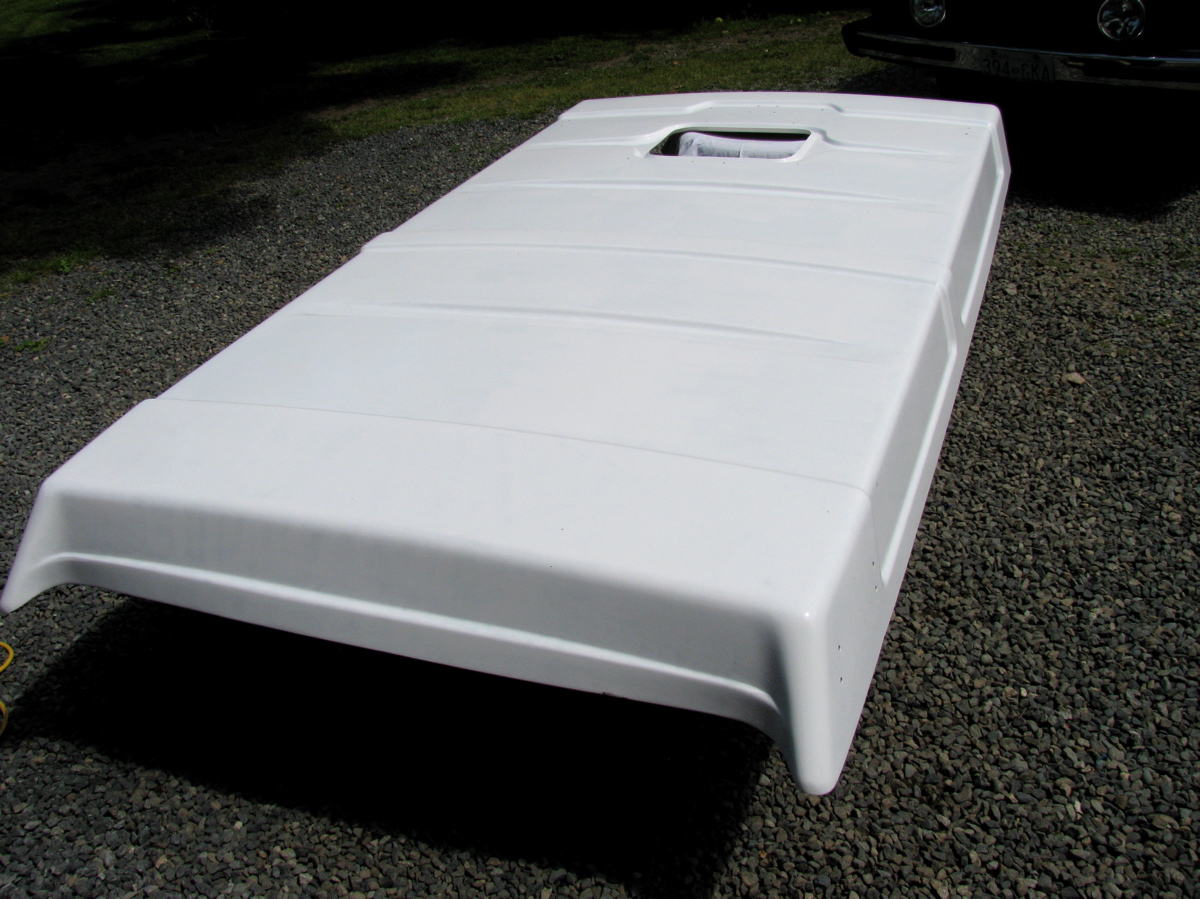
Sanded the epoxy filled holes and scrapes and put on a first coat. Used a small foam roller and a brush to get into the curves. The paint went on pretty nicely but it a second coat is needed.
Vanagon pop top work
Posted by albell in vanagon, vanagon mods on June 4, 2011
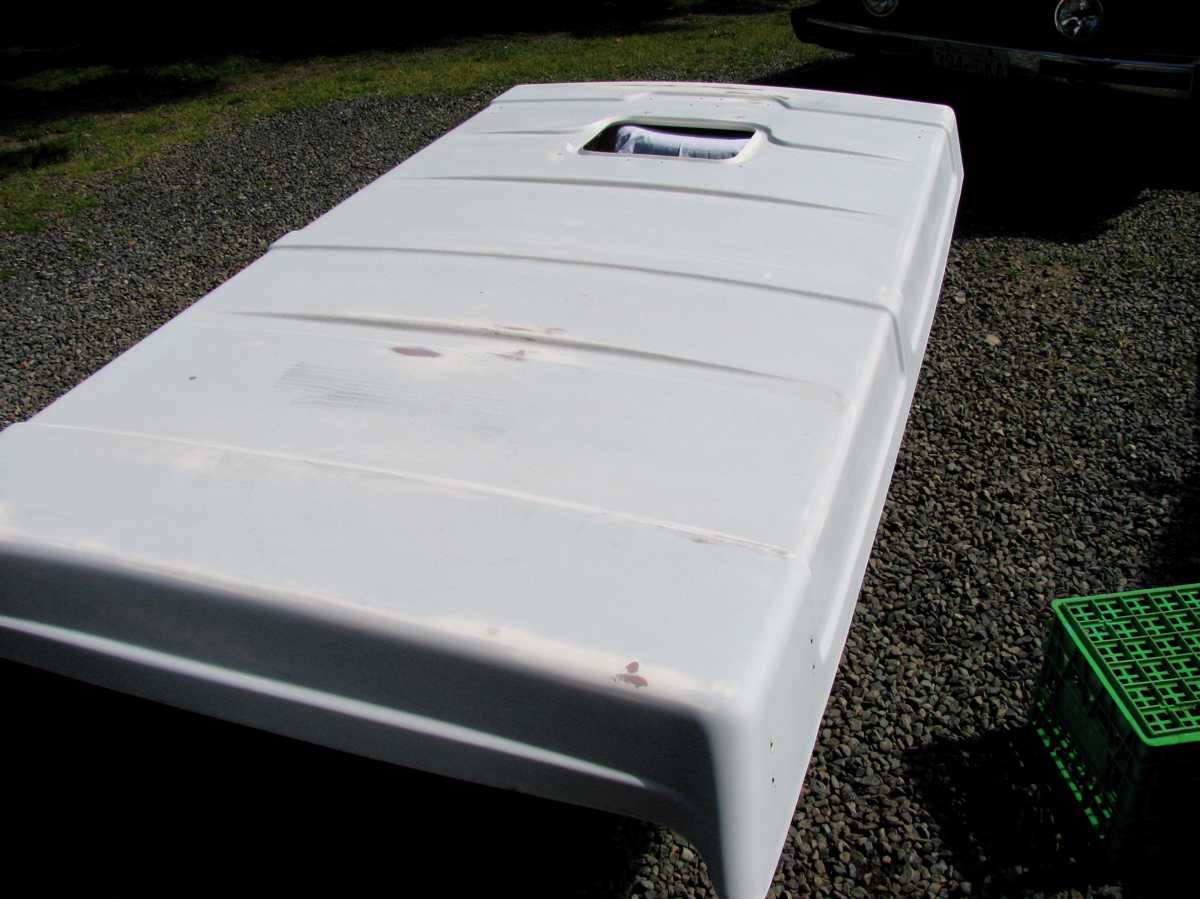
Finally the weather around here has warmed up and looks stable enough to pull the pop top out of the garage and get around to painting it. I power washed it last fall, and did a bit of scuff sanding. I have this notion to insulate the ceiling with some 3/8″ closed cell polyethylene foam so I set about taking the fuzz off the ceiling. I used an orbital sander, which worked well. Then I thought I’d try some paint stripper (had a little bit hanging around), and that worked really well. I’m not concerned about getting all of the tan paint off the ceiling, just the fuzz and around the edges.
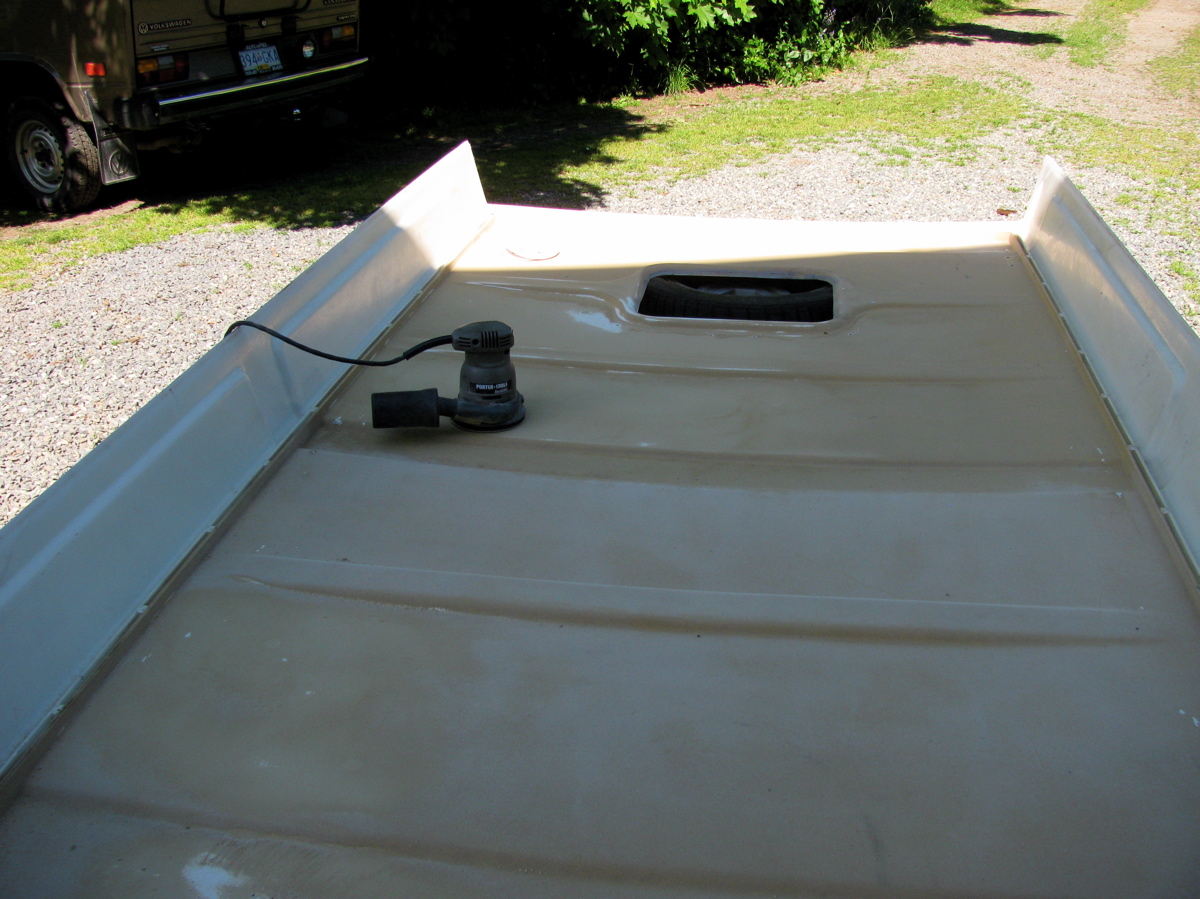

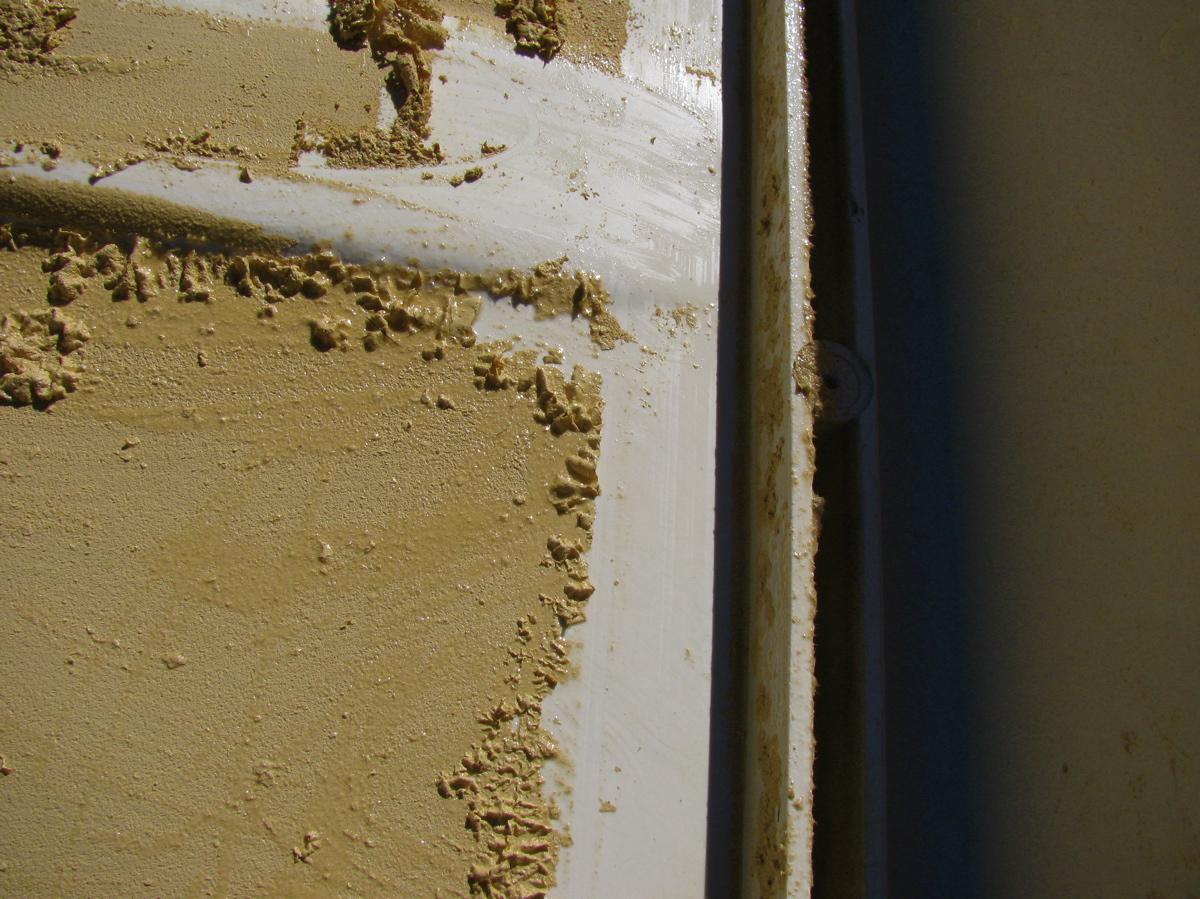
Then I used some thickened epoxy to fill some holes I had in the top. While the epoxy was curing I put a coat of paint on the luggage rack.


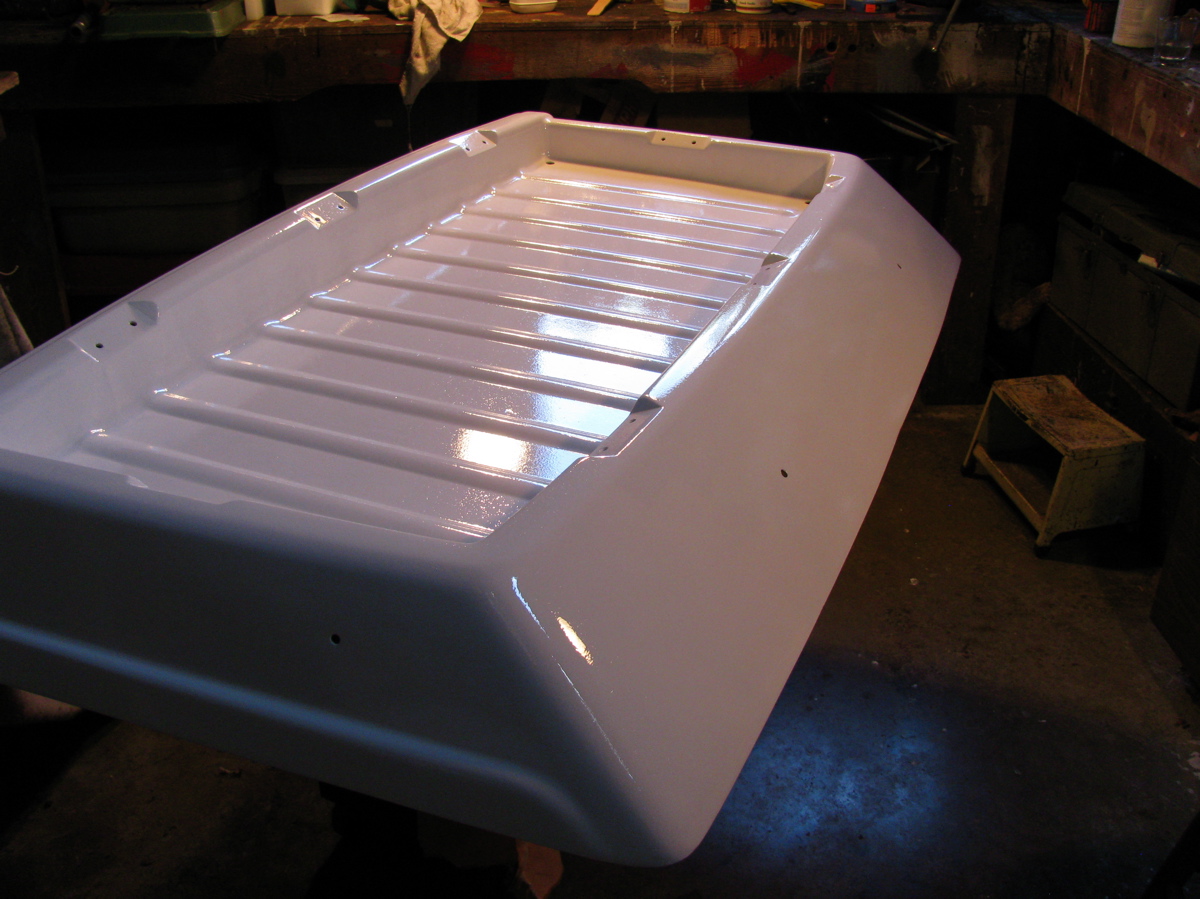
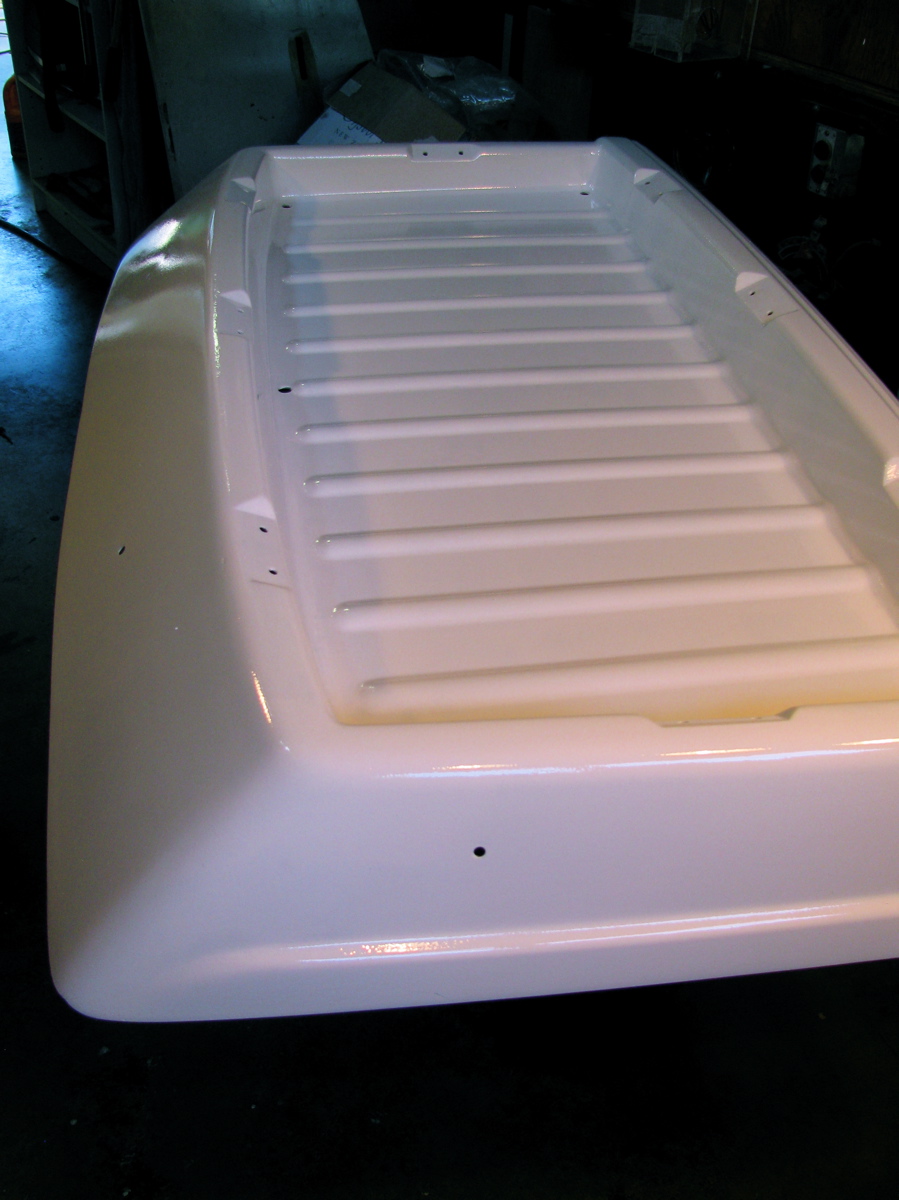
It’s not a great job and it does need a second coat, but it sure looks much better than it did on the old ’82 westy. Tomorrow I’ll get another coat on it and do the pop top.
Vanagon syncro aux. back up light installed
Posted by albell in syncro, vanagon, vanagon mods on June 1, 2011
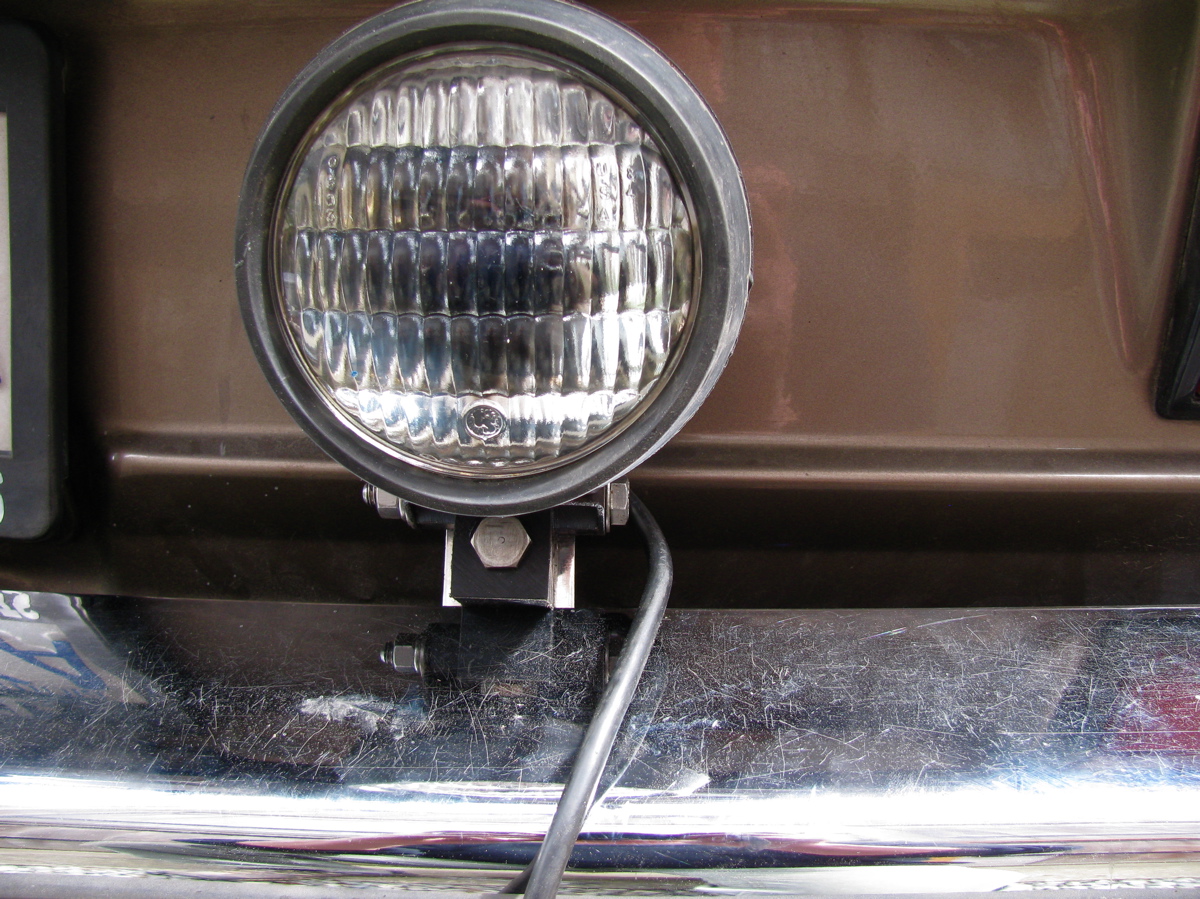
I gave up on making an adaptor for the chrome light housing and decided instead to make one for a rubber housing, here it is.


Made of black polyethylene, kinda clunky looking. Jony Ive does not live here. It does seem to work though.

I led the power and ground wires through one of the holes in the rear valence, up over and well away from the muffler, and through a grommeted hole in the heat shield. I do wish there was a better route. I used one of those black plastic electrical box to house the relay.
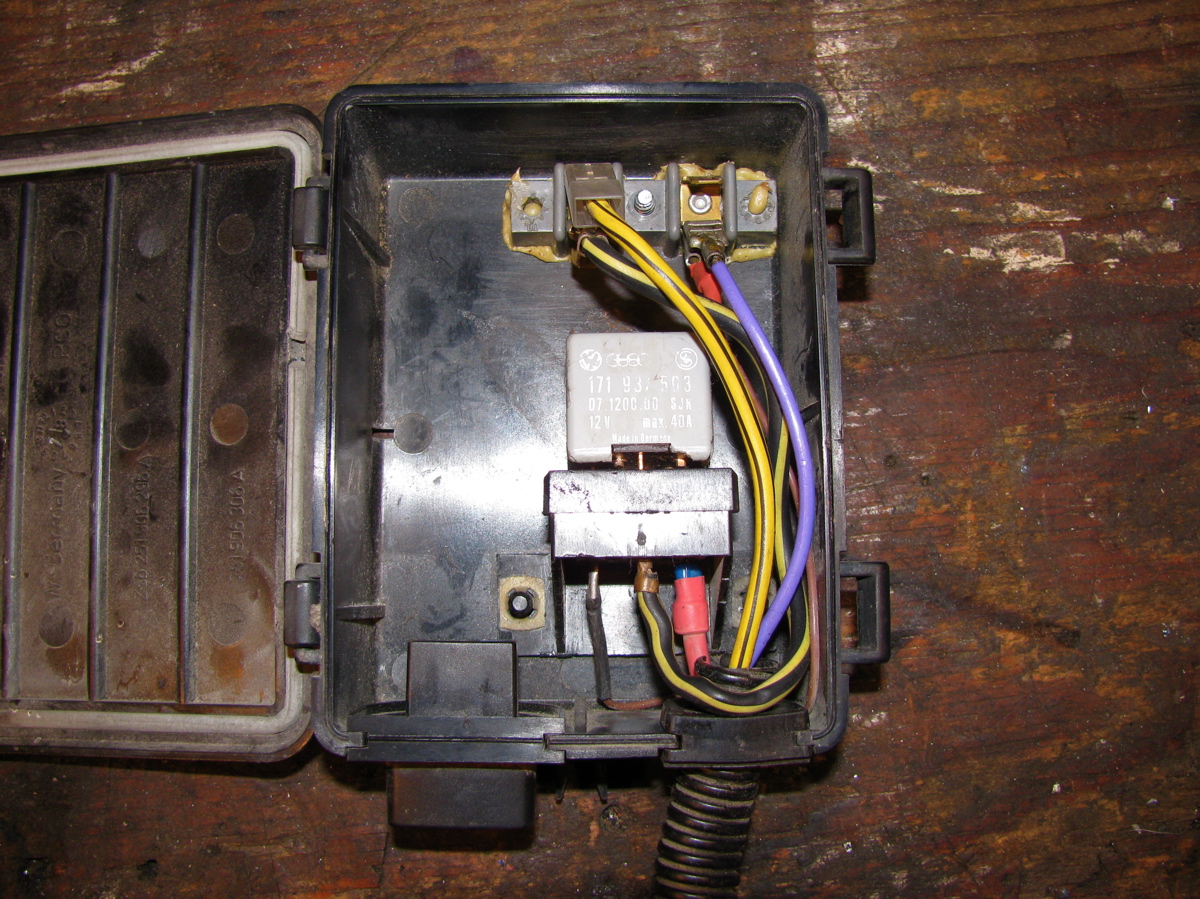
I used wire I had lying around, not conforming very well to any colour code. I did use a little bus, power is on the right, and ground on the left. I mounted the box onto the plastic “bulkhead” that the air intake snorkel connects to on the right hand side of the engine compartment. I tapped into the black/blue power wire feeding the right hand side back up light to provide the signal power for the relay.

I also put in an old back up beeper I had on my ’82 westy. I was a good thing to have when my son was young and I got used to it, so now it’s on the syncro, just lying in front of right hand side tail lights.
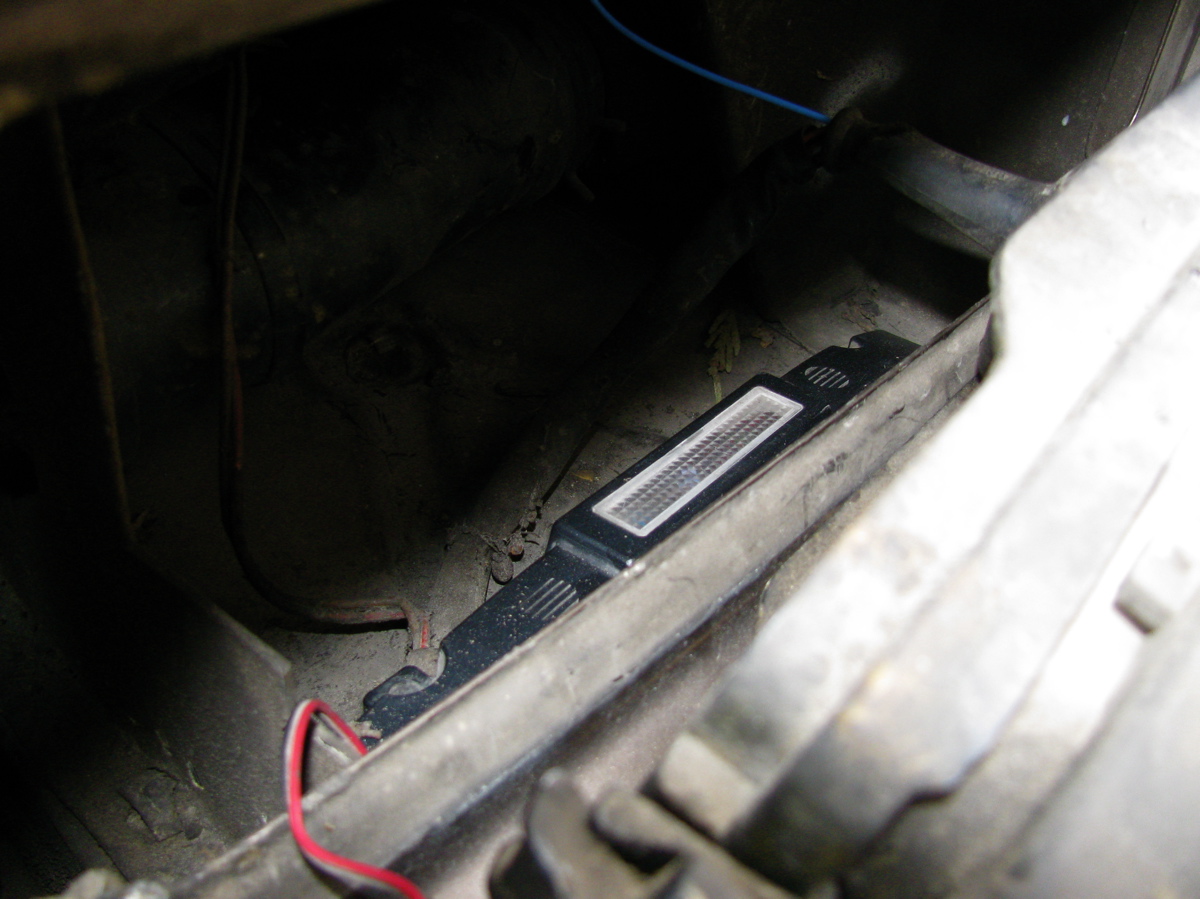
I took power from the alternator stud – NOTE – I have not installed in inline fuse on this feed line yet, one DOES need to be installed. I led a ground to one of the alternator housing screws.

Gack, I need to buy black cable ties. Tested, and works (beeper too).

Vanagon syncro aux. back up light bracket
Posted by albell in syncro, vanagon, vanagon mods on May 31, 2011
I want to put an auxiliary back up light on my ’86 syncro but never have found an attachment method I liked. That is until Brett H. told me about how he did it, so all credit for this bracket idea goes to him. I used scrap stainless stock I had in the workshop (hence the double holes shown) and I have an old bumper that I could do trial fittings on. Pretty simple bracket, easy bends.
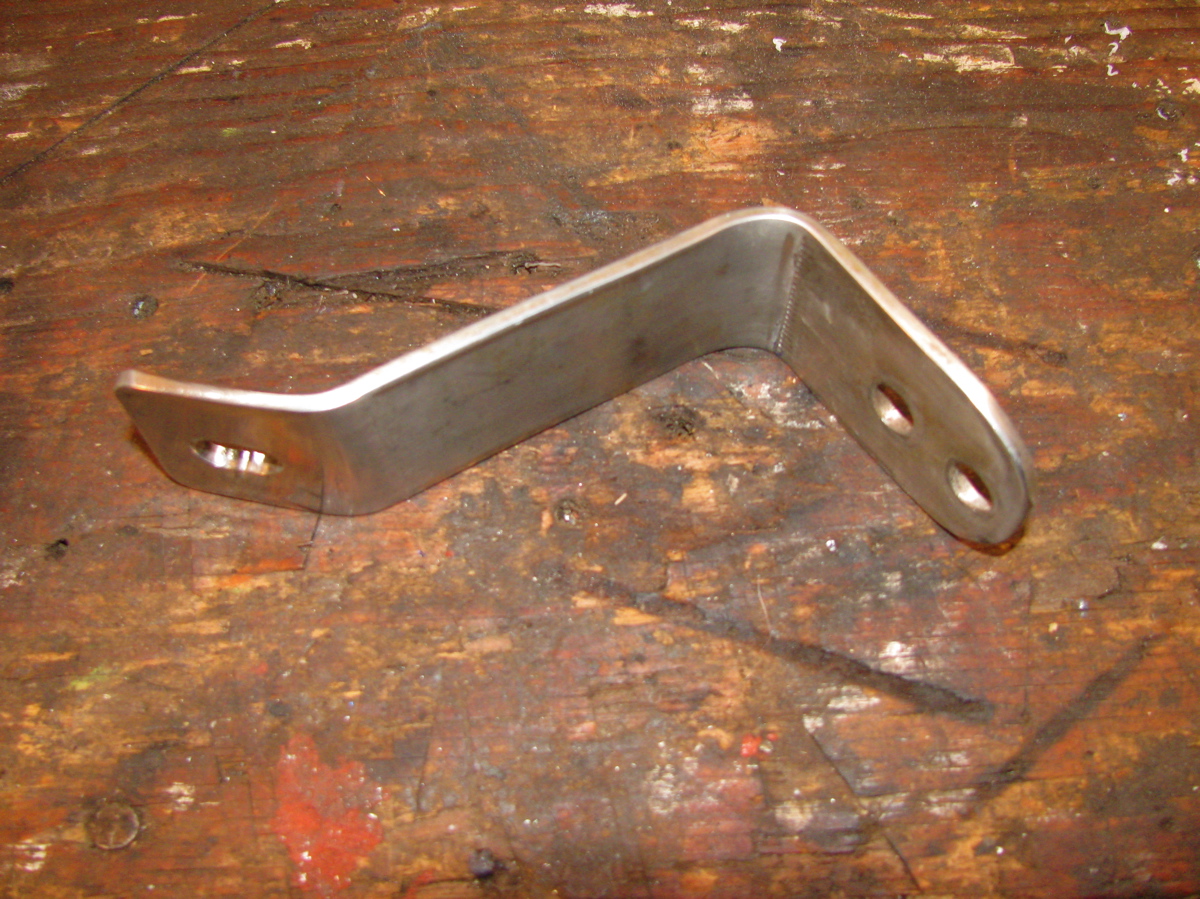
It bolts to the bumper using one of the holes that the plastic clips on the rubber “rub strip” attaches to.

The lamp housing is one of a set I found at the Salvation Army some years ago. I had one on the front of my old ’82 westy, fitted with a 250 W aircraft lamp. The test fitting on the old bumper looked ok.

It is possible to attach the bracket while the bumper is on the van.
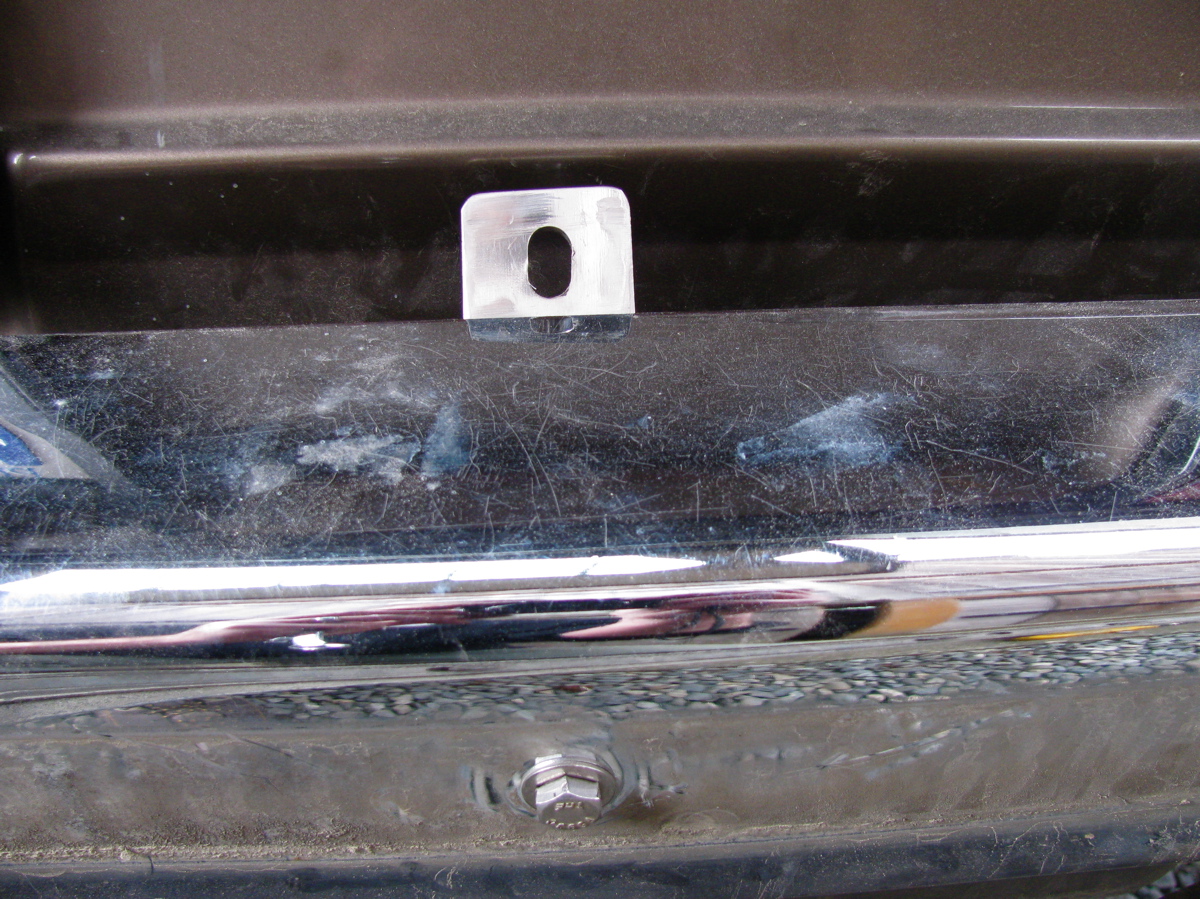
I enlarged the hole that the plastic clip was set into so that the rub strip would fit over the bolt.
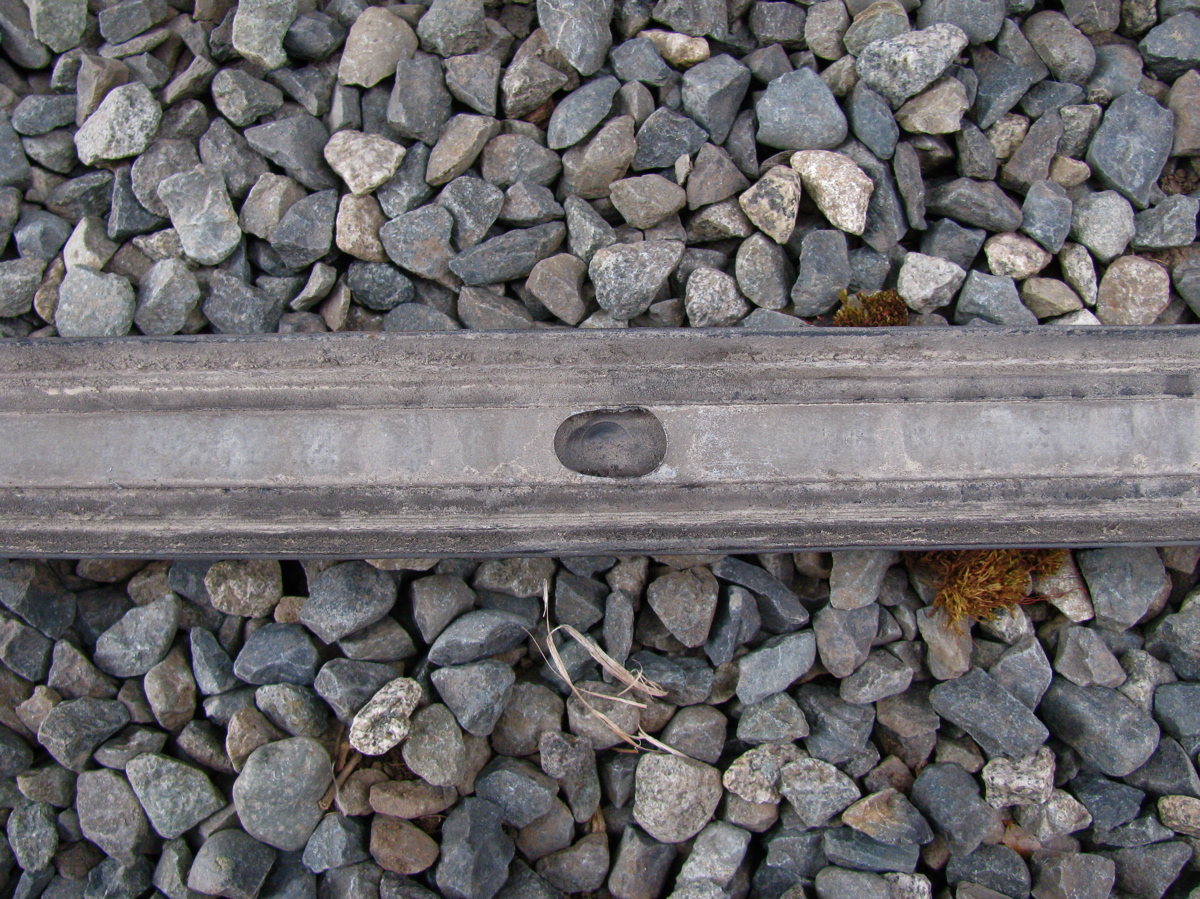
The rub strip fits back on quite well, I was lucky with the hole enlarging, it seems to grab the bolt head.

Attaching the lamp to the bracket showed that I need to tweak things a bit, light is pointing slightly down. I’ll make an adapter tomorrow and show the electrical part of the install. Oh, in the pic above, the bracket is to the right of the license plate (seen on the left).
Vanagon – check valve on windscreen washer line
Posted by albell in vanagon, vanagon mods on May 22, 2011
Boy oh boy, this is heady stuff.
Yeah, my son thinks I am a doofus too.
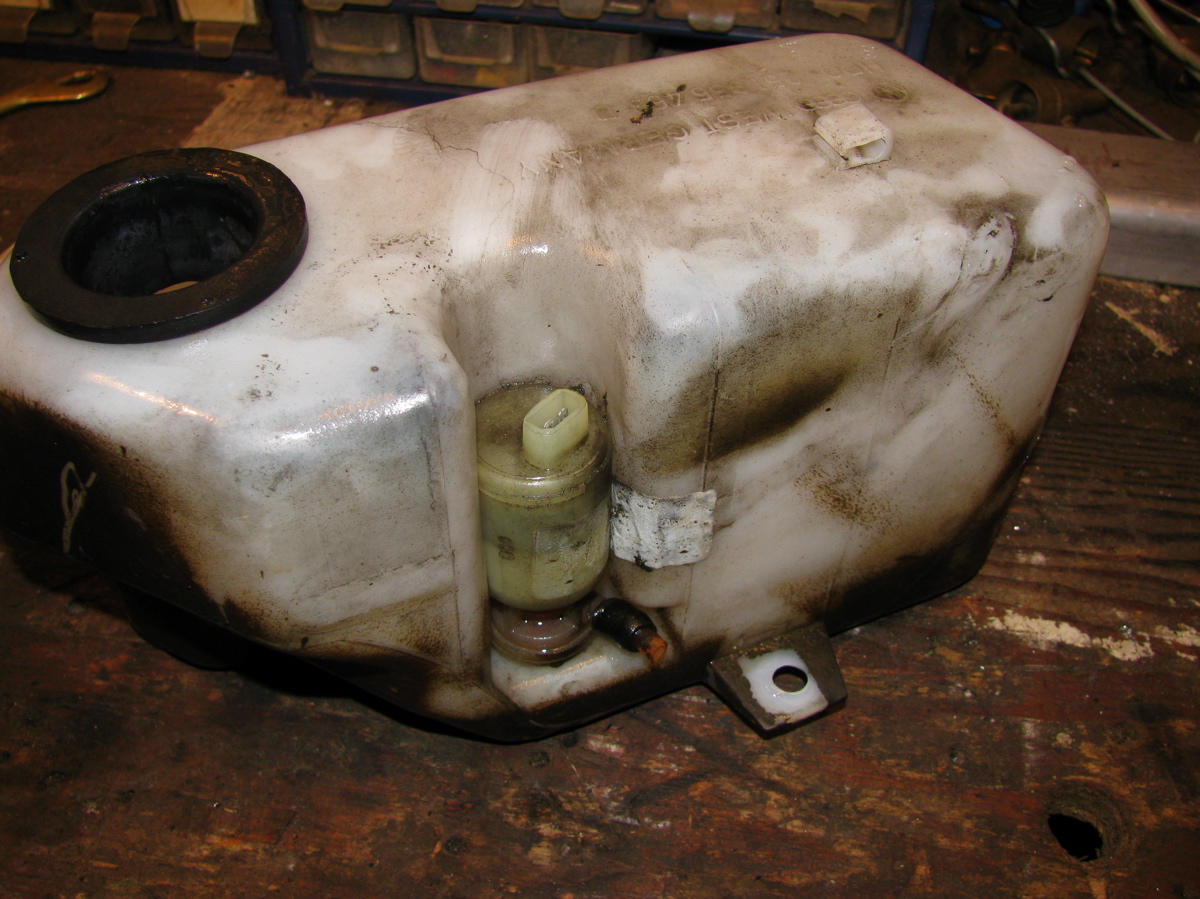
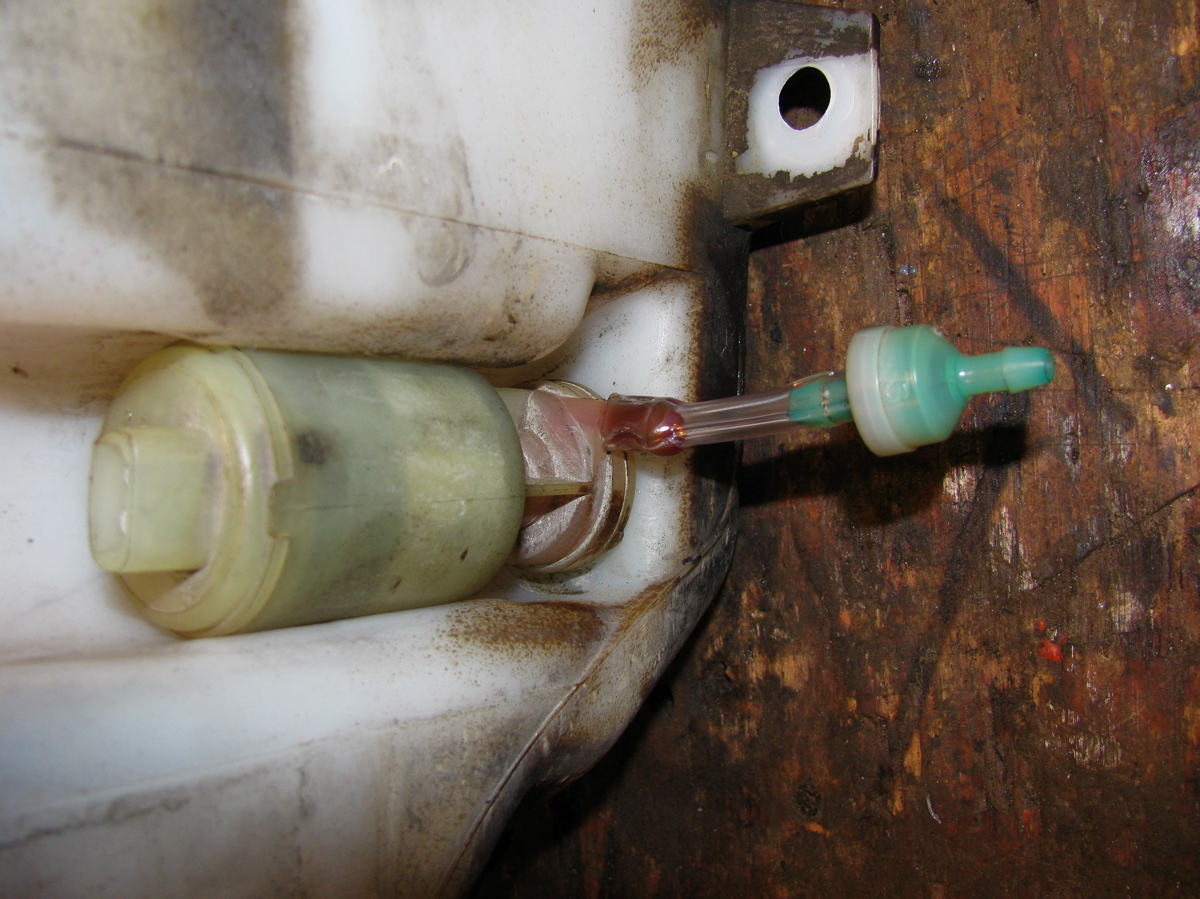
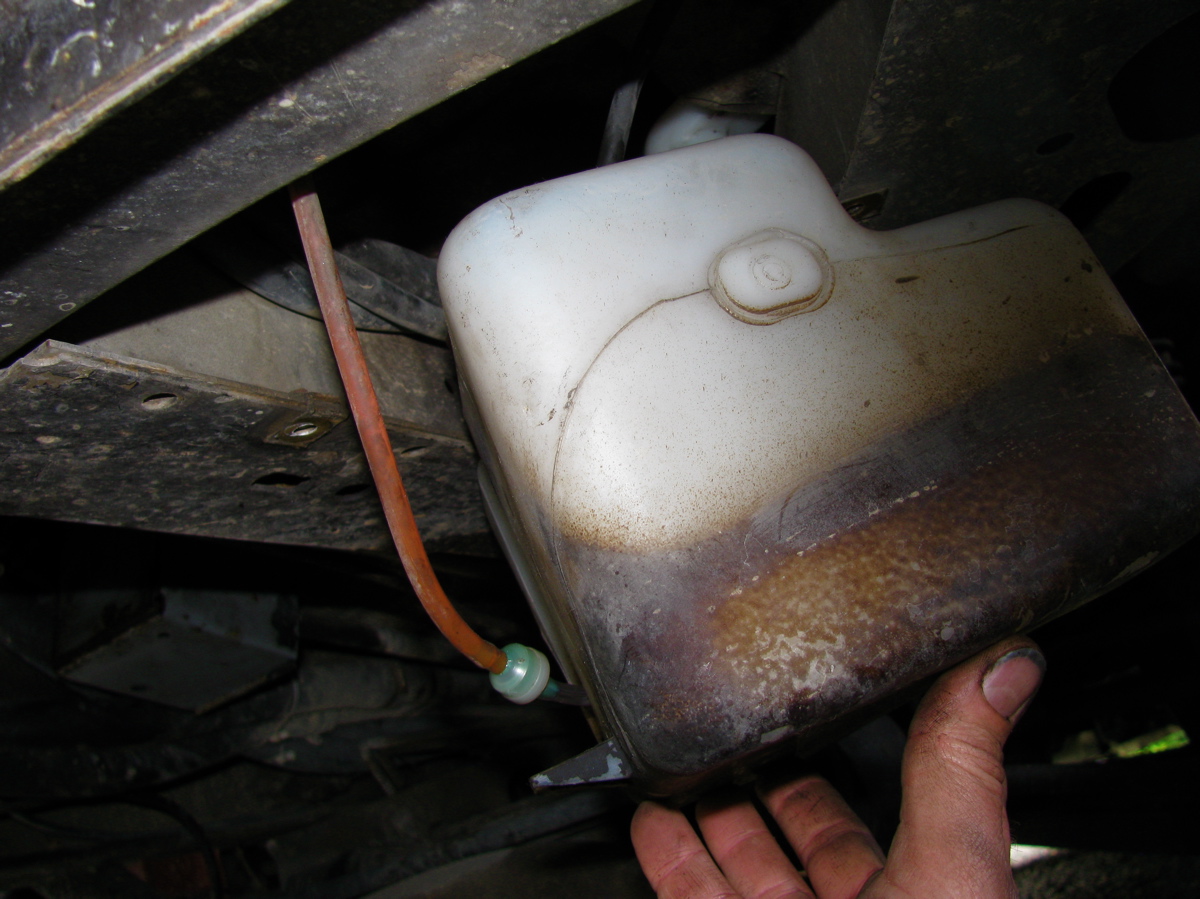
Ok, I didn’t get enough of squirming on my back today when I was working on the shift linkage, I had to drop the windscreen washer reservoir and add a little check valve (found at wreckers on a Vanagon years ago).
Car audio ground loop whine
Posted by albell in vanagon, vanagon mods on April 17, 2011
For the last few months I have been trying to fix a whine coming through the car audio system when the engine is running. It came on all of a sudden, and only on the front speakers which are powered by separate amp and go through crossovers. The noise is present no matter what input chosen: tuner, CD, aux, USB.
What I have tried :
-redid all grounds, signal, and power leads to front speakers, crossovers, and amp
-ran new power and ground wires to head unit
-swapped in another amp
– tried alternate pair of rca jacked leads from head unit to amp, straight run, not crossing power lines
– new antenna and lead to head unit (old one was really bad at head unit)
– if I grounded amp directly to battery post instead of body, noise was louder. BTW, the amp ground wires are a short run twisted trio.
-pulled alternator brush pack and cleaned connections
-pulled the noise reducing capacitors on alternator and cleaned connections
-removed the diagnostic plug (TDC sensor lead and plug) from alternator
-pulled distributor cap and cleaned, above and below black plastic shield
-cleaned up edge of rotor
-cleaned all the grounding points (pivot bolt area etc) on alt. body
I did notice that the whine would disappear if the radio antenna was not connected. I talked to a few people and most told me to install a ground loop isolator on the low level lines from head unit to amp. Yesterday I talked to an ex-car audio installer and he advised to try grounding the RCA jack shields. That advice and the information here, convinced me to try it, and miracle of miracles, IT WORKED! Not a hint of noise or whine. To say I’m chuffed would be an understatement.
The head unit is a Pioneer DEH-P5000UB.

 shooftie