Posts Tagged vanagon
At the wreckers
Went to Malahat Auto Wreckers thinking they had a good condition caliper (they said so on their website), but no, they didn’t. I did get a couple of muffler hangers that were in good shape and an antenna (I tend to bend them when I go on old logging roads). Also picked up a delay dim interior for Brett – I’ll email you.
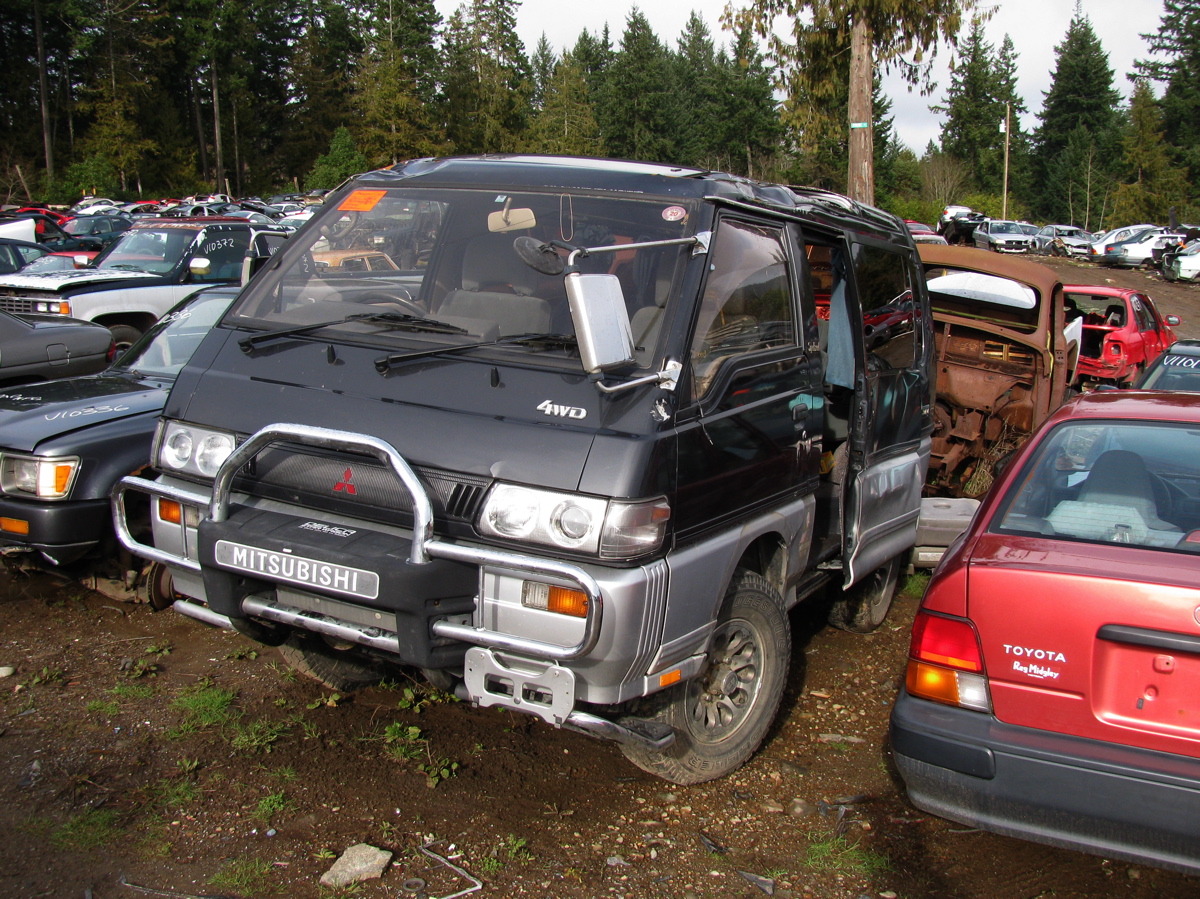
While there I took a couple of picks of some wrecked JDM imports. There are more of them than there are Vanagons. One Vanagon of note is a white 86/87 panel van. Black bumper still in decent shape.


Bleeding failure
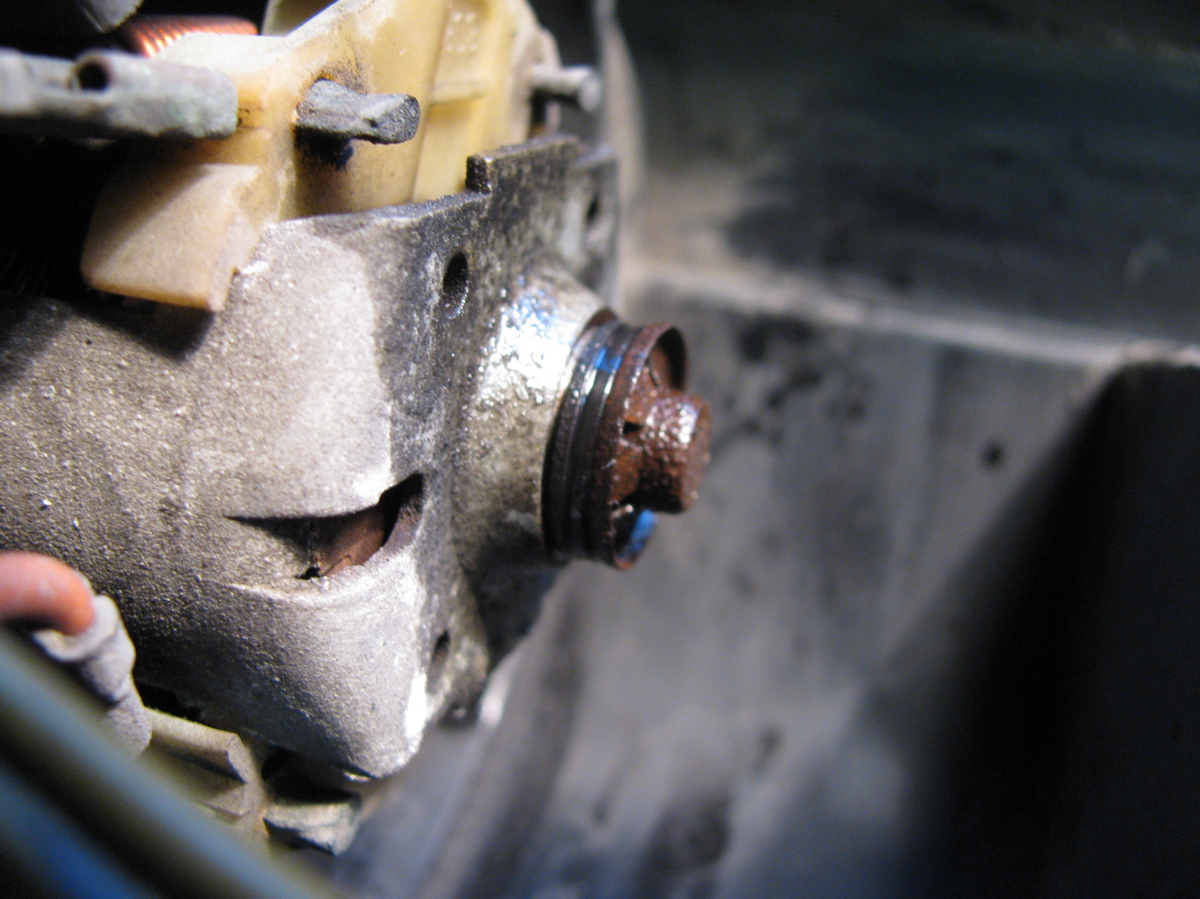
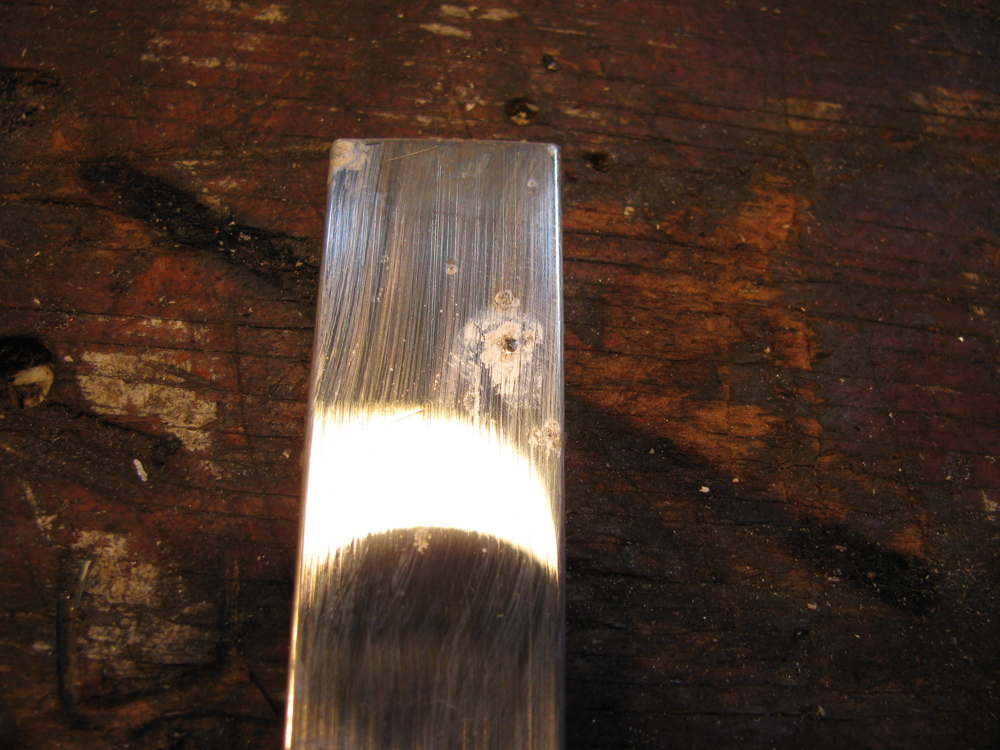
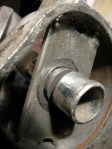
After refurbishing the pedal assembly I had to bleed the brakes. The rears went ok, but I broke the bleeder nipples from both front calipers. I swear I didn’t wrench hard, was a short wrench and the buggers sheared of easily. Here is pic of the front right, stub of bleeder gnarled a bit as I had a go with vice grips.

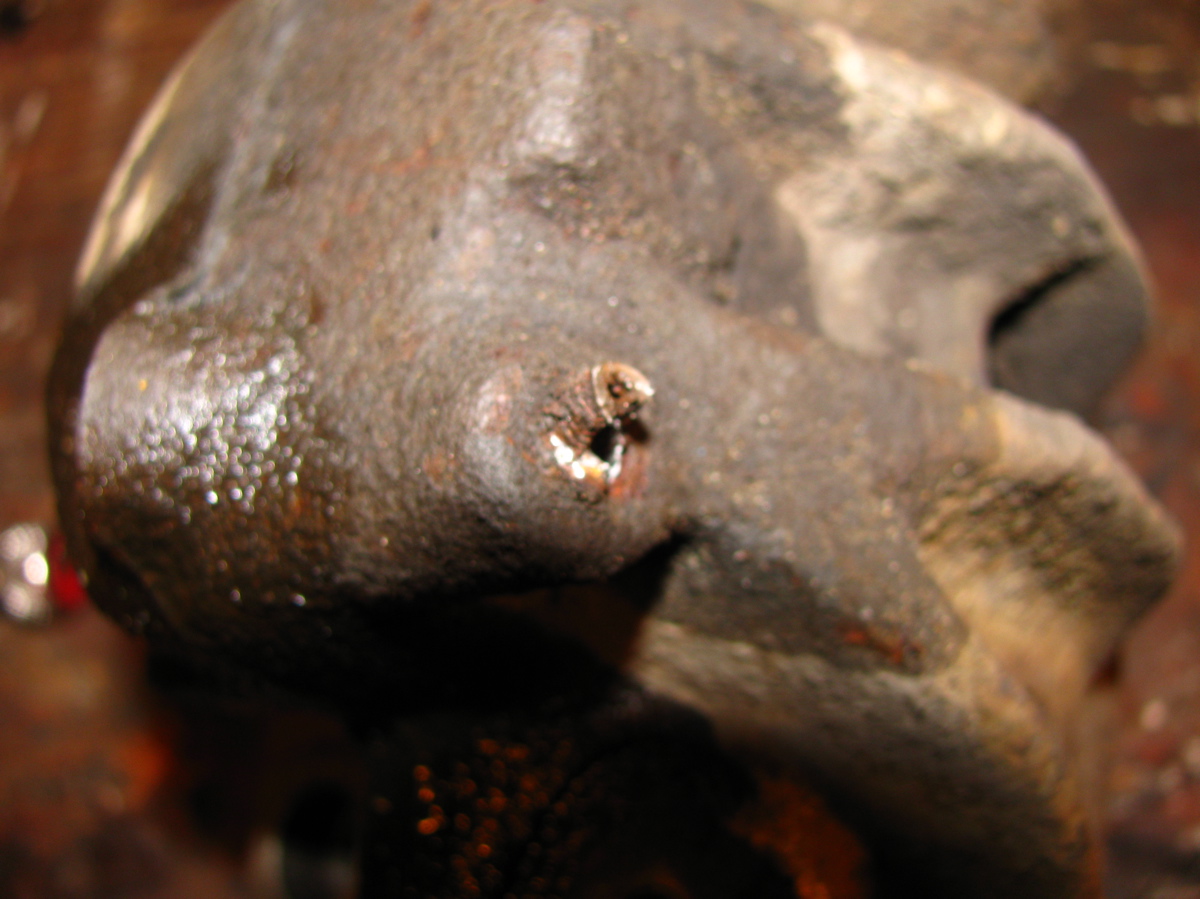
I tried spiral type bolt extractor but no luck. I then started to drill, carefully, not full diameter which is 7 mm, and not full depth. I was worried about damaging threads and also the conical base of the hole that forms the seal with the conical point of the bleeder. I then hit it with lots of heat, hoping the shell of the bleeder would separate from the body. No such luck and I got more frustrated and drilled wider and deeper.


I ran a tap down the hole and managed to get some threads restored, but in the end I drilled out too deep and damaged the conical seat at the base of the hole and a new bleeder screw would not seal. Double bugger. Tomorrow I am off to the local wreckers to get a couple of used calipers. What a pain.
Vanagon dash removal, pedal assembly repair, and heater core flush
Posted by albell in syncro, syncro specific repairs, vanagon on February 1, 2011
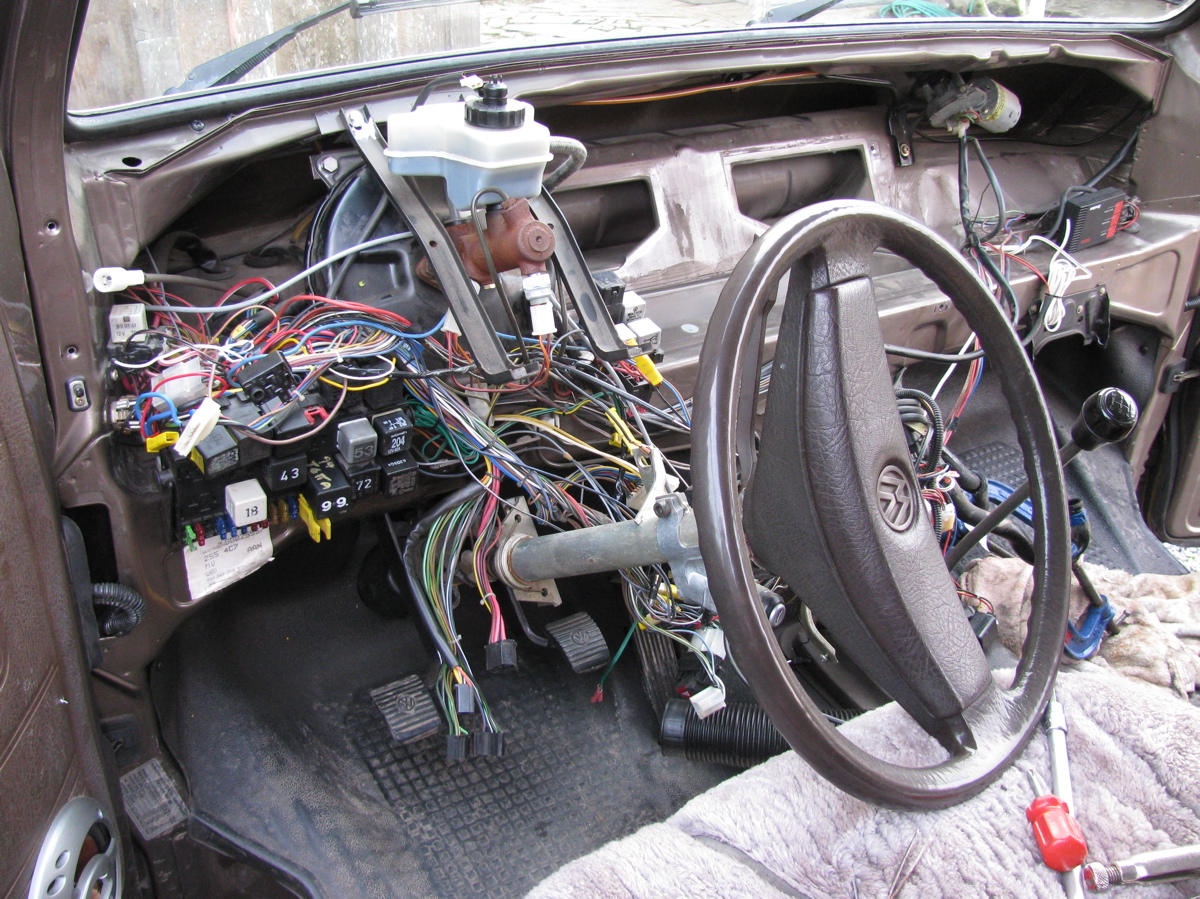
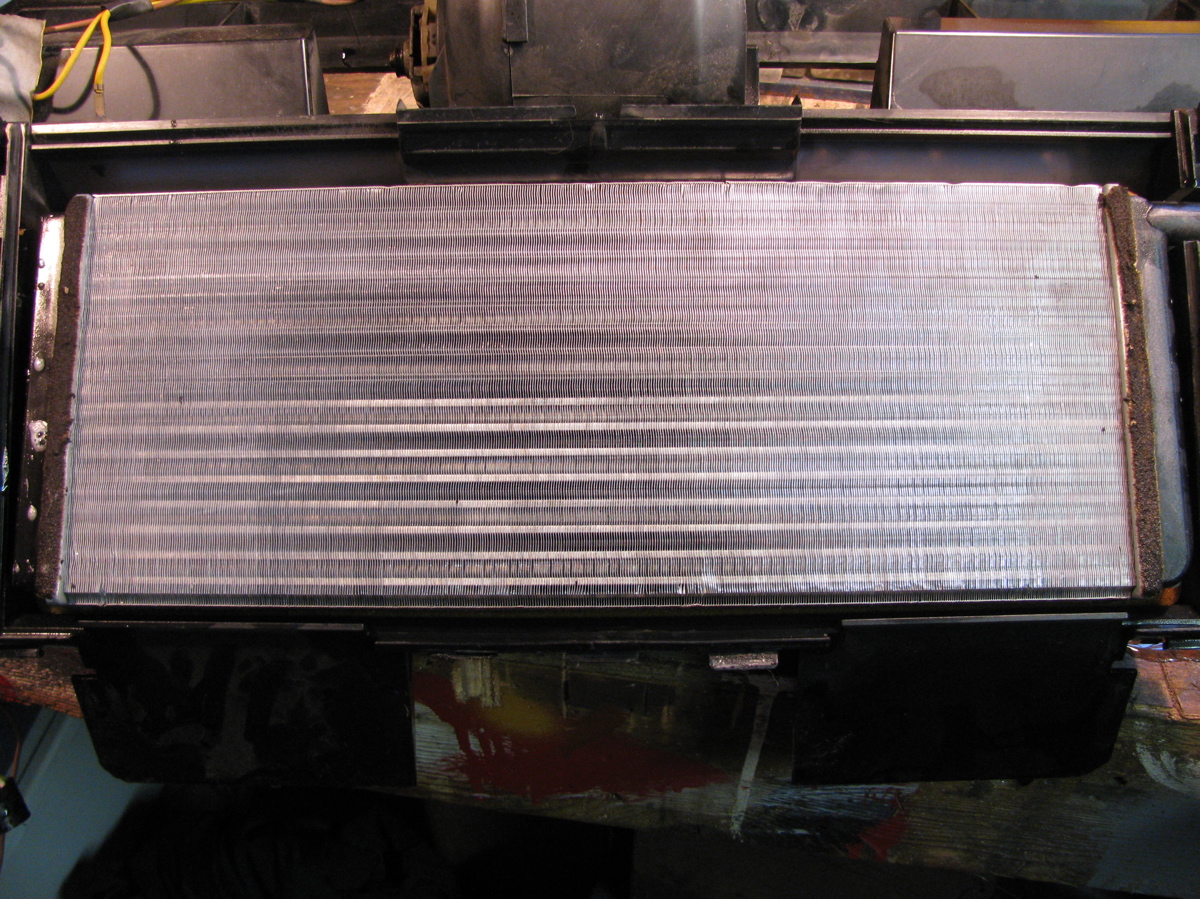
I’m just about finished with this project. I decided to pull the dash and have a look at both the heater core (I didn’t have as much front heat as I thought I should have) and to fix a squeaky clutch pedal. Removing the dash has been covered elsewhere, a good reference is on Ben’s Place website. Once the dash is out, the heater box can be removed (clamp off coolant lines). One tool that makes this possible is a phillips bit socket on a long extension. Some of the screws holding the heater box to the van can be rusted in tight, so take care. The heater box is then split along the seam, there are spring clips to remove first (and welded plastic tabs if box has not been split before). Then the heater core comes out and I cleaned it inside an out with a hydrofluoric acid based aluminium cleaner. I diluted the cleaner, it was a pretty strong stock solution. Flushing with the cleaner produced a lot of black sediment, I’m hoping that getting rid of that stuff will improve the heater’s performance.
Dash off and heater box out:
Core before cleaning:
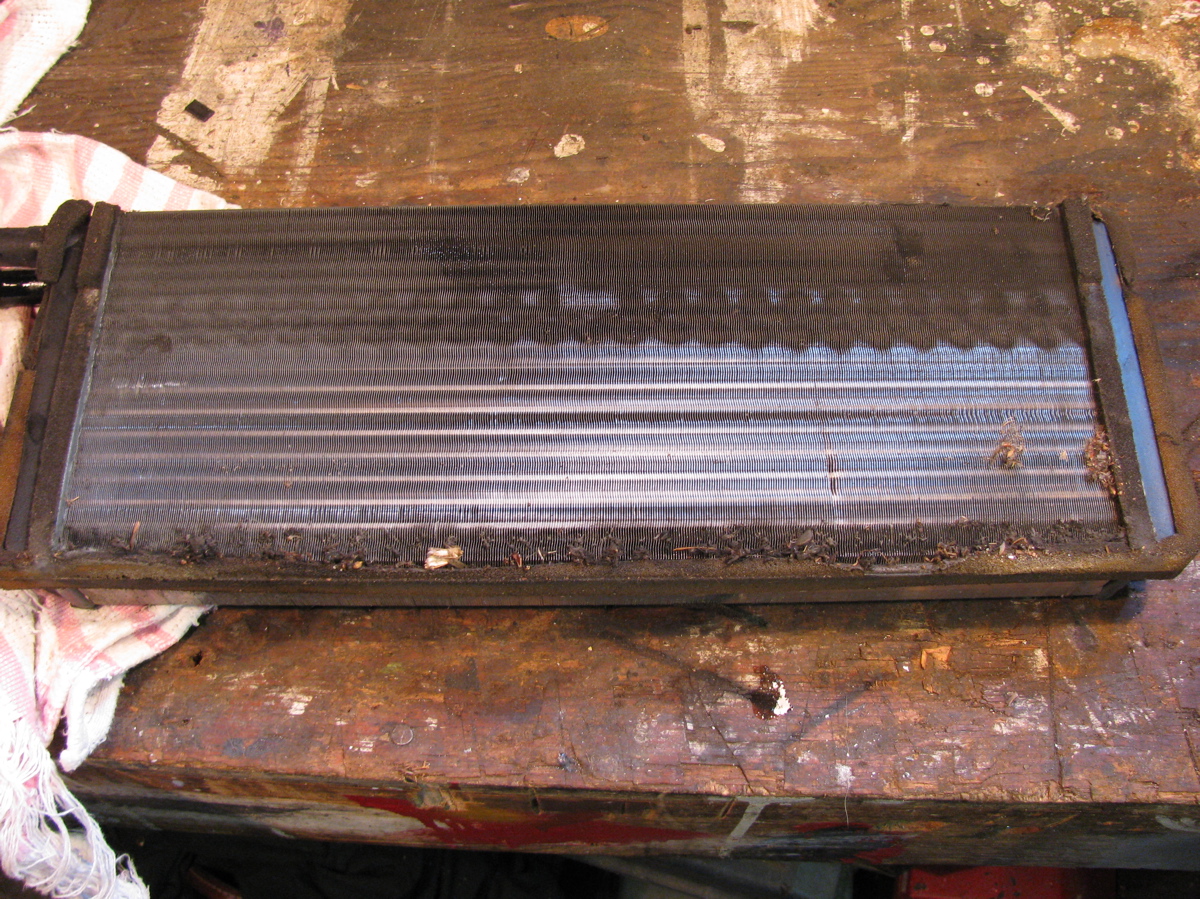
The other side:

And a shot of one side after cleaning and installed in box:
Also took the opportunity to squirt some oil on one end of the heater fan. It did feel easier to spin after even this casual oiling:
With the dash off its relatively easy to pull the pedal assembly out (after draining brake fluid etc). I have a spare assembly that I rebuilt and talked about in this post, but I decided rather than swap over the units I would rebuild this one. As in the other one, this assembly had a worn hole in clutch pedal and worn clevis pin.
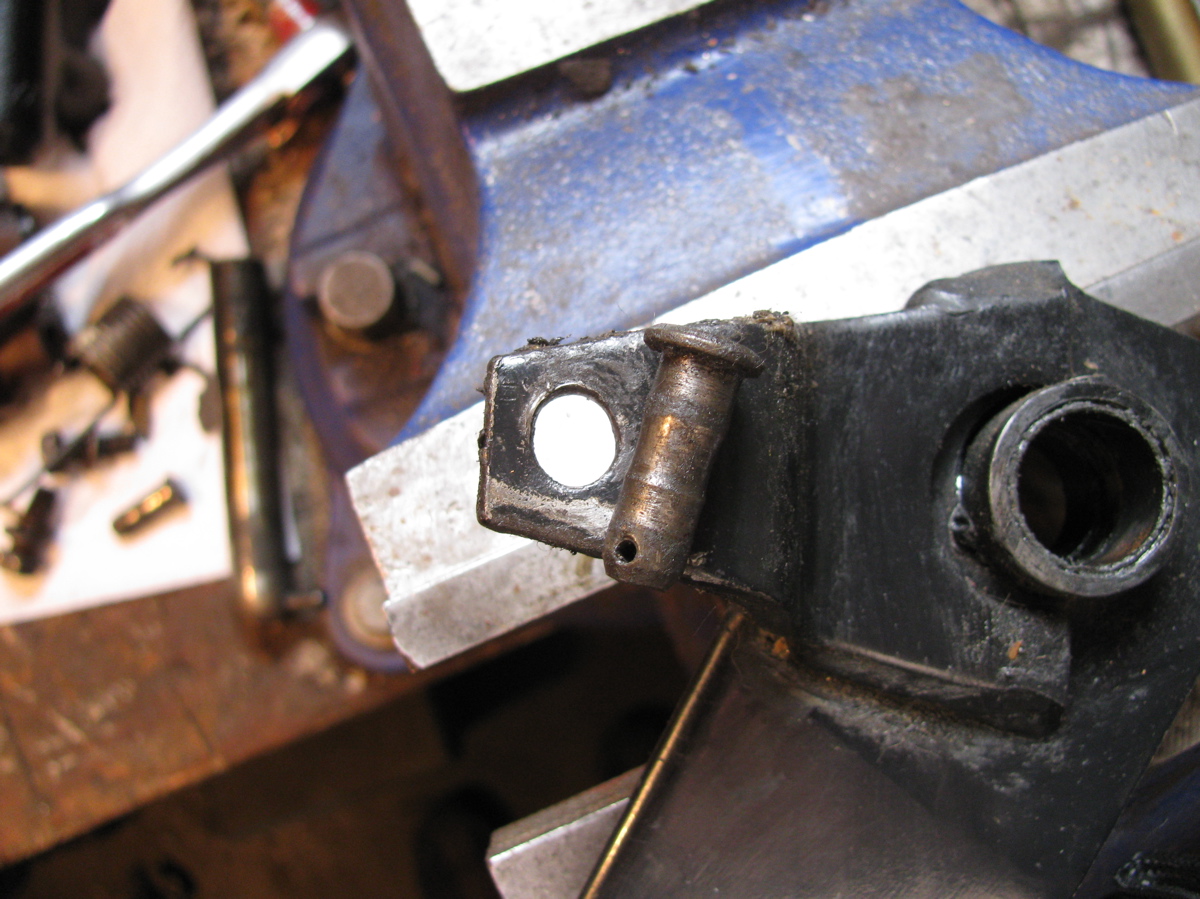
But also, the clutch rod was bent. Wonder how that happened? Maybe previous owner had replaced clutch master cylinder and didn’t insert pin correctly and the first time pedal was depressed it bent the rod before it popped into place?

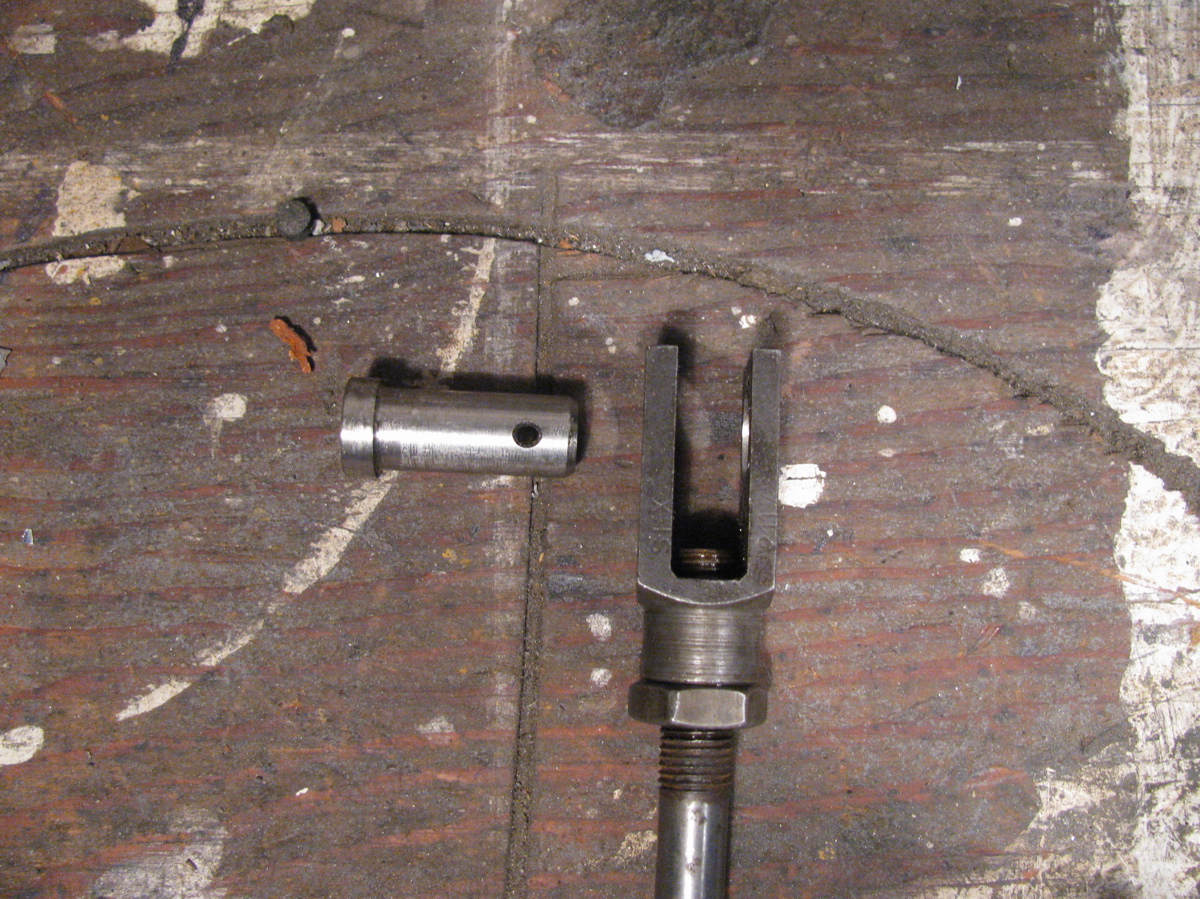
I took the chance and straightened it out, then I enlarged the hole in the clutch pedal and clevis to make it round rather than oval, and turned a new, oversized, (and roughly finished) pin.
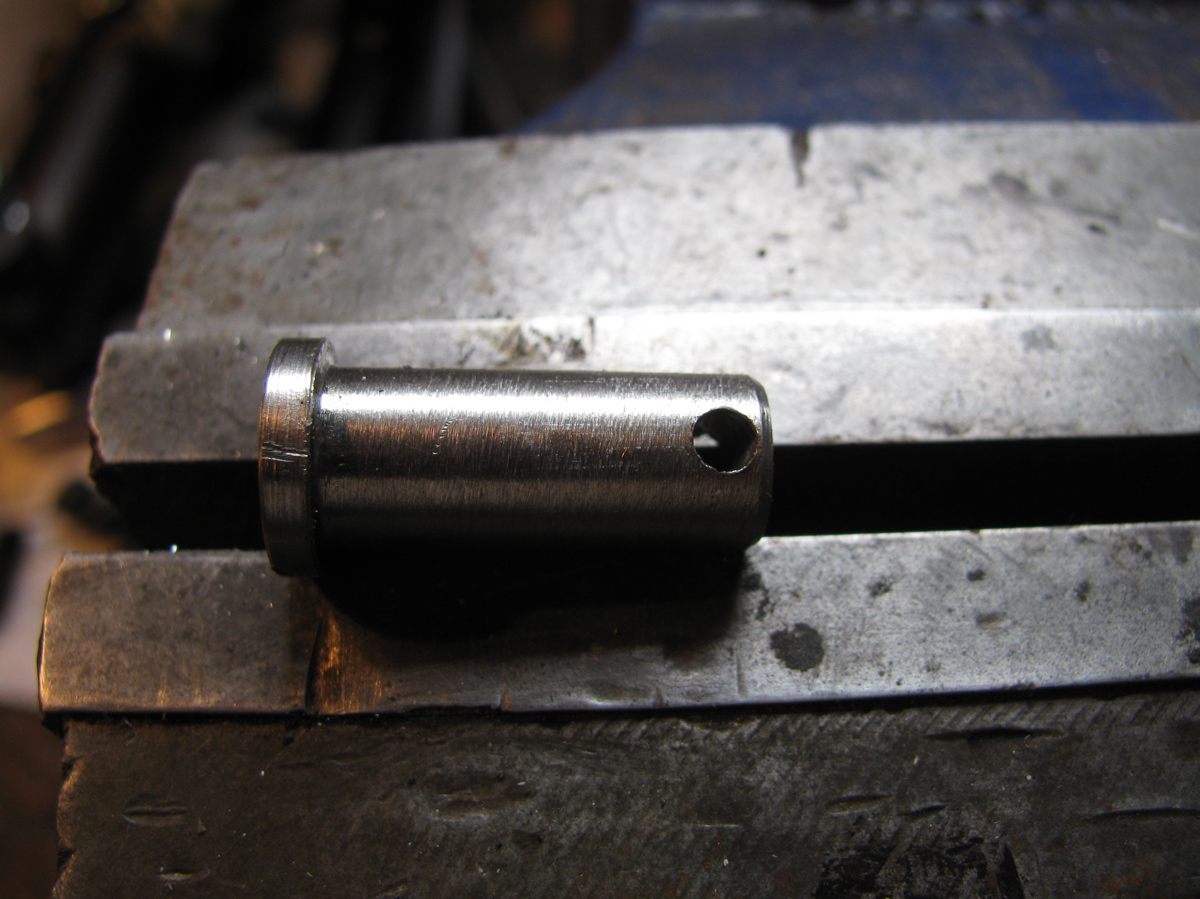
Cleaned everything up, greased, and reassembled.

The pedal feels a whole lot better. Now the chore of putting it all back into the van. Nothing special to report here except to note that it is easier to reattach the clutch line to the clutch master cylinder if the mc is disconnected from the pedal bracket. Oh, and a heat gun is needed to soften the plastic vacuum line to the brake booster to get it off, and to put it back on. The dash is back in place and tomorrow I’ll be reconnecting the electrics and flushing the hydraulics.
Vanagon window regulator repair
The window on the driver’s side door on my ’86 Syncro came adrift from the winder mechanism yesterday. I wasn’t really surprised, it had been a bit wonky ever since I got the van. Today I took the door panel off and set about repairing the window. I didn’t take pics of the disassembly, but I took a couple of pics of reassembly to make up.
First, a diagram of the scene:

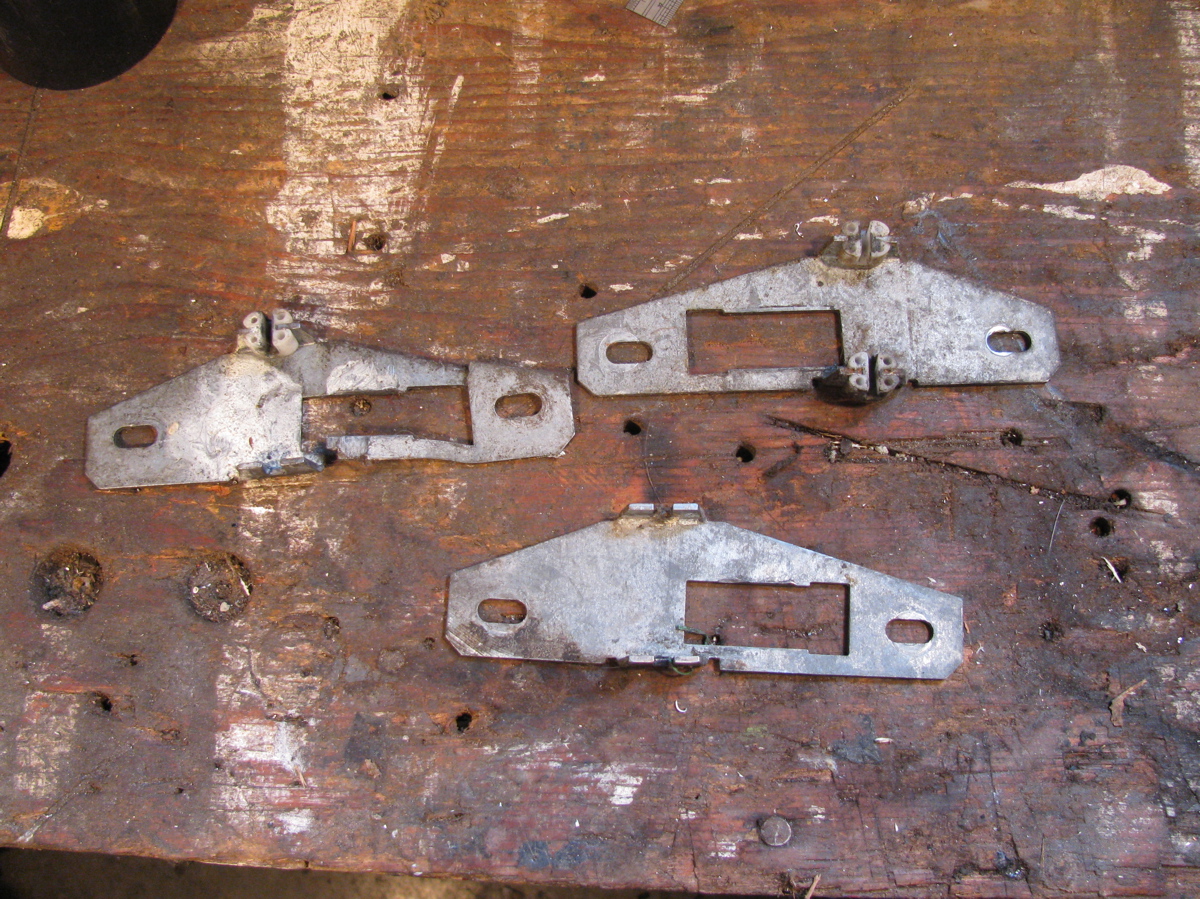
The regulator comes out with a bit of a struggle, but once out I took it to the bench where it was obvious why the window mechanism had failed. The picture shows the broken part (on the left, parts placed together), plus a couple of spares from my ’82 van. Notice that this piece (as is the winder assembly) is “handed”, ie different for each side.
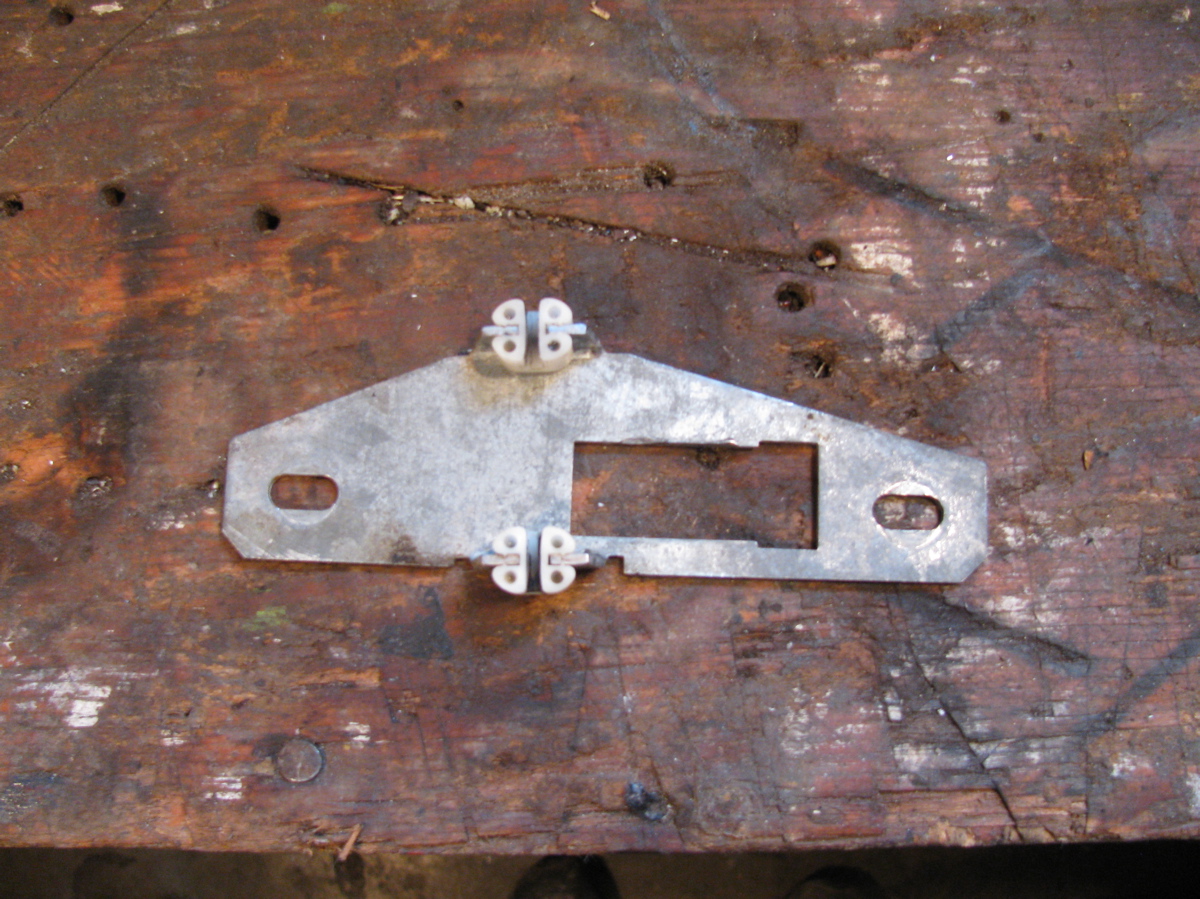
The replacement part, with plastic guides in place:
Another problem was a missing plastic guide that sits in that rectangular hole in the above part. The plastic bit is fixed to the moving part of the winder mechanism. So I set about getting a guide from my spare assembly:

Maybe that metal part just twists off?:

Oops, I guess not:
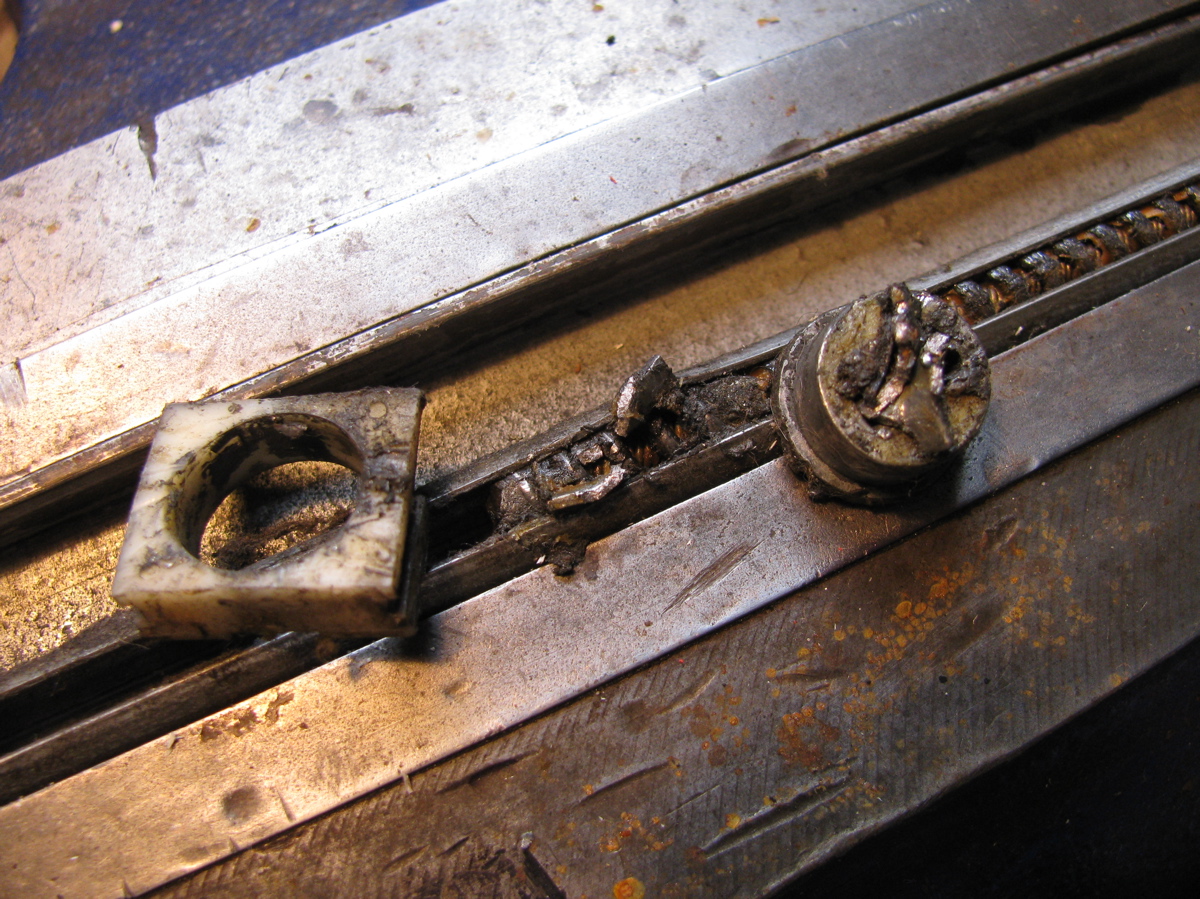
But at least I have the plastic guide. Breaking the assembly showed that it is held together by 2 tabs on the “winding screw” projecting through the metal part, trapping the the plastic guide, and the tabs are peened over to secure. So he I go taking the same part off the regulator that I want to repair:
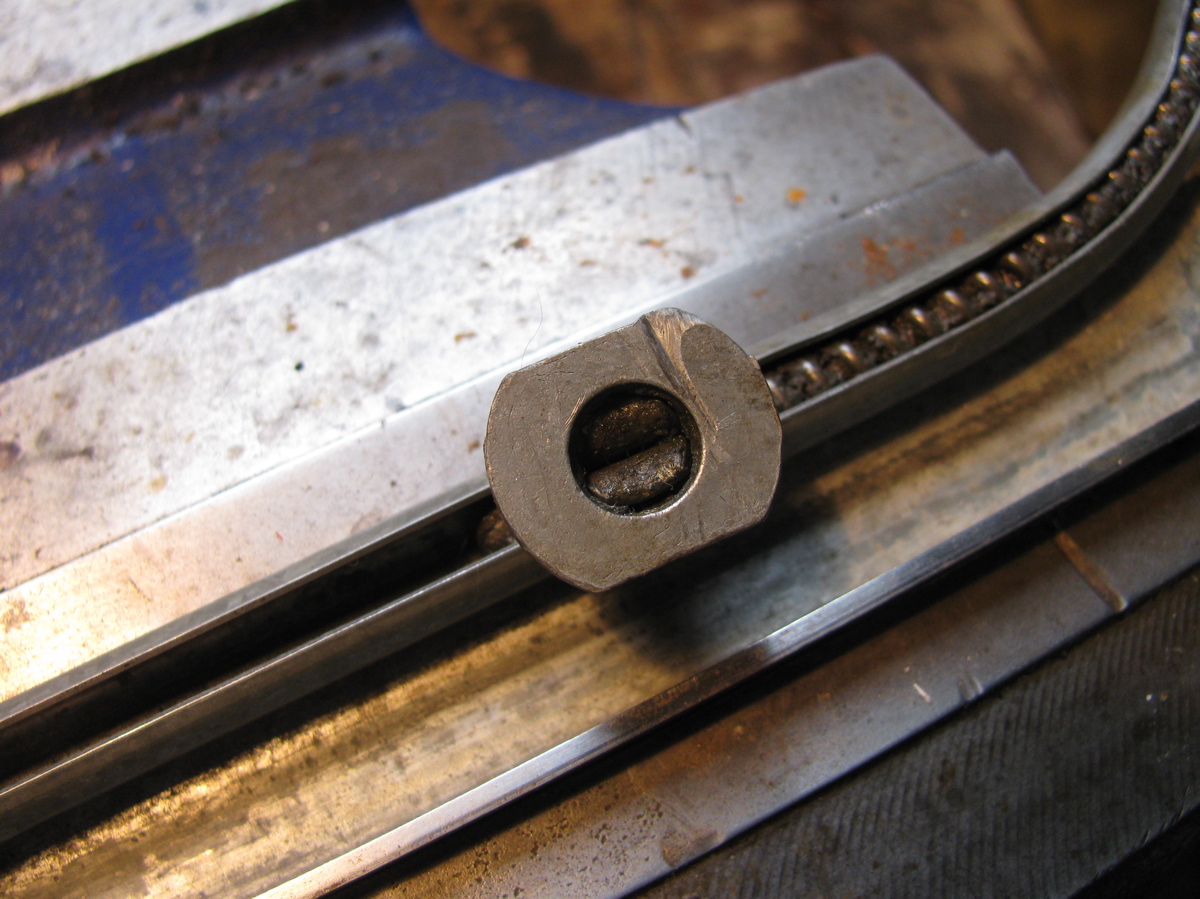
Tabs pressed together:
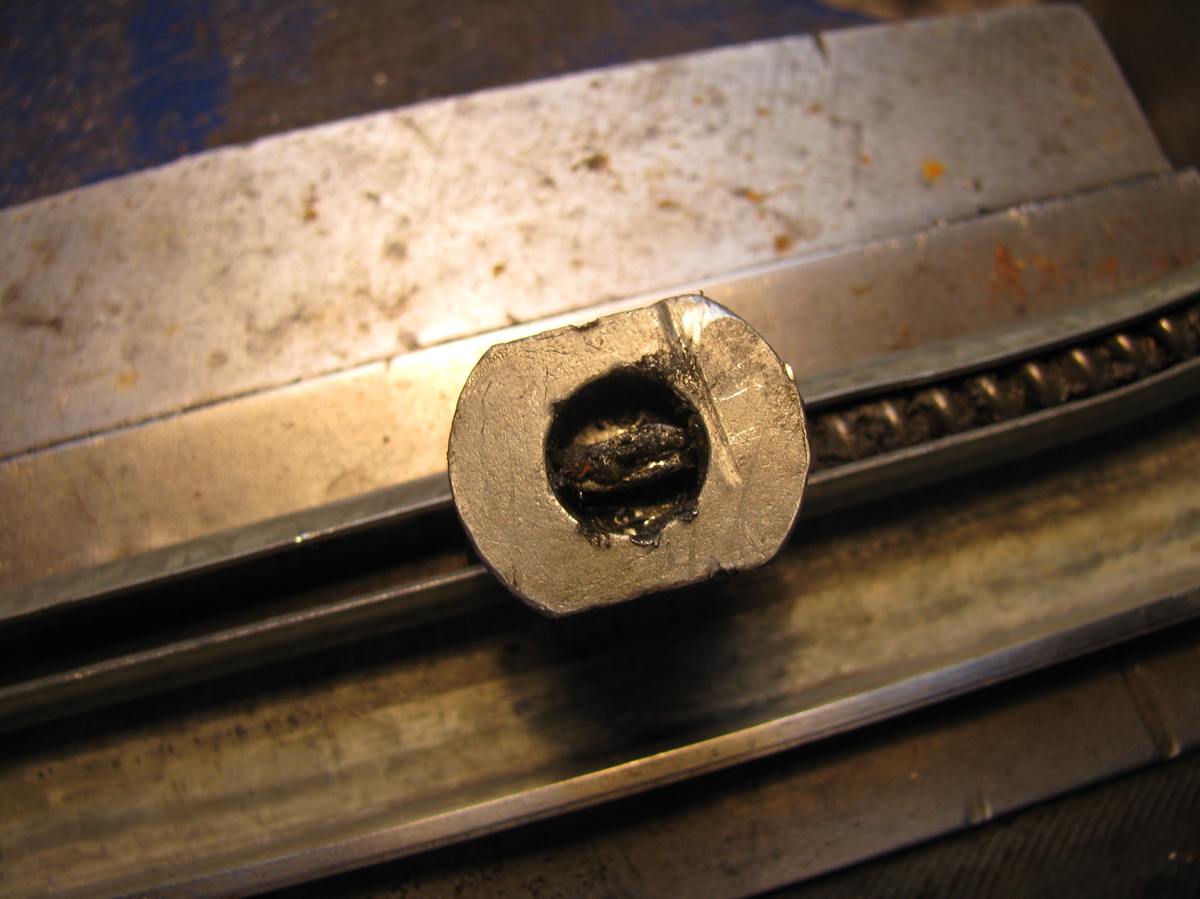
And the part freed:
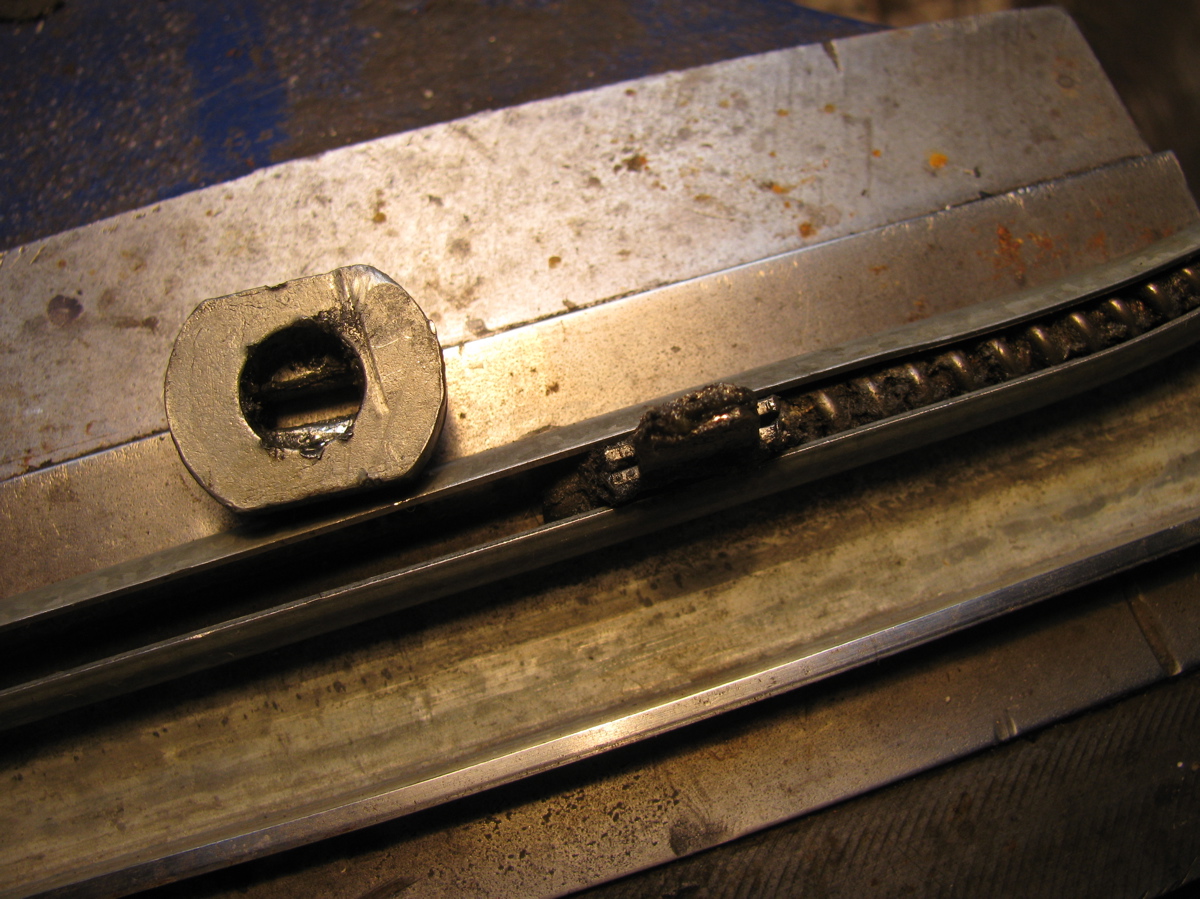
Start of reassembly:

On and tabs spread:
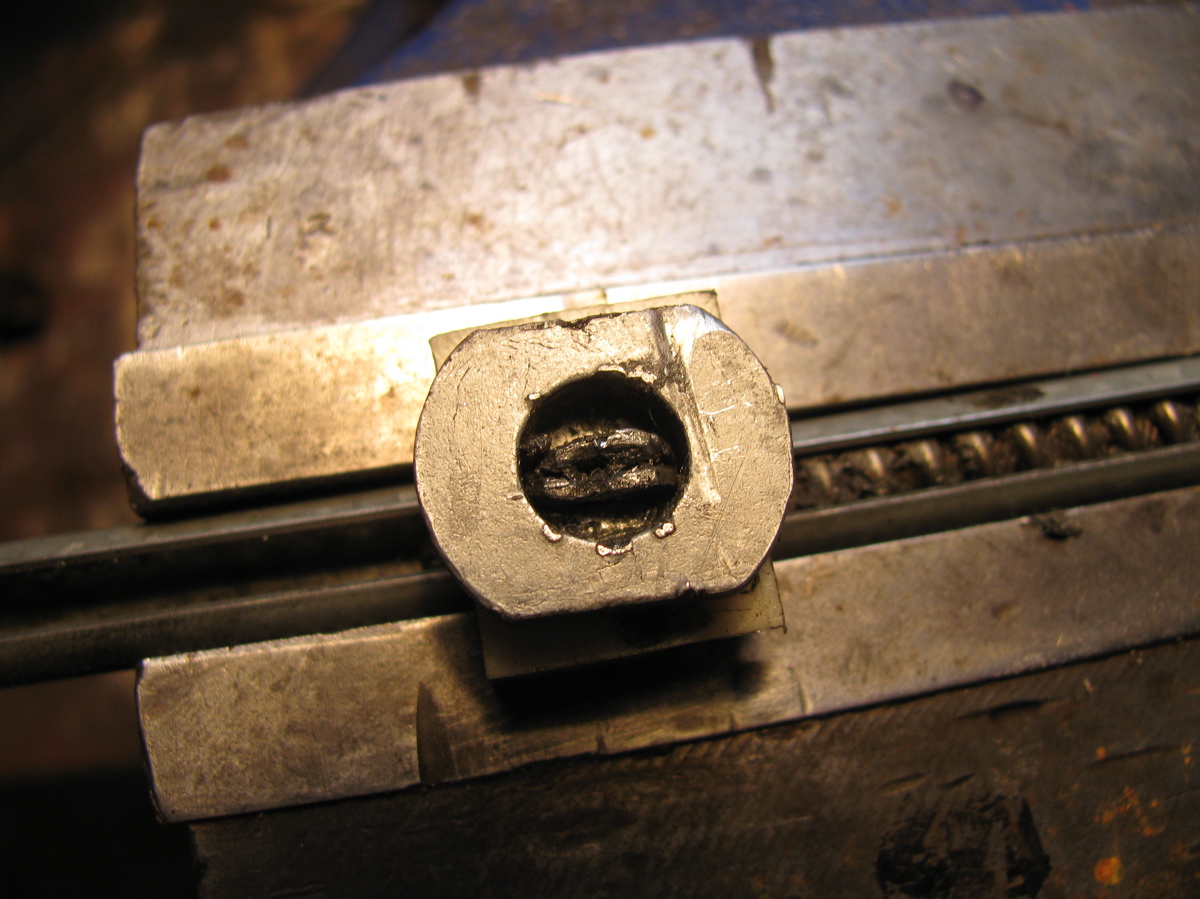
The final result:
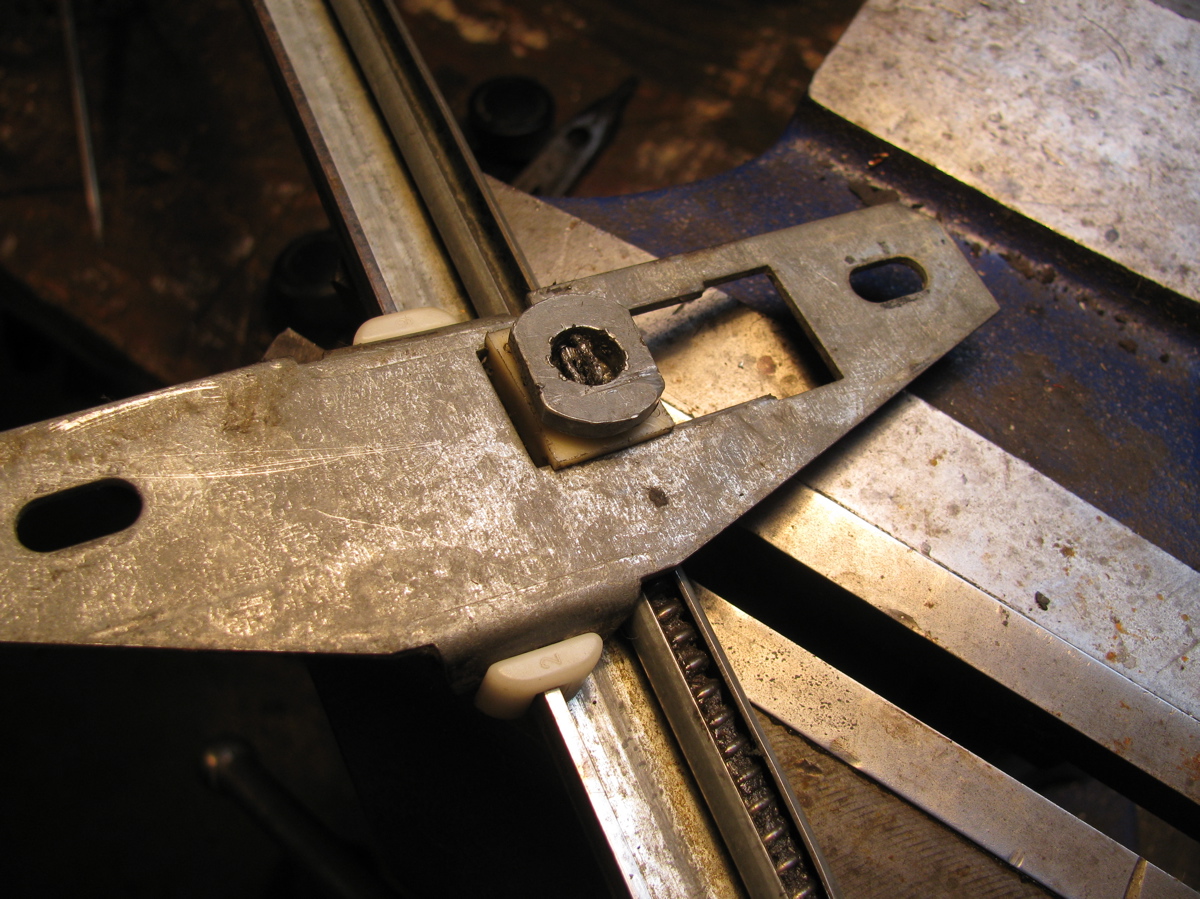
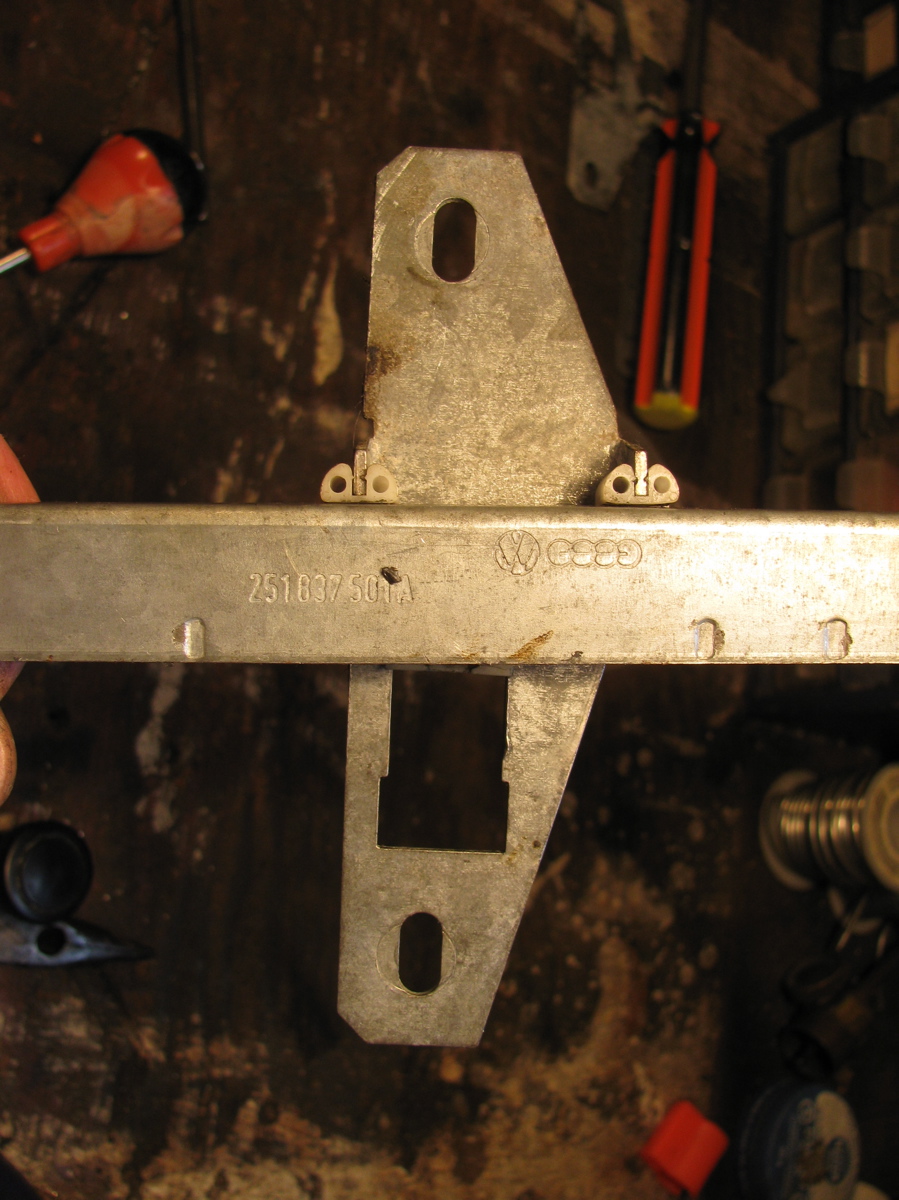
I guess I should mention that I cleaned the entire assembly and re-lubricated with grease. Now back out the van to re-install. I used a spring clamp to keep the window glass up and out of the way. Here is the assembly clamped on the face of the door to show the orientation:
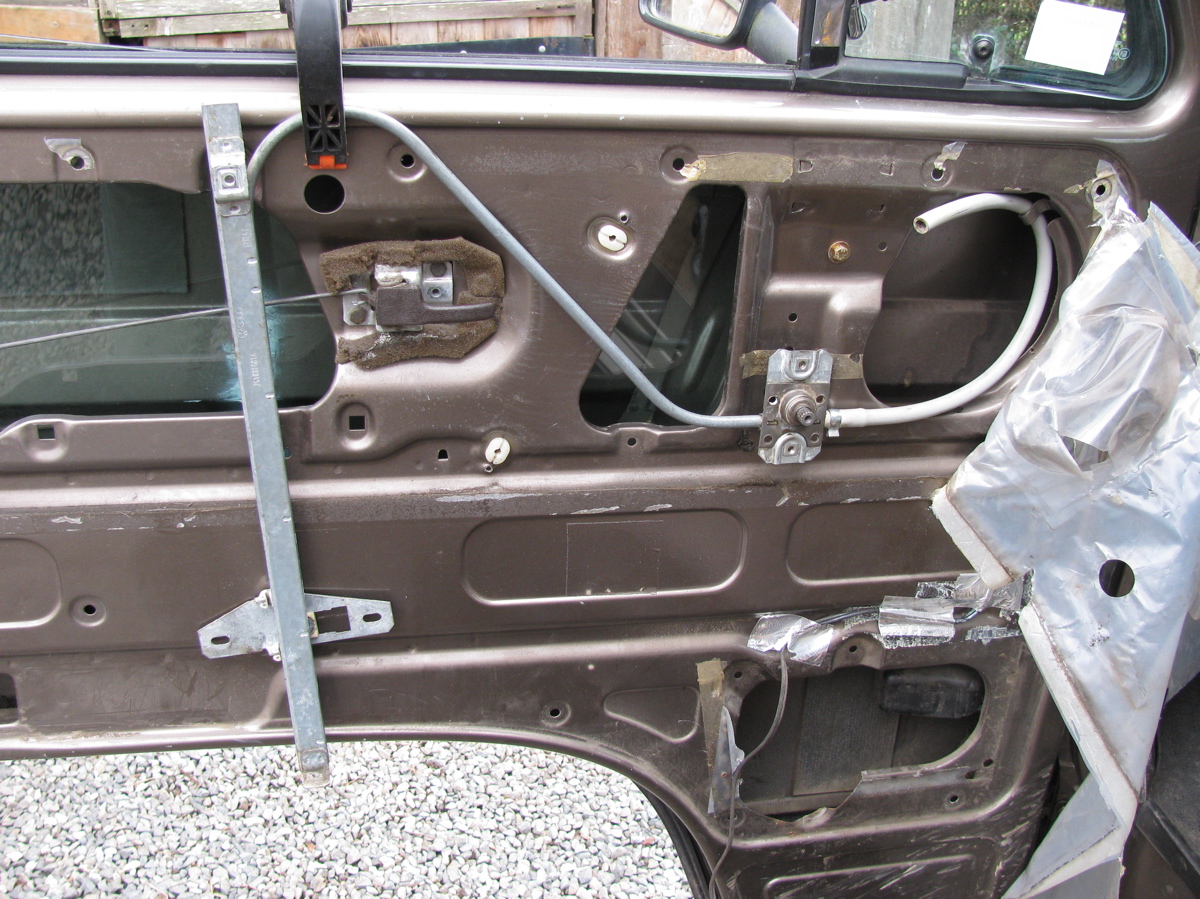
Wiggling and tilting etc, it goes in:
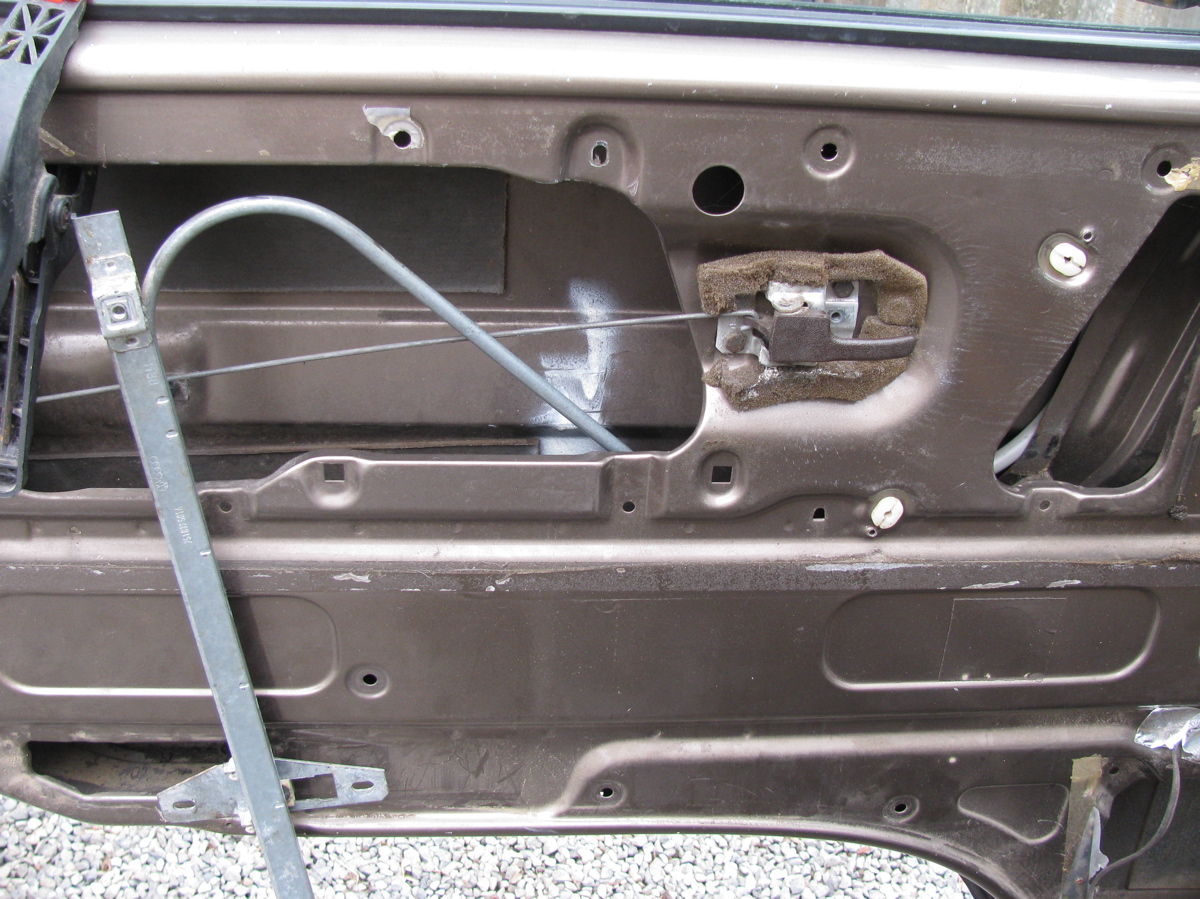
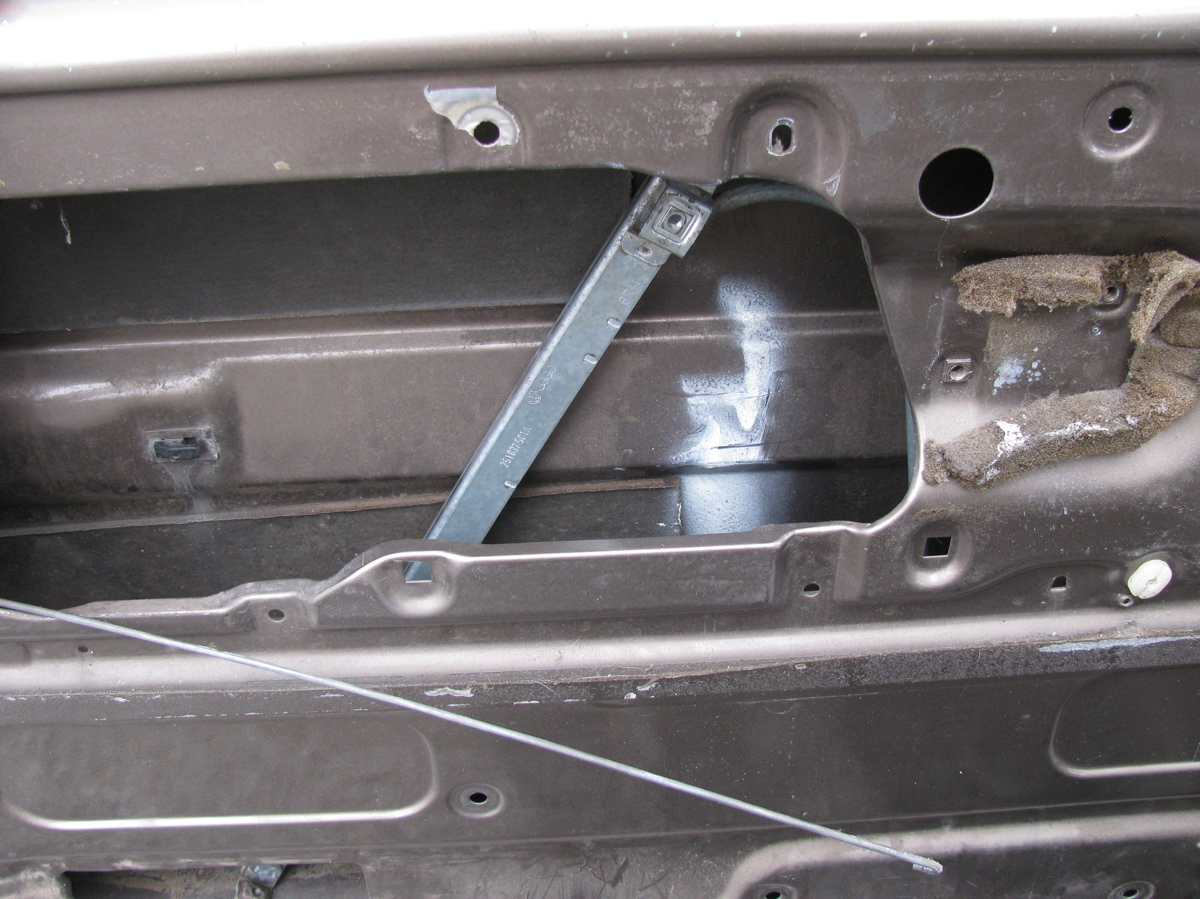
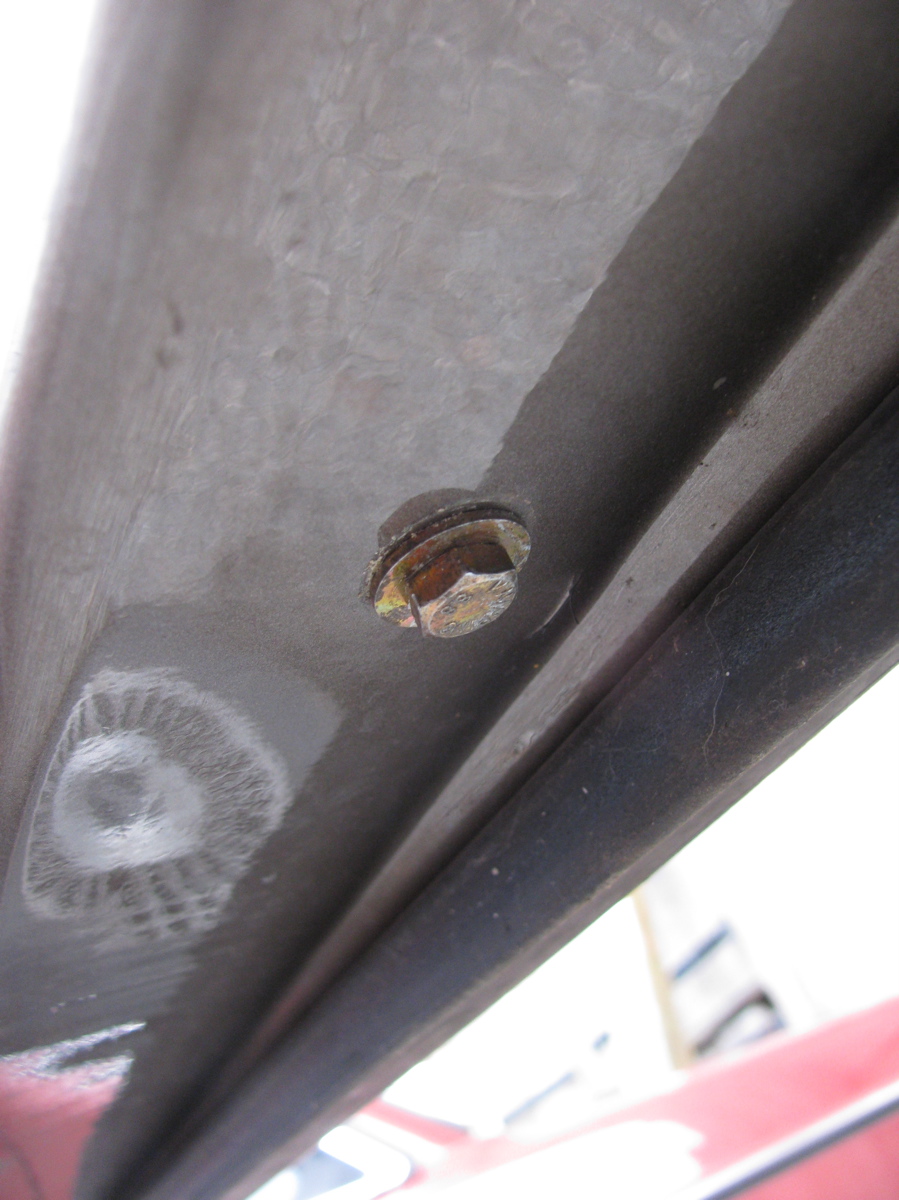
That vertical track is secured at the top, and at the bottom on bottom edge of door:
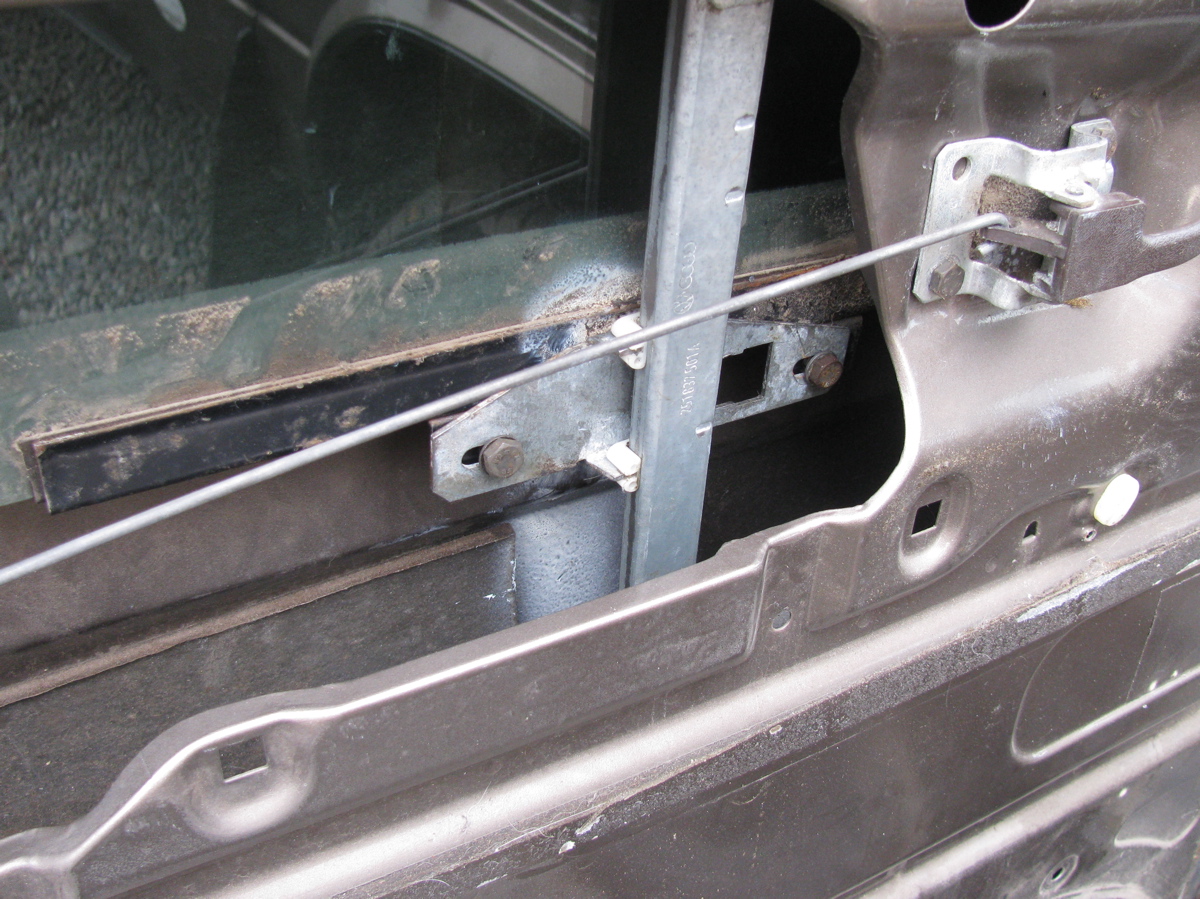
The plastic guide tube (which contains the “winding screw” when the window is wound down, is curved and secured by metal tab on door:

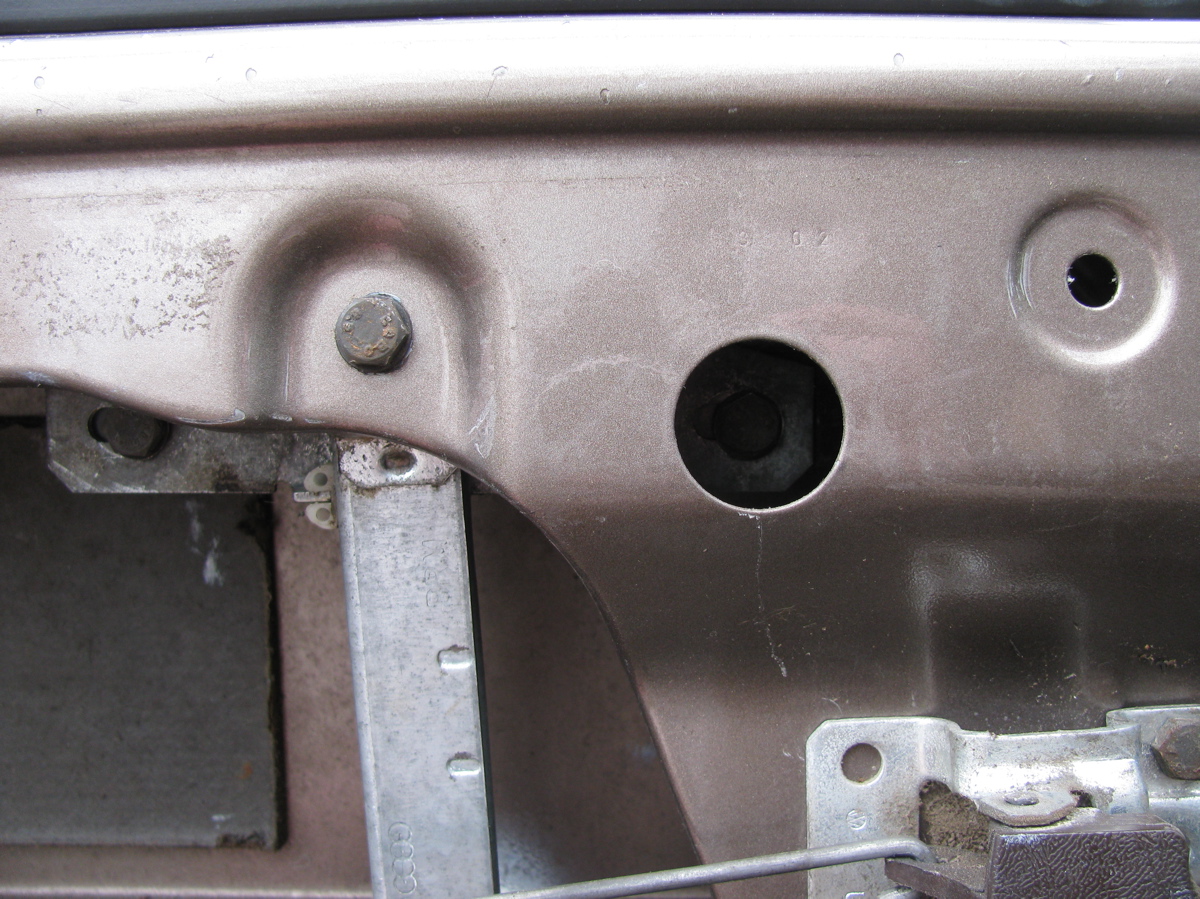
Bolting glass carrier to regulator. Don’t tighten bolts up until you wind window up and down a couple of times. Note the hole at top of door that allows access to forward bolt:
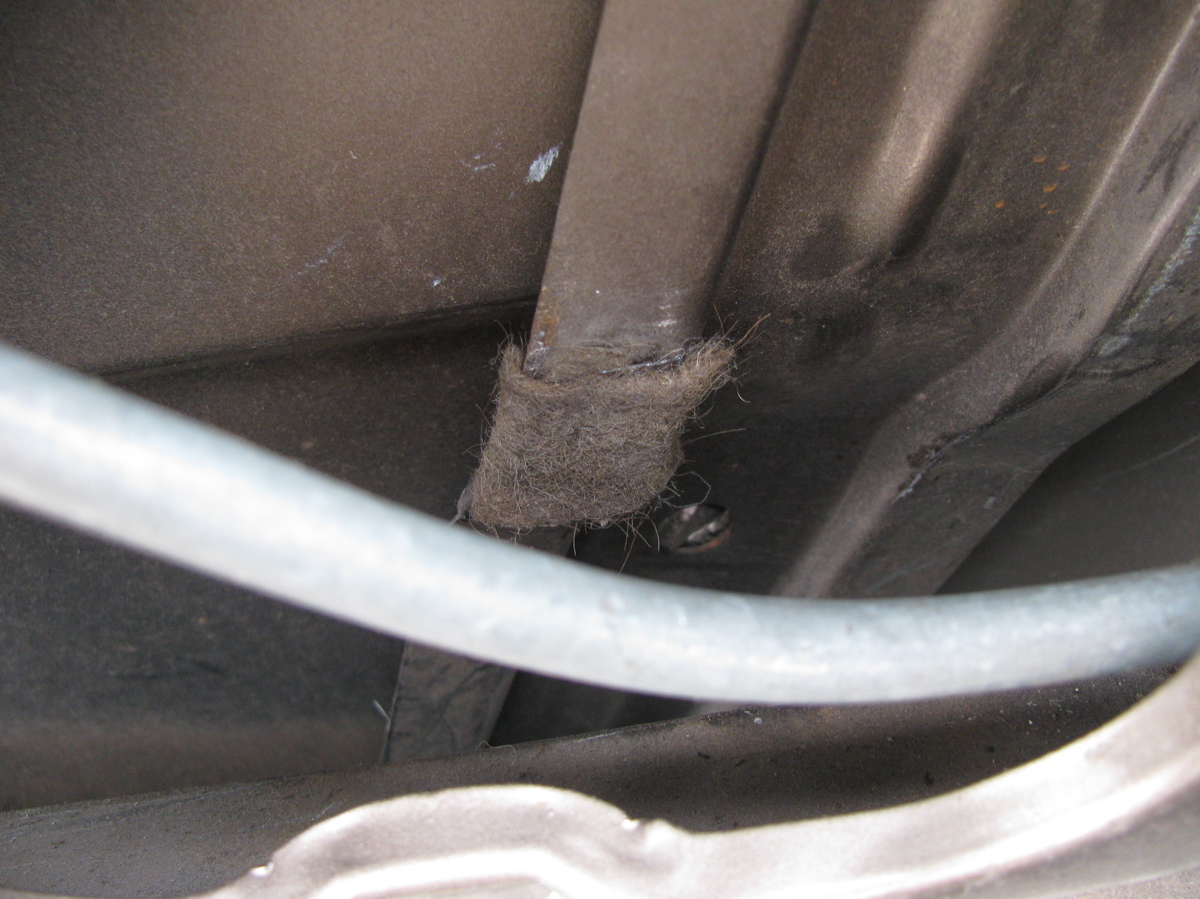
There is a little felt pad glued to the outer door skin, I suppose its to eliminate the window rattling at some part of its travel. I glued it back on with double sided tape:
The window winder now works. It was a bit squeaky so I added some more lubrication by squirting some oil down that plastic extension tube. I think the “winding screw” may be worn in parts as the window does not lower smoothly at part, its sort of herky jerky. I’ll look into that some other time.
More old tool info
Posted by albell in vanagon, vanagon tech papers on January 21, 2011
Some more vintage stuff.

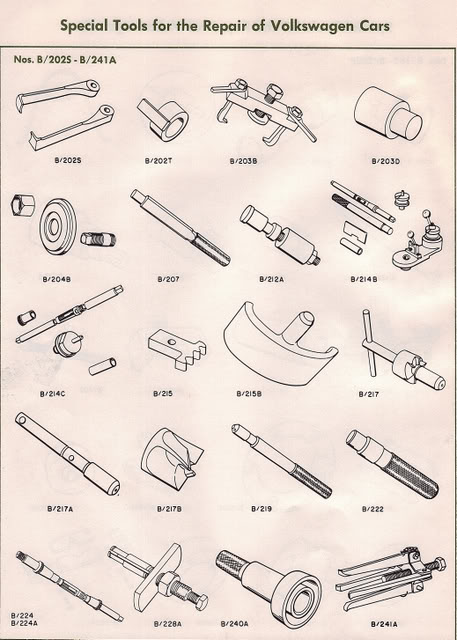
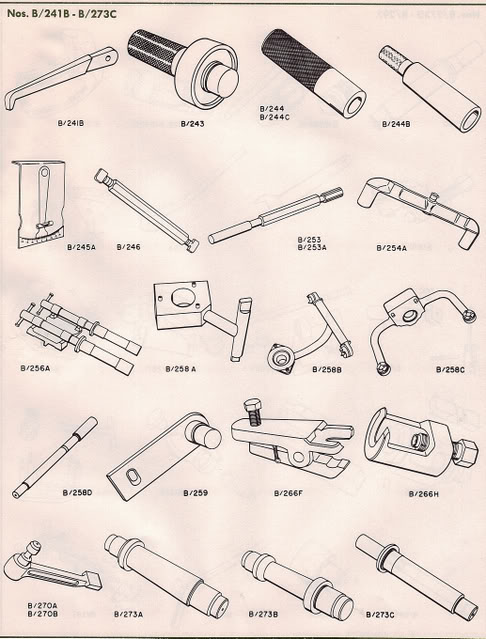
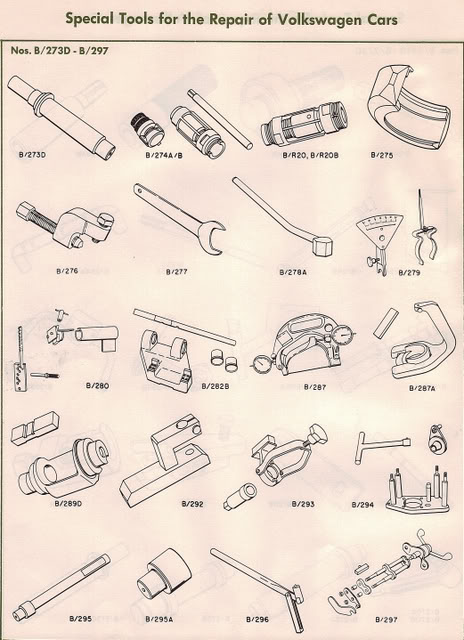

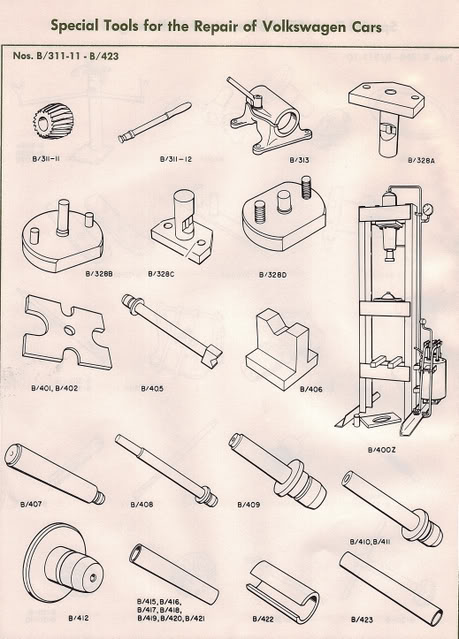
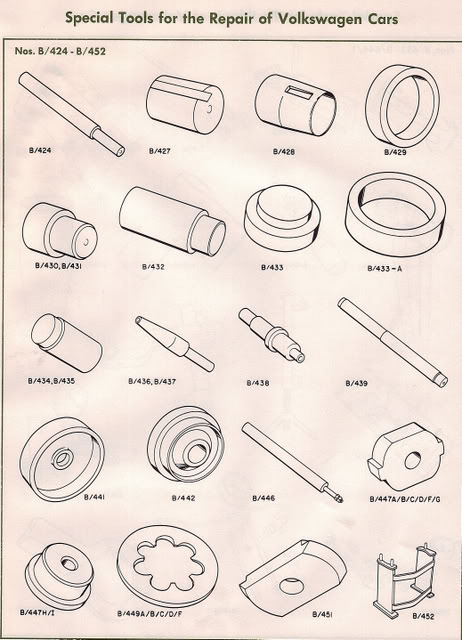


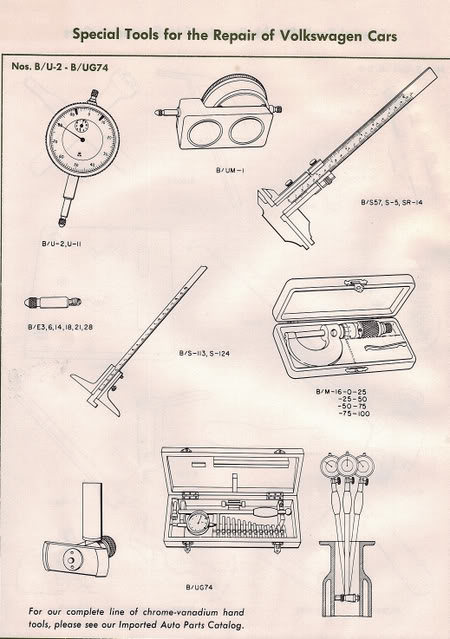
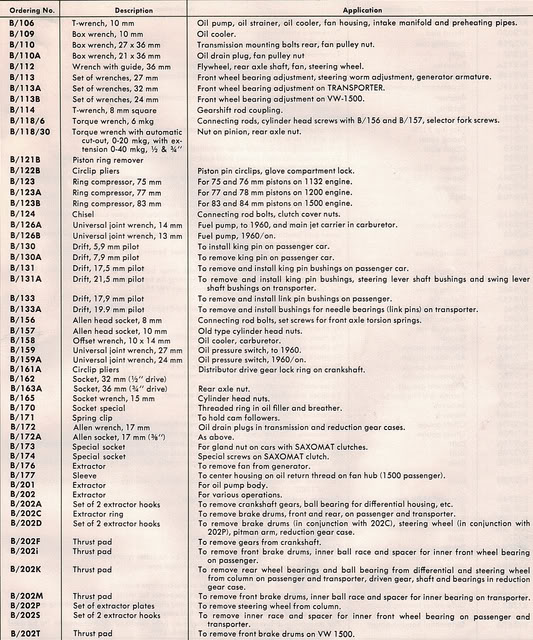


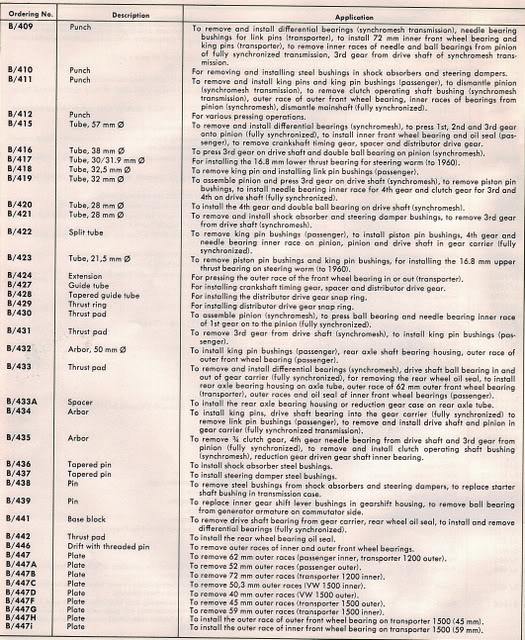
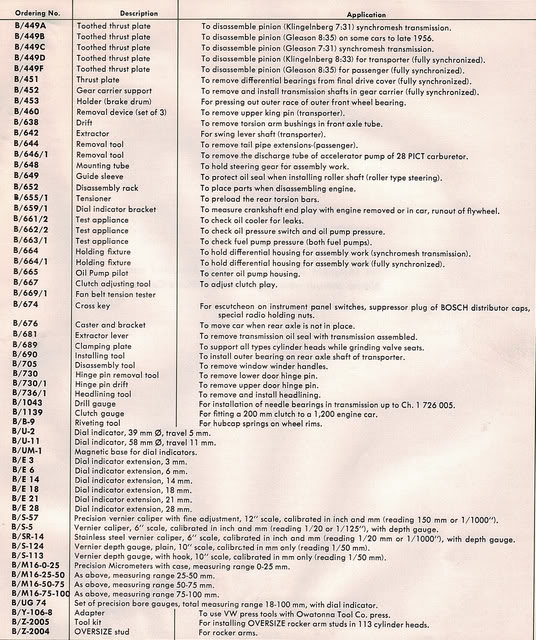
Shop made tools
Posted by albell in vanagon, vanagon tech papers on January 21, 2011
Might be useful to some VW enthusiasts (pdf, from 8 – 18 MB each)
Dissimilar metal corrosion – 1.5 month update
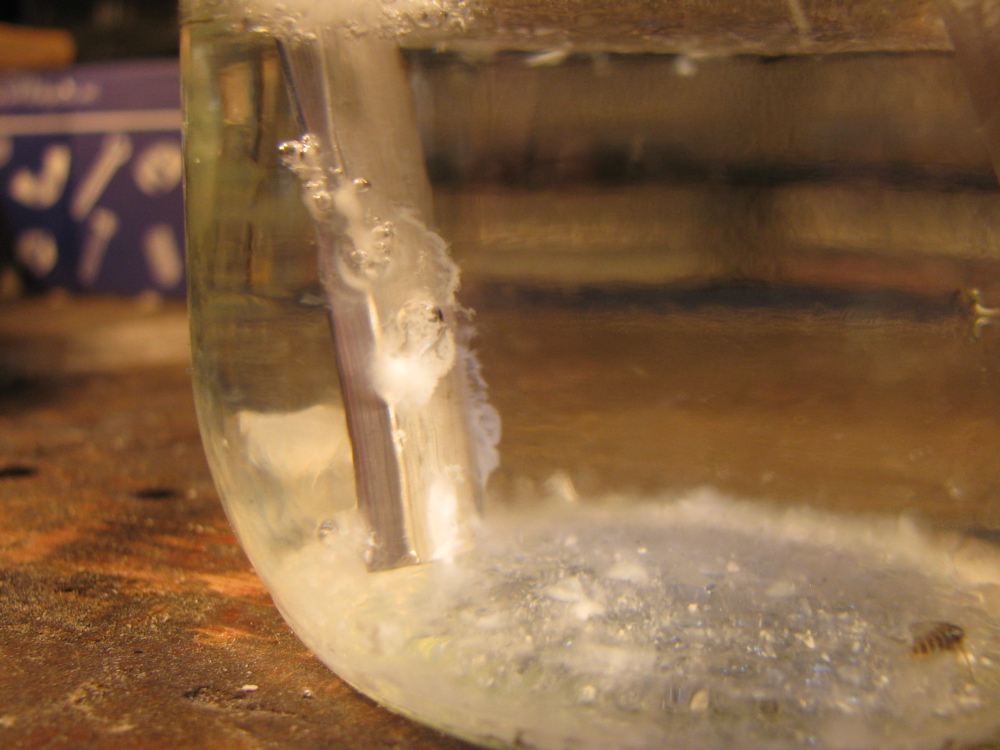
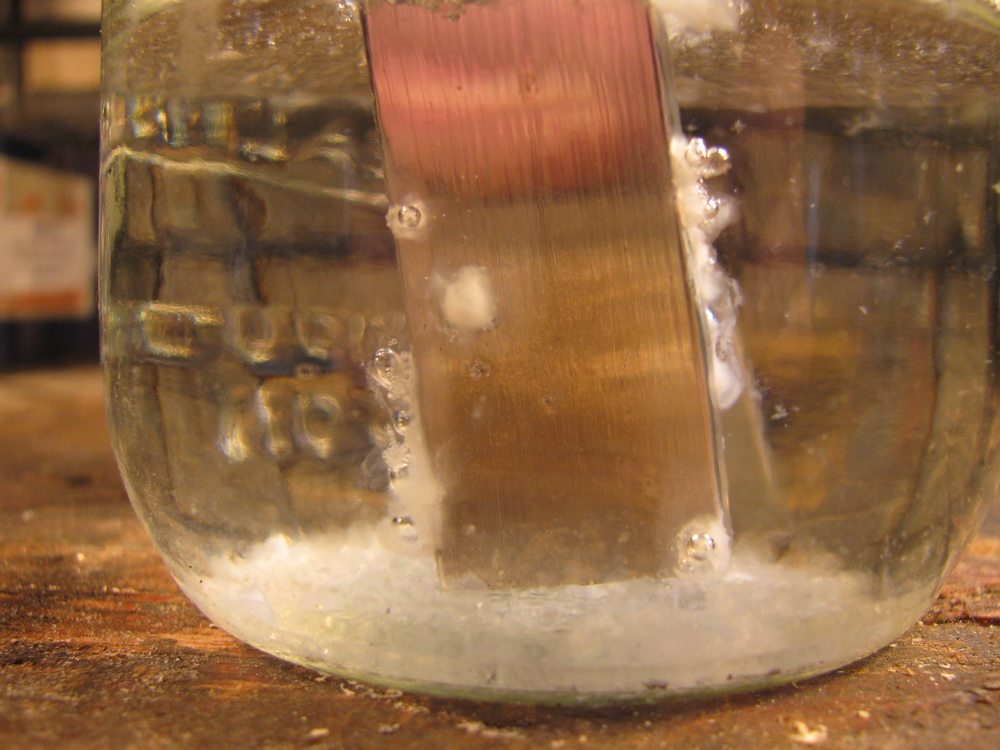
The jar has been sitting undisturbed for over a month and a half now. During that time it was frozen solid for about 2 days (the barn is un-heated). The original set up and explanation can be found here.
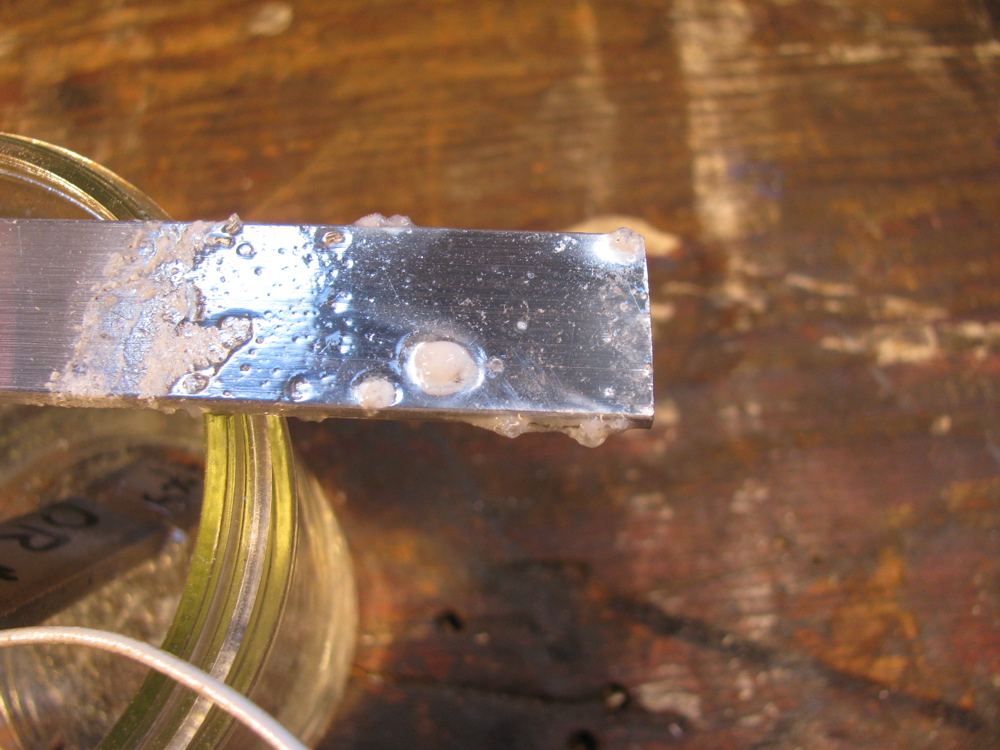
The photos clearly show the amount of “fluffy” material formed. I have to guess its something like aluminium hydroxide. You can also see in the photo where the strip was wiped off, that there is a bit of erosion on one spot which corresponded to a location with the white deposit. Its funny how localised these areas are, open to conjecture.
The stainless steel sample was unchanged.
My next step is to make a series of metal pairs and immerse them in a range of liquids. I’ll do that after Christmas.
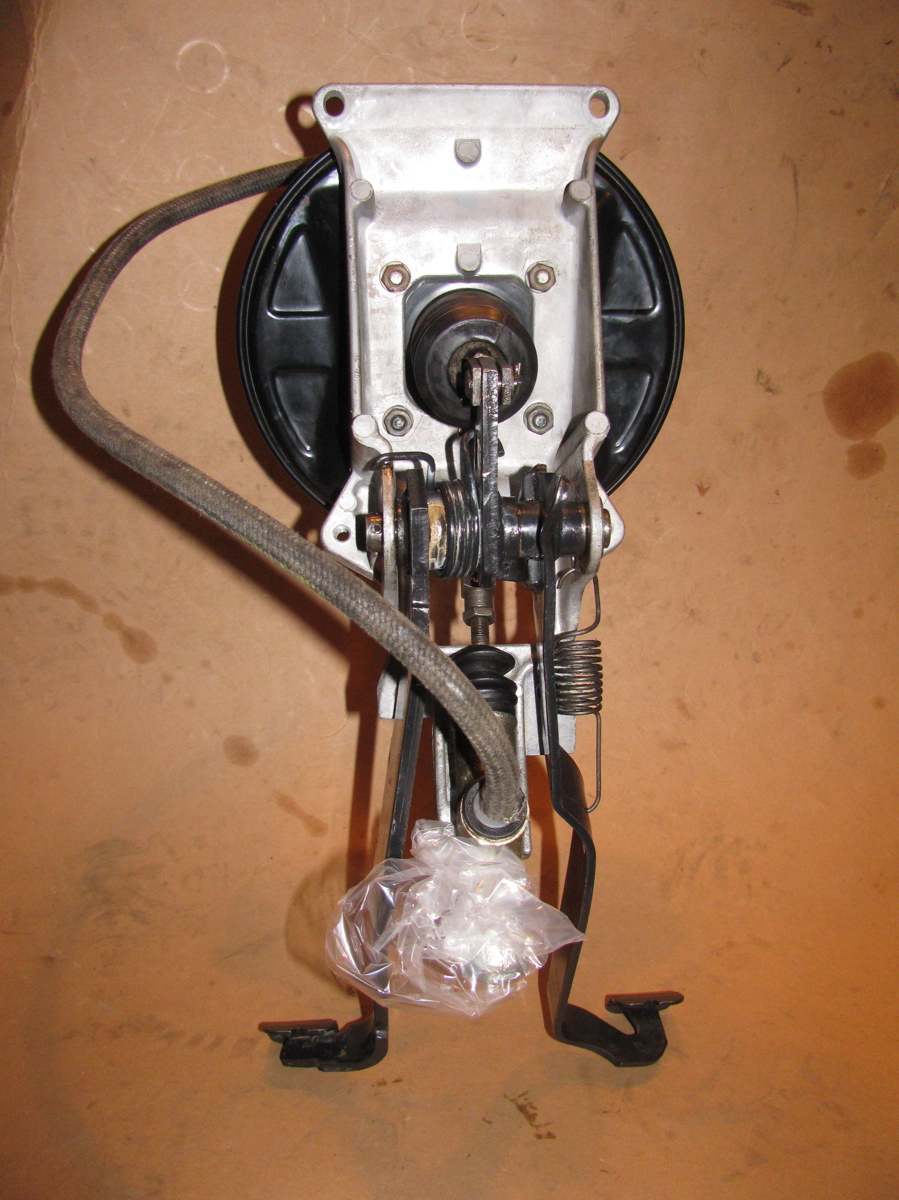
Vanagon clutch and brake pedal assembly
How can I introduce this? Why not just say that after some time the Vanagon clutch and brake pedal assembly wears a bit at certain points and its a bitch to repair in the van.
My ’86 syncro has a squeaky clutch pedal and I know why… the metal arm of the pedal has a hole in it where a pin connects it to the clevis of the clutch master cylinder slave rod, and this hole wears into an oval over time. The pin also gets worn. The result is a less than smooth and silent clutch pedal.
I happen to have a complete assembly taken from my dearly loved ’82 westy that I could work on and refurbish.
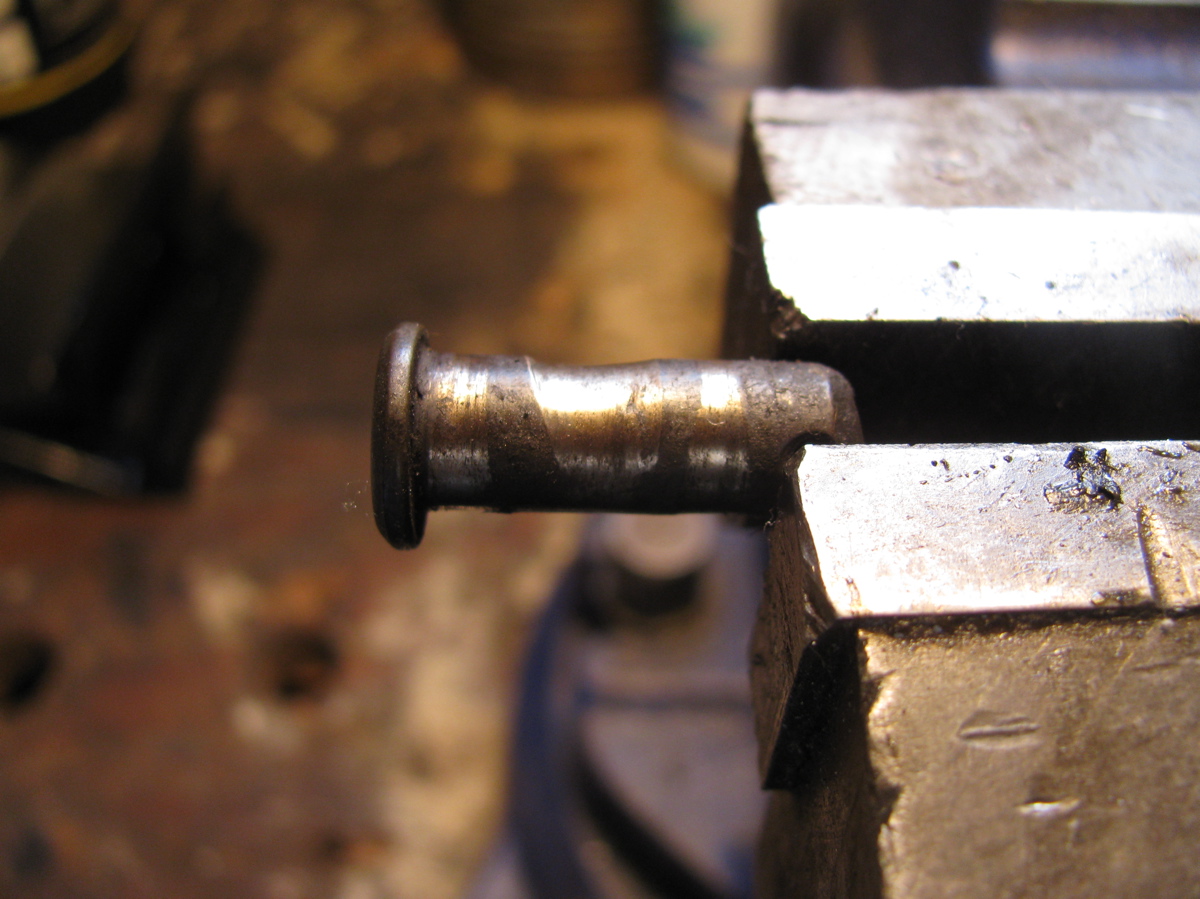
On the ’82’s clutch pedal the hole was indeed oval and the pin worn (pic of pin in vise is the original worn one). So I drilled out the pedal hole to make it round again (others have filled in hole with weld and redrilled to stock size), also drilled the clevis hole, and I made a new pin out of some stainless stock. Like an idiot, I forgot to take before pics. But the series of after pics show the disassembled assembly and the whole shebang together again. A close up of the clutch clevis and pin included.
One day I’ll swap it into my syncro (it probably means dash removal, but some rumours of being able to get it up and out via binnacle are about). Maybe before I do that, I’ll swap the brake booster for a larger one from an E30 series BMW (see Herman’s blog linked to the right for details).
Oh I should add, if you are like me and can’t be arsed to pull dash to get pedal assembly out for refurb, or at least greased, then you can try scrootching under the dash to get at the bugger. If you lie across the floor, or half in, half out the drivers door, you can reach up with one hand and feel where the clutch actuating rod/clevis connects to the cross pin. You might have to move the clutch pedal with other hand to really get at it. If you put a blob of grease on your finger you can try to massage it around the pin.




Dissimilar metal corrosion expt. – minor update
Took a picture of fluffy deposits on the aluminium sample (after 2 days). See the original post here
Dissimilar metal corrision
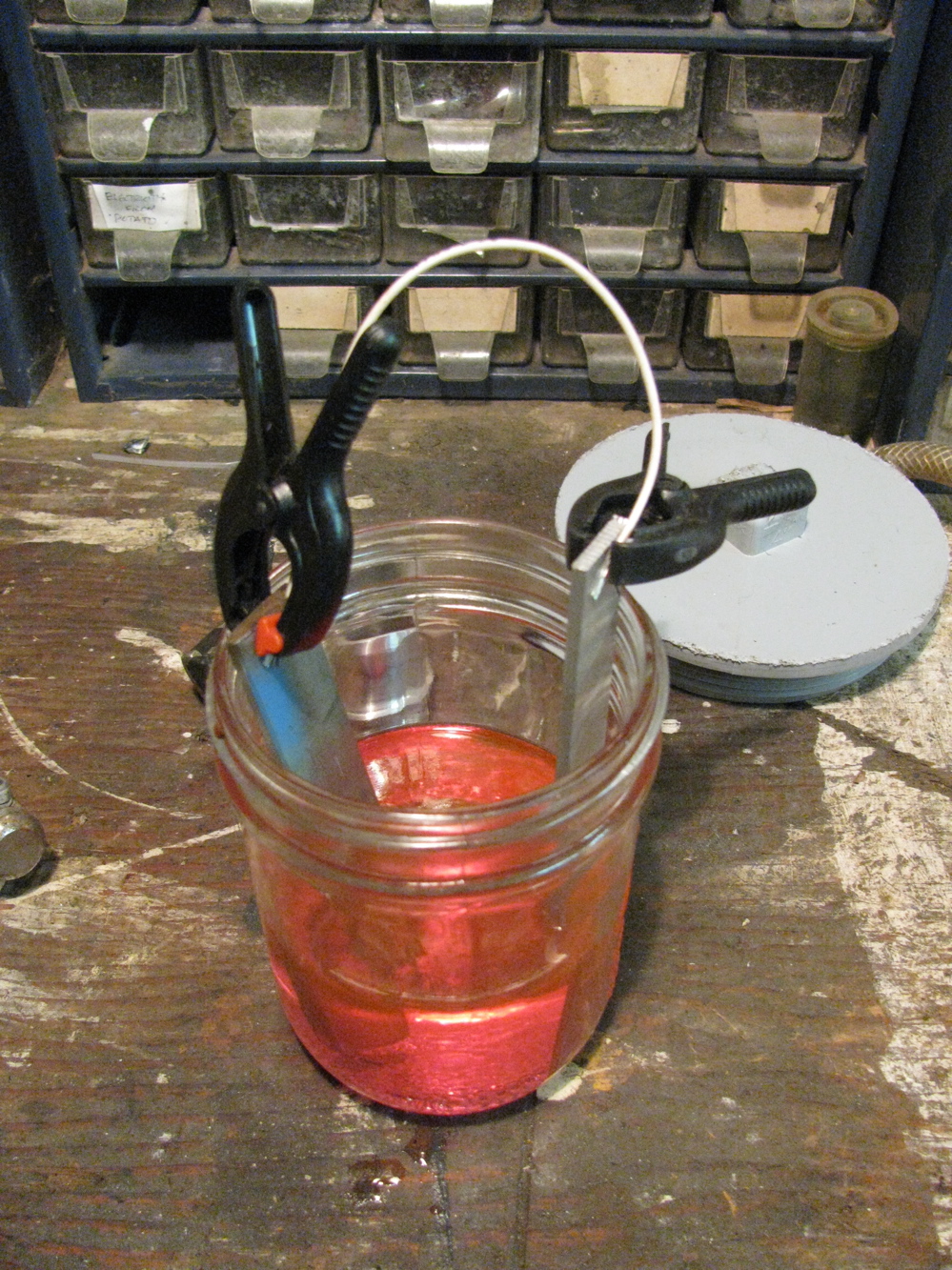
There has been quite a lot of activity in the Samba Vanagon forum on the subject of stainless steel cooling lines causing dissimilar metal corrosion in the aluminum alloy engine. About a week ago I decided to do a little experiment to see if I could detect any visible corrosion on a bit of aluminum connected to stainless steel, both in shared electrolyte of engine coolant.
The stainless is 304, the aluminum is 6061. Both samples are 0.125″ X 0.750″ and immersed in the coolant to approx 2″.
The coolant in a 50/50 mix of OAT based coolant and distilled water.
I did a casual buffing of both samples with tripoli, and then degreased. The buffing was to allow any corrosion to be more visible. In the picture, the aluminum is on the right.
The samples are connected by tinned copper wire.
Ambient temp in the lab, I mean the barn, ranges from 7 C to 10 C.
Initial measurements between the unconnected samples in the coolant was, 150 microAmps and 540 milliVolts.
Experiment started at 6:30 pm, pacific time, October 26 2010.
I’ll leave it undisturbed for a week or so, then take pics of the metals.
It will be interesting to see if anything happens

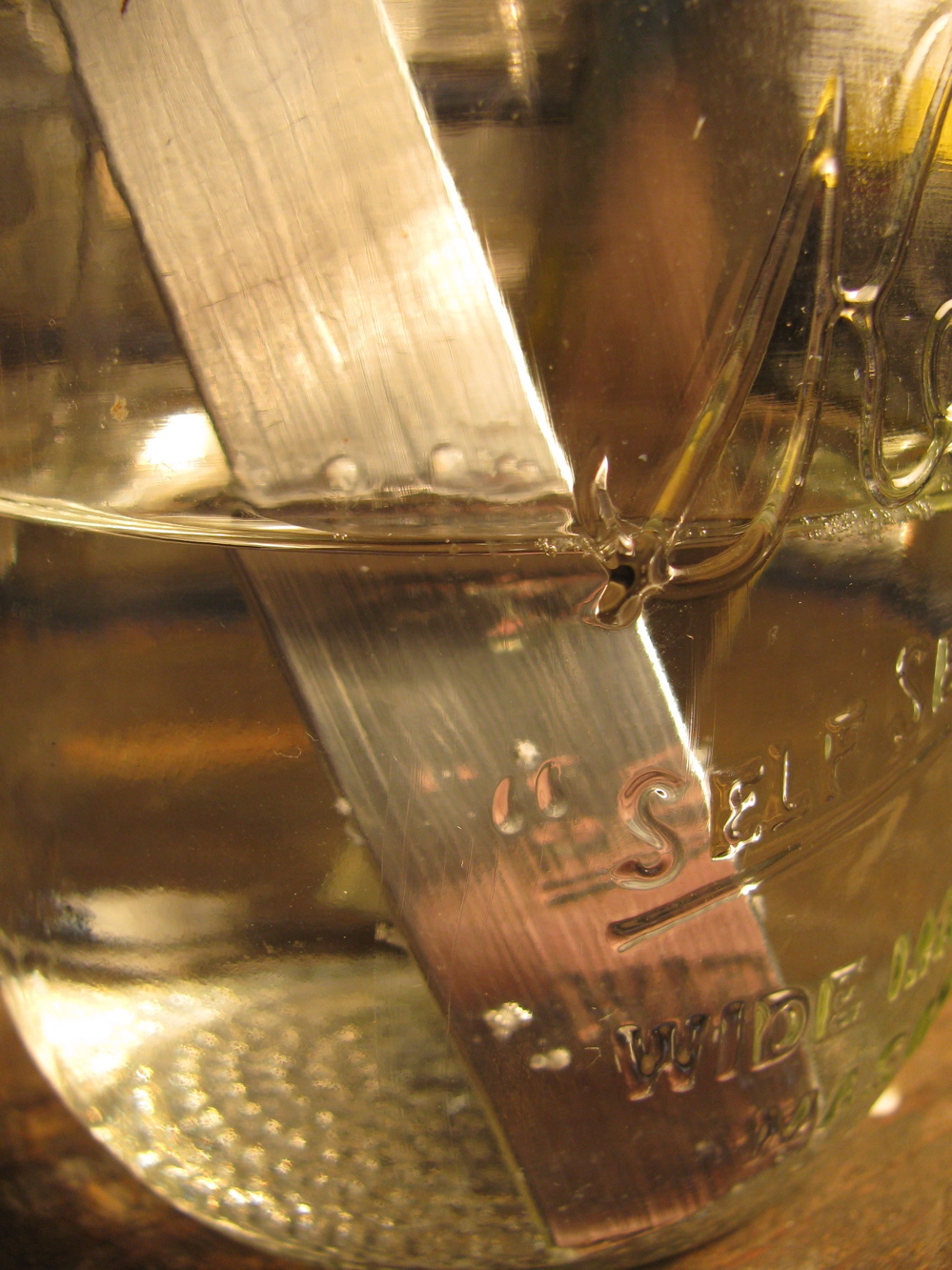
Nov. 2 1220 hrs – I pulled the metals out of the jar and rinsed off coolant. The aluminum looks pretty good. I don’t know if the pic shows it but there is a very slight haze on the surface.

I replaced the coolant with tap water (well water, pretty hard), and set the expt. up again, same conditions as before. Initial readings are:
326 mV and 195 microAmps between the 2 samples.
(I don’t know why wordpress is sticking the “I” up there to the right of the image… I have tried to get it back down, the html looks right to me, but…)
Update, Nov. 4, 2010.
There are a few spots on the aluminium (none on the stainless) that look like a white “fluffy” deposit.
Dogs in the Vanagon
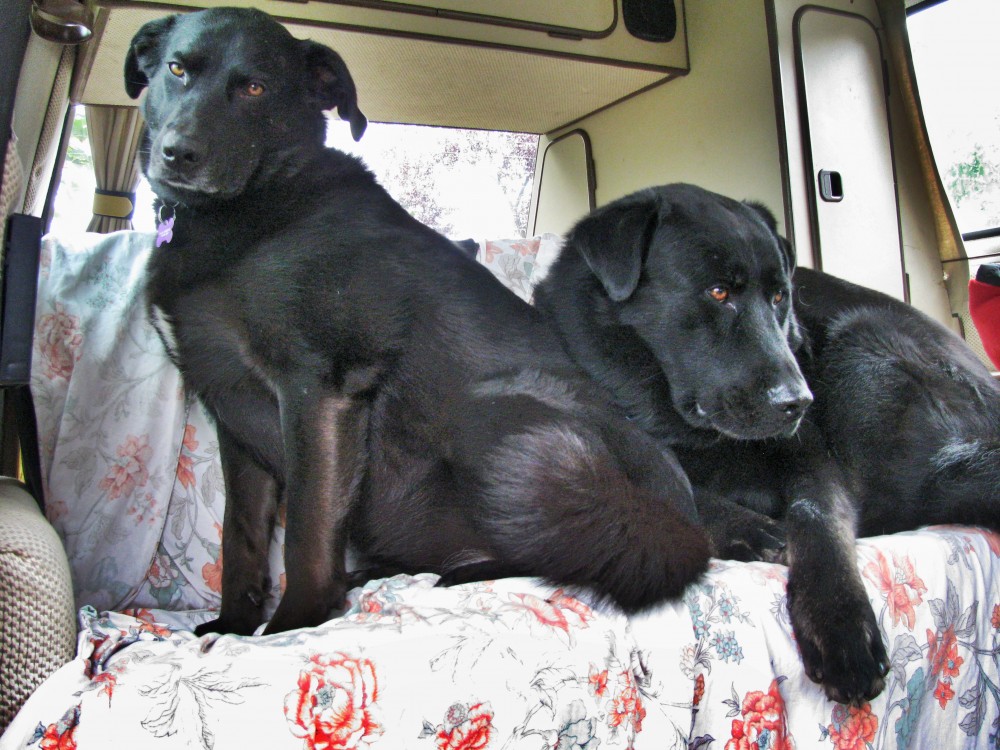
Any chance they can get, they are in there. Funny thing is I never seem to able to get a good shot of them.
Westy pop top lifting assembly problem
I had a look at the assembly, and sure enough it shows the same wear as others have noted – David and Neil, (and Neil’s Vanagon Wiki article on assembly worth a look).
And a good Samba thread on subject here.
So what to do? A copper bushing as Neil did or a bronze shaft as David did? Or both?
Will report back.

July 2016, reporting back. Did a fix of the problem, post is here
Camperisation Part 4
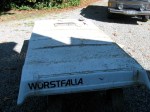
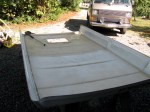
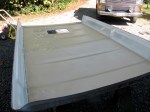
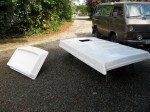
Pulled the pop top roof and “luggage rack” from the old ’82 Westy. Boy oh boy it had grown a lot of lichen and dirt in the last year and a half. I pressure washed them, scrubbed with a Scotch-Brite pad and Simple Green, then sanded the outside. The time consuming part was getting the old caulk off, where the roof and skylight seals were. Next step will to be filling the 2 holes at the back or the pop top where I had eye bolts installed (lashing points for canoe) and checking for any cracks that need repair. The “Wurstfalia” sticker was a practical joke played on me by a friend. I didn’t have a Westy sticker back there ( I suspect the roof had been repainted before I got the van) and my friend snuck by the house and put that sticker on. It got comments.
Vanagon camperisation, part 3
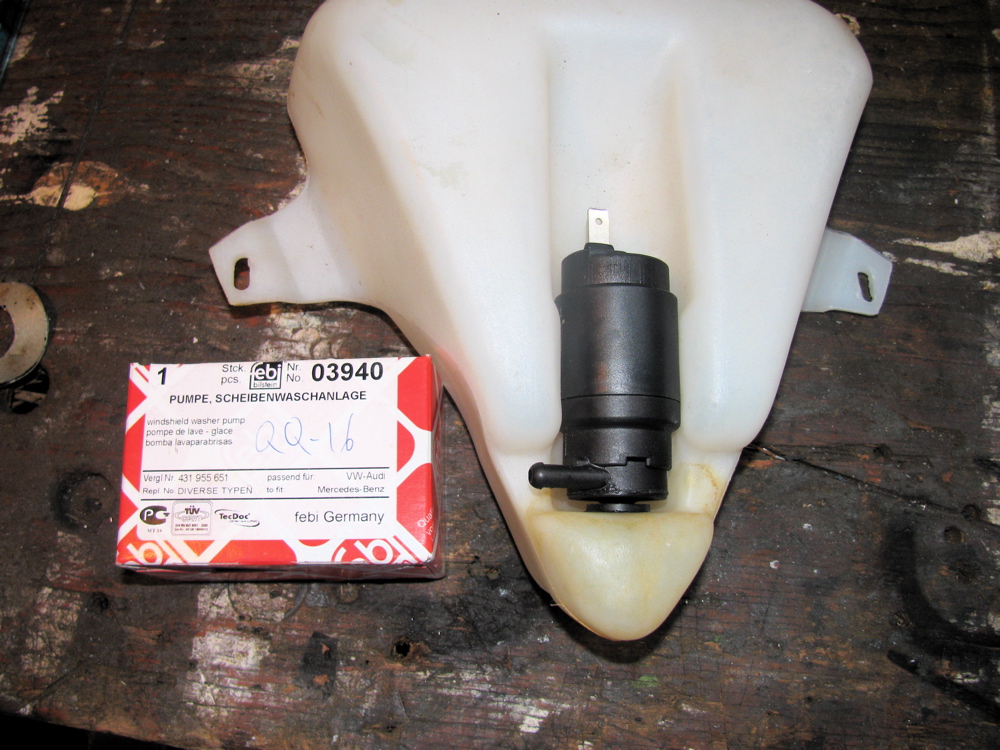
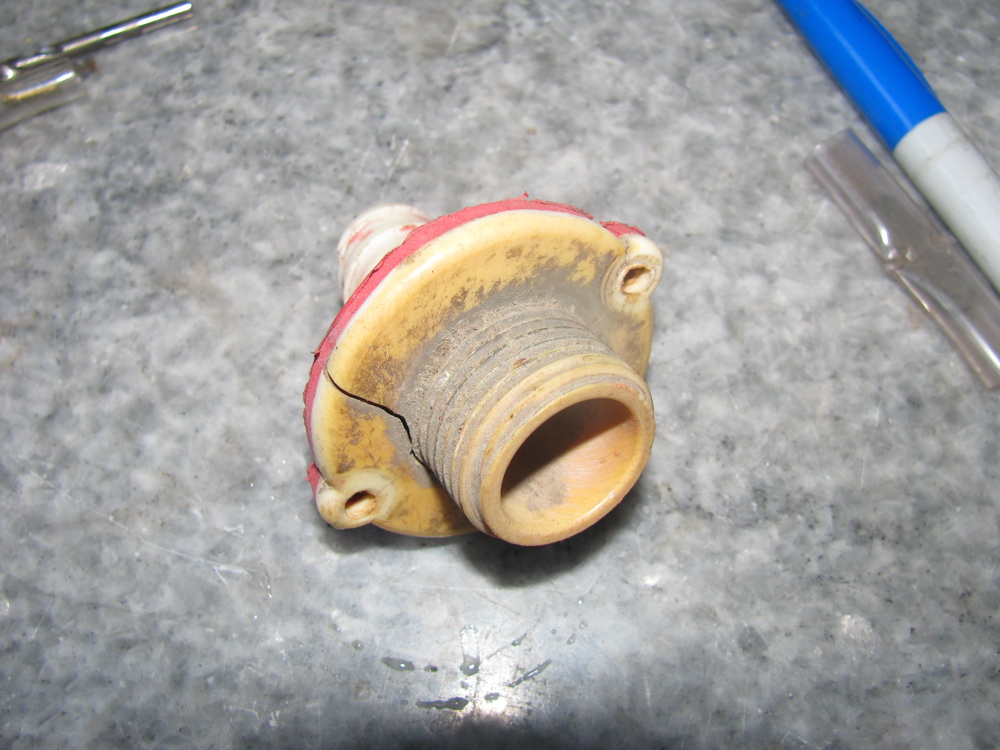
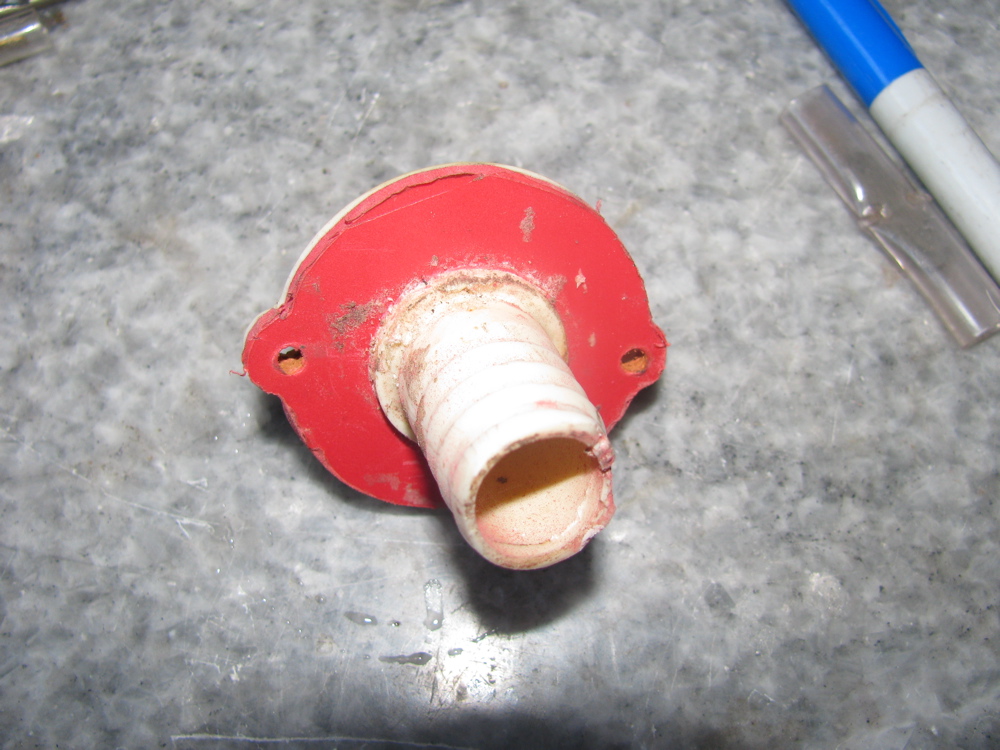
Not much progress in the last couple of days. A new rear windscreen washer pump was bought from dealer (best price, 20 bucks, had the option of $120 original from dealer, or a rather suspicious “trico” brand one from local parts supplier). I removed the old sink drain bulkhead fitting, you can see how I repaired it years ago with some red plastic. I looked for a stainless fitting to replace it with, but could not find one.
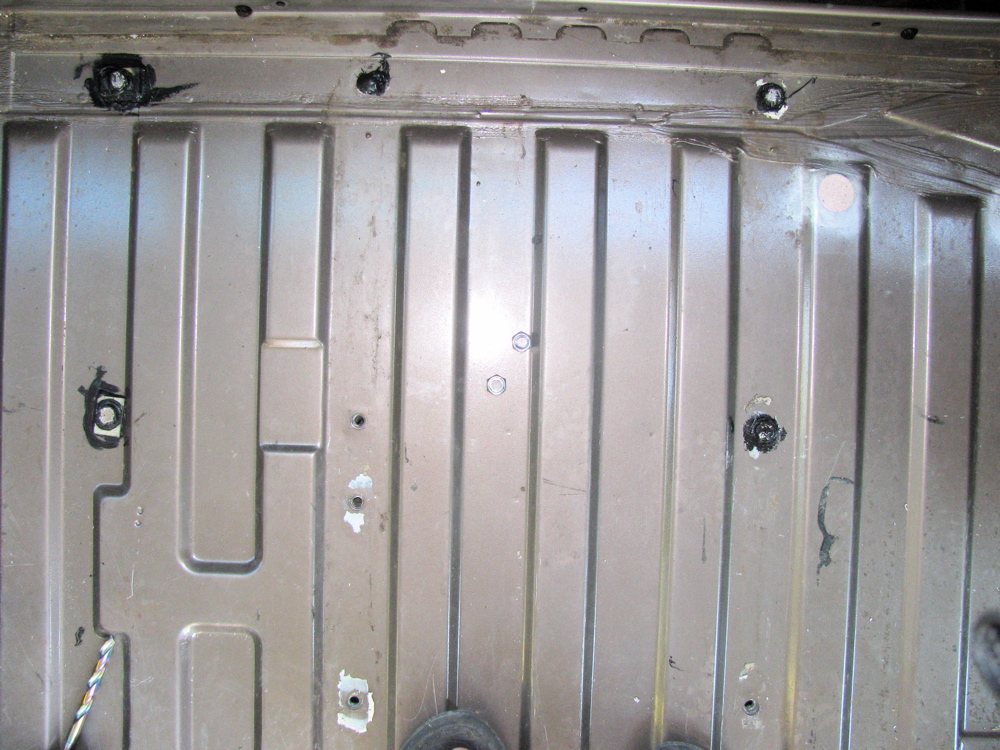
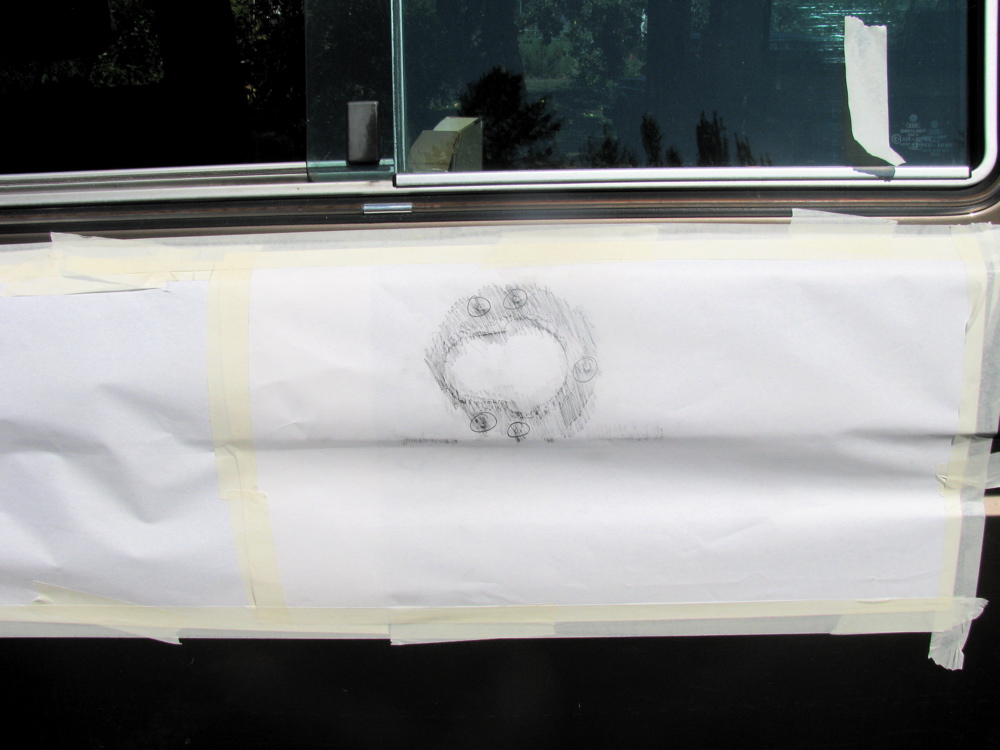
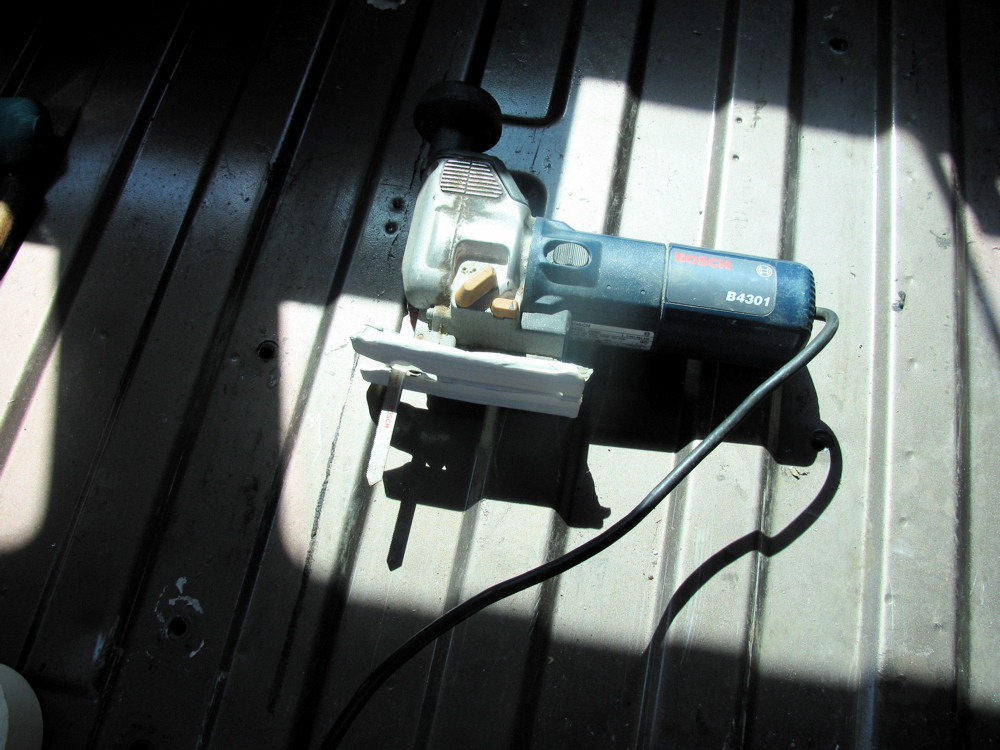
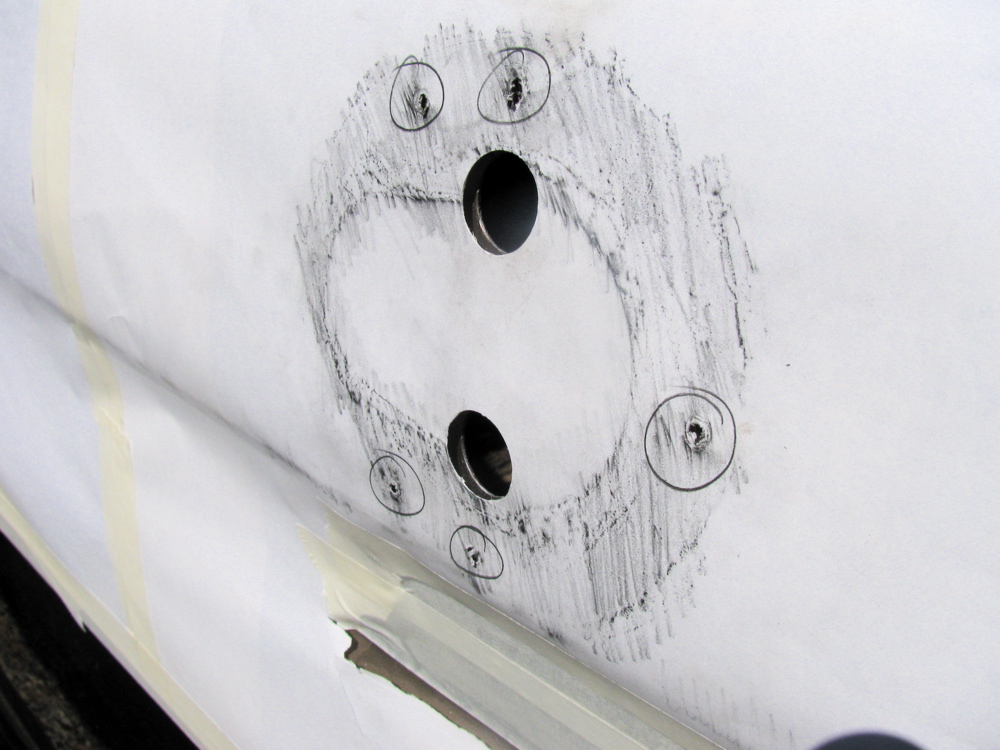
Also, I pulled all the cabinets and drilled holes for the rear most 2 attachment points for propane tank. The forward 2 points use the existing welded nuts for the seat tracks, but new ones had to be drilled, metal “washers” installed and the bolt held in place by nylock nut underneath. Silicon caulk applied liberally, and all 4 bolts stainless steel. The fridge vent hole was cut. I used paper to make a “rubbing” of the shape and location of hole on my Westy, and taped the paper to the syncro and first drilled the screw holes, then used punches to make the “ear” shaped curves and finally a saw for the rest. I taped the base of the saw to insure no scratches on van’s side.
I also put in a second battery and automatic charge relay. The install is preliminary, nowhere near picture worthy yet.
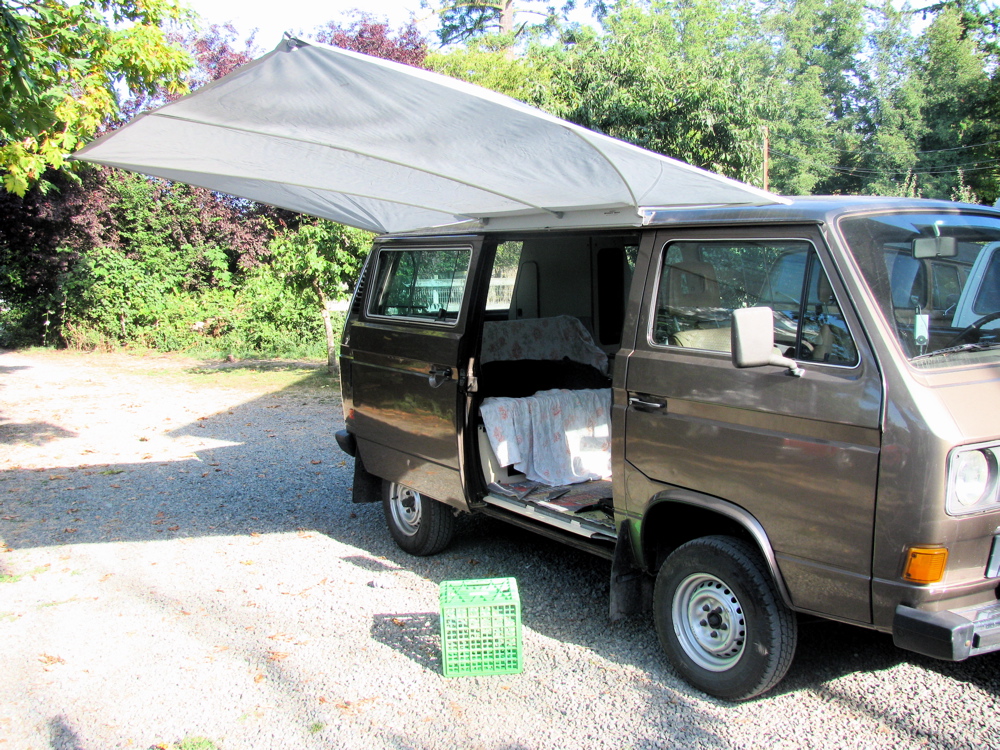
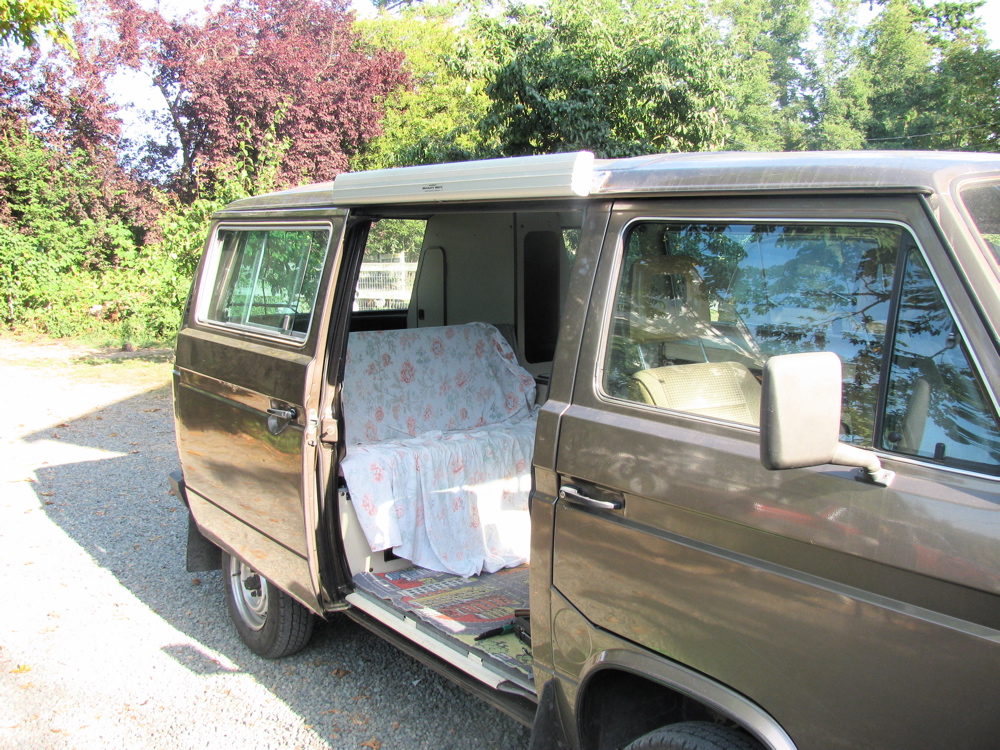
Finally, today I installed my “Shady Boy” awning. I really like this awning, lightweight, simple, and it works. Picture show it deployed without guy lines or down draught poles.



Vanagon heater valve replacement
Posted by albell in vanagon, vanagon mods on August 19, 2010
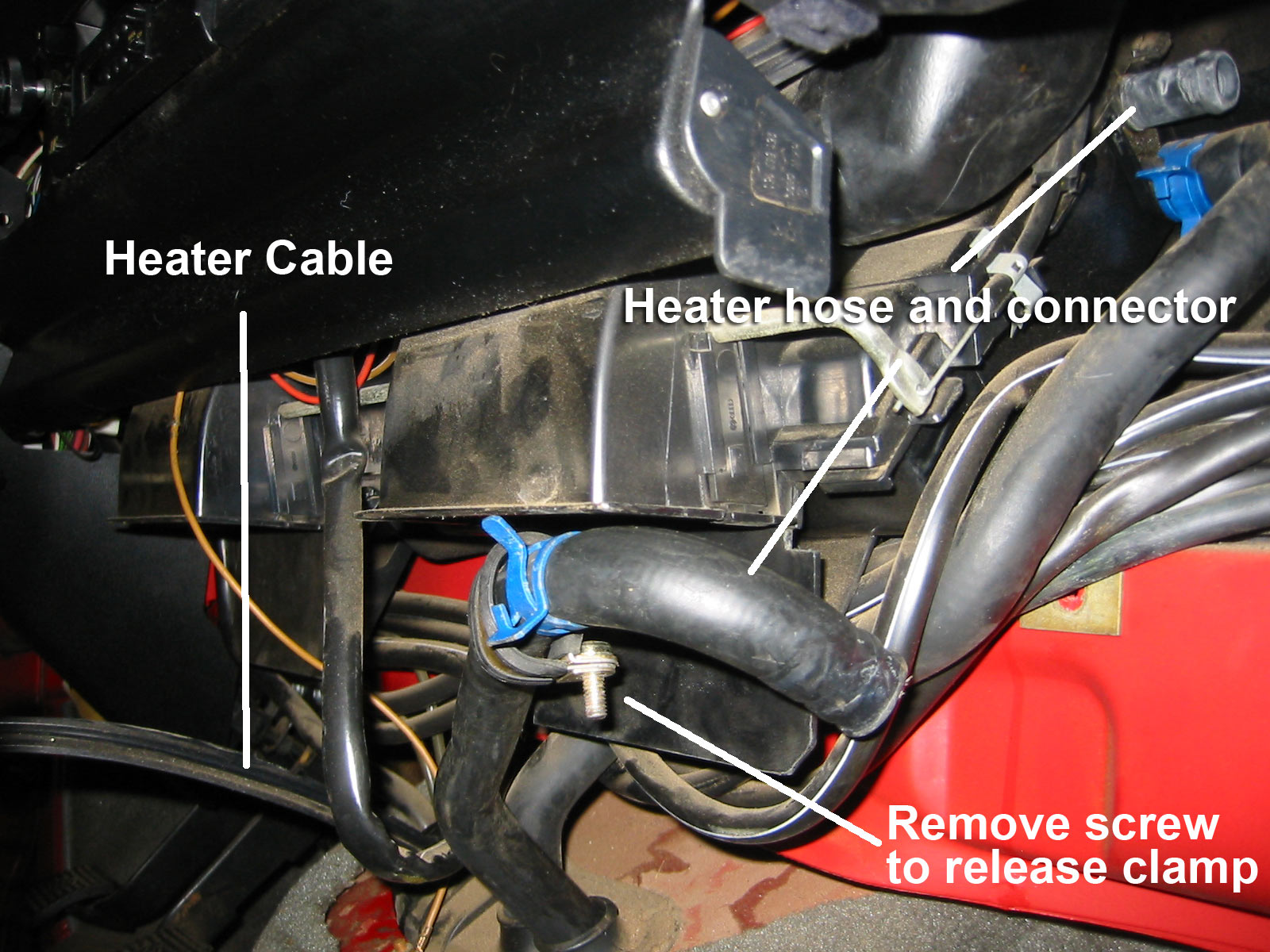
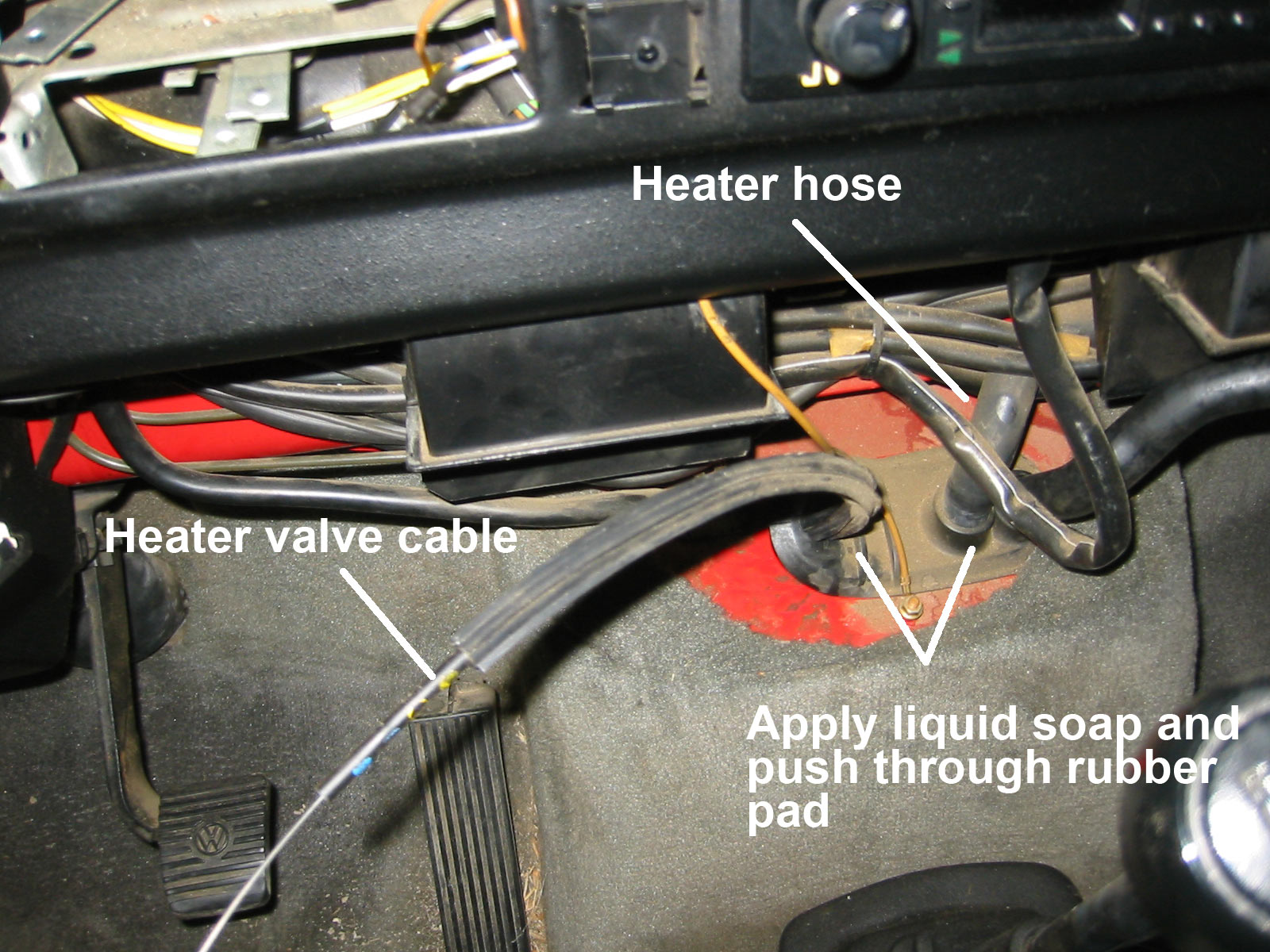
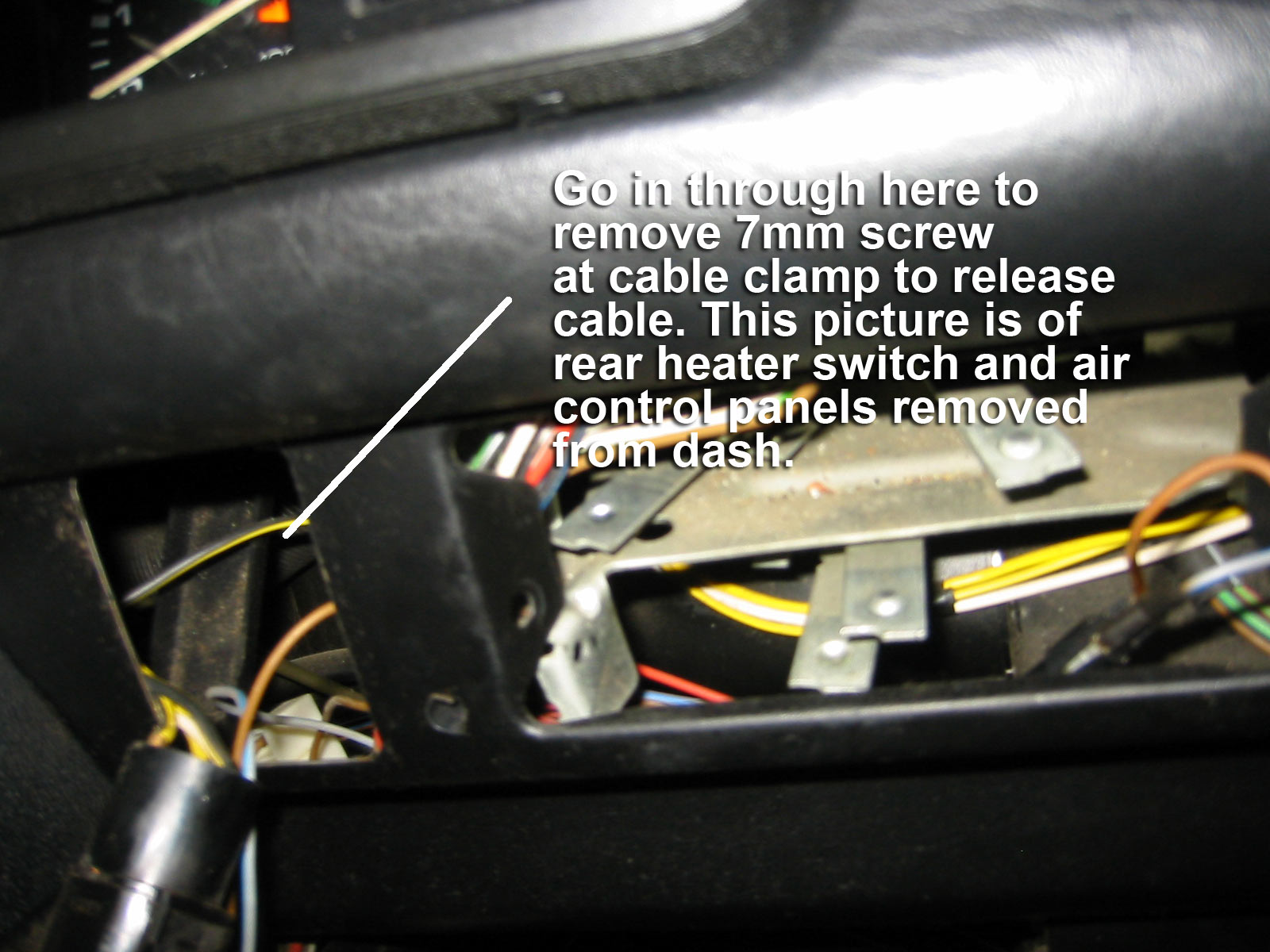
Jim’s annotated photos.
’83 Vanagon diesel dipstick mod.
Posted by albell in vanagon, vanagon mods on August 19, 2010
Jim writes:
This might be of interest to anyone wanting to use an 82 block with a later Model vanagon, or for anyone wanting to get away from the stick-in-the filler tube setup.
A few weeks back I wrote that I had carefully studied and measured the dipstick tube on my vanagon-specific NA diesel and was trying to make another one out of brake line for the 82 vanagon-specific block I was building.
What makes the blocks specific to the years is the treatment of the “dipstick” hole in the side of the block. With the 82 block, the hole is plugged with an aluminum piece, and the dipstick assembly is part of the oil filler tube.
I was going to use the dipstick tube out of the original 83 engine after knocking the aluminum plug out of the 82, but upon careful inspection, it isn’t that simple.
The machining in both holes is different. The 83 has a larger top part—the holes are step- drilled so that the bulge in the dipstick tube will seat at the step, assuring that the marks on the dipstick itself are the correct distance from the bottom of the pan and thereforeread accurately.
The bulge in the dipstick tube on the 83 will not even fit into the 82 hole at all without grinding it down, which would thin the tube walls, making it weak and ruining for further use in an 83.
So here’s what I did:
Start with a 7.5 mm steel brake line 36 inches long, and while you’re buying it get a brass compression fitting that just barely fits over it. They make one that’s perfect, you just have to try a couple of sizes to find it.
Cut off the flanges on both ends of the tube. slide the compression fitting over one end and touch a grinder with the fitting so that it grinds concentrically as the fitting is spinning on the tube. It doesn’t take much, you want a nice fit so be careful
Push the fitting up from what will be the bottom of the tube so that the bottom of the ferrule is 30mm (7 and 5/8 inches) from the bottom. This has to be exact. Now mark the top and bottom position of the fitting and use a small file to clean the metal of the tube where it will sit. Now solder it in place.
Slip a coil spring type pipe bender over the tube and bend it to shape by hand (I think I’ve already posted a picture of the proper bend photographed against a 1 inch grid for reference). The curve should be smooth, but it doesn’t have to be particularly faithful to the original for the setup to work. What DOES have to be accurate is the distance of the compression fitting from the bottom of the tube, and the length of the tube overall.
Go to a junkyard and get any VW gas or diesel dipstick where the orange plastic piece snaps over the end of the tube. Unsnap it and throw away the tube, you are going to put the plastic piece on the end of the tube after bending the pipe, and cut the tube several times until the dipstick (dealer item if you don’t have one) protrudes from the end of the tube exactly two millimeters.
Once done, drop this into the dipstick hole in your block and seal with black permatex. Behind the alternator, under the nut, drill and trim a hadware store angle bracket to fit under the nut. I bent the top, flat part of this to conform to the roundness of the tube and secured the tube to the bracket with a hose clamp.
After putting 3.5 quarts of oil in the car, the dipstick shows the level exactly halfway between the marks.

adding middle seat rails to a Westy
Posted by albell in vanagon, vanagon mods on August 19, 2010
Jim writes:
How to install middle seat rails in a westy
You’ll need a way to get under the car, a circular saw, the usual hand tools, a set of seat tracks and the fasteners for those tracks, a marker, a tape measure and a straight edge and some 2″ wide painter’s tape. The tape will allow you to mark accurately for the cuts, and will help the carpet cut cleanly. You will need a very long 3/16th (approximately, it just has to fit through the center of a 13mm bolt hole–that’s a head size of 13mm, not shaft diameter) drill bit, about a foot long I believe. You will use the bit to drill up through the bolt holes in the bottom of the van to locate the center of the pieces you are going to remove. It’s tight up against body crossrails, and the drill body will interfere with these if you don’t have a really long bit.
When the instructions refer to bolt holes in the floor, realize that every vanagon ever made, as far as I know, has the bolts for this welded into the metal of the floor. The trick is to remove two sections of wood that cover the holes in such a way that when the sliding seat trays are dropped in, their holes align exactly with the fastener holes. It isn’t difficult if you can mark and measure carefully.
First pull out the fridge unit so you have access to the whole width of the floor board. Take off the front (door side) trim.
Go underneath with the long drill and locate the fitting welded into the floor where the floor track will be. This will be obvious as there will be two rows of them across the car in about the middle of the rear area. Once you have drilled up through the two fasteners near the door, measure over the width of the floorboards and then go below to locate the corresponding pair. You don’t want to go all the way to the driver’s wall because there’s no point in removing the plugs. You are not going to use them because the seat rail won’t reach them.Start at the ones just inside the door and drill up through the floorboard. You are drilling through a plastic plug. After you get the floorboard strips removed, you can remove all of the plastic plugs from the top with with a phillips head screwdriver. But, until you can remove the wood flooring, you must very carefully mark where you are going to cut, and for now must be content with drilling as small a hole through them as is feasible. You don’t want to break the drill bit off, but you don’t want to big a drill either. Just something large enough to find the hole in the carpet to use as a point of measurement. If you drill too large a hole in the plastic plug, you will just spin the plastic plug and it will not want to come out. You will also have drilled out the molded phillips head pattern in the top. So, use as small a drill as you can.
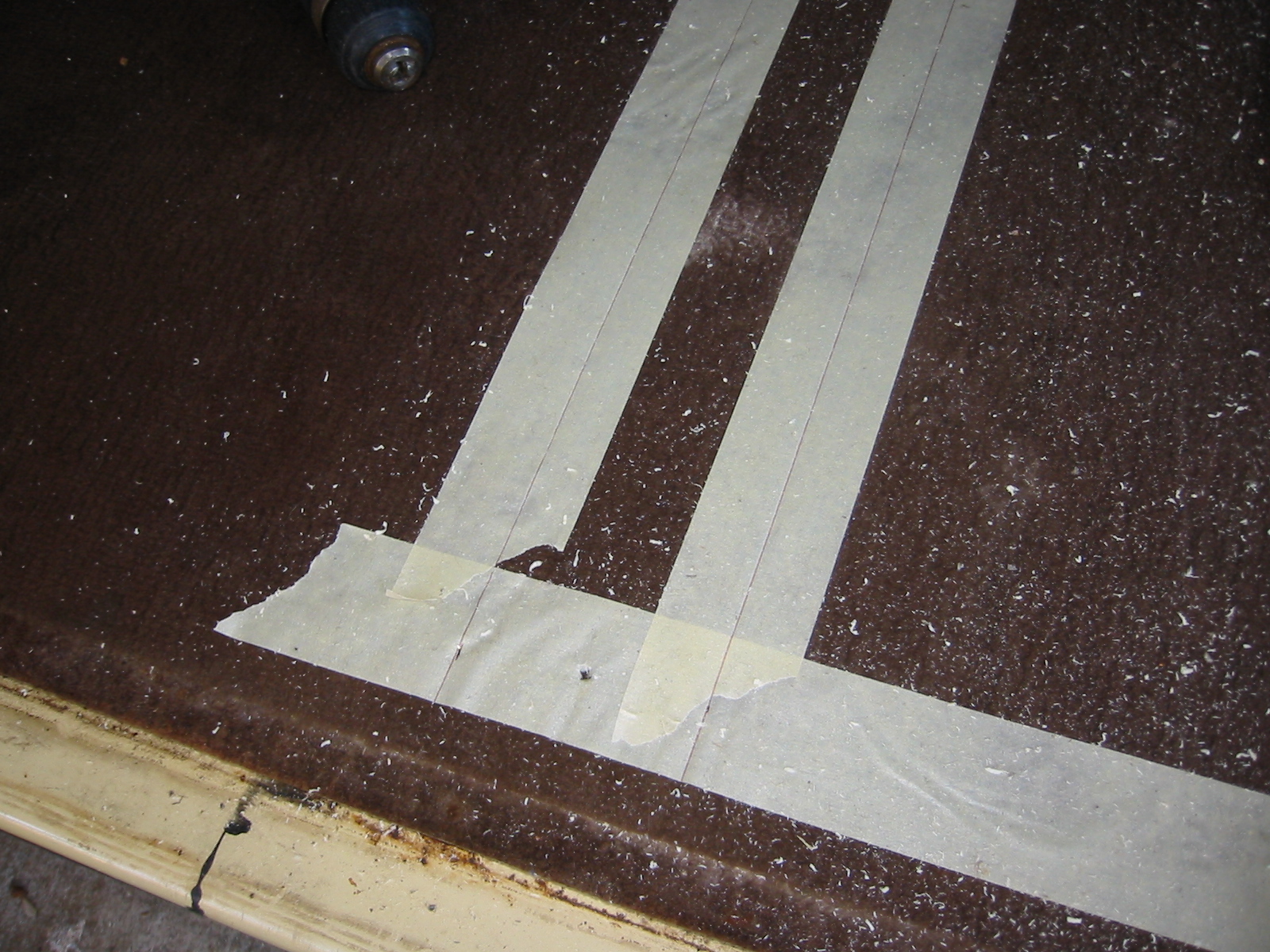
Lay down a strip of tape over all four holes, running fore and aft, each about ten inches long. Punch down over the hole to locate it in the tape. This will create your four reference points. Now run masking tape across the floor of the van between the marks. Now measure the width of the seat rail tray where it drops into the slot (not at the edges of the flanges). Look at the end and you will see this for yourself. The flanges down both edges of each piece are meant to cover the edge of the channel and embed in the carpet.
Measure this distance, divide it by two, and mark this distance out from your reference holes. Connect the marks across the width of the floor with a line from the straight edge. The material between these lines is what you will saw away.
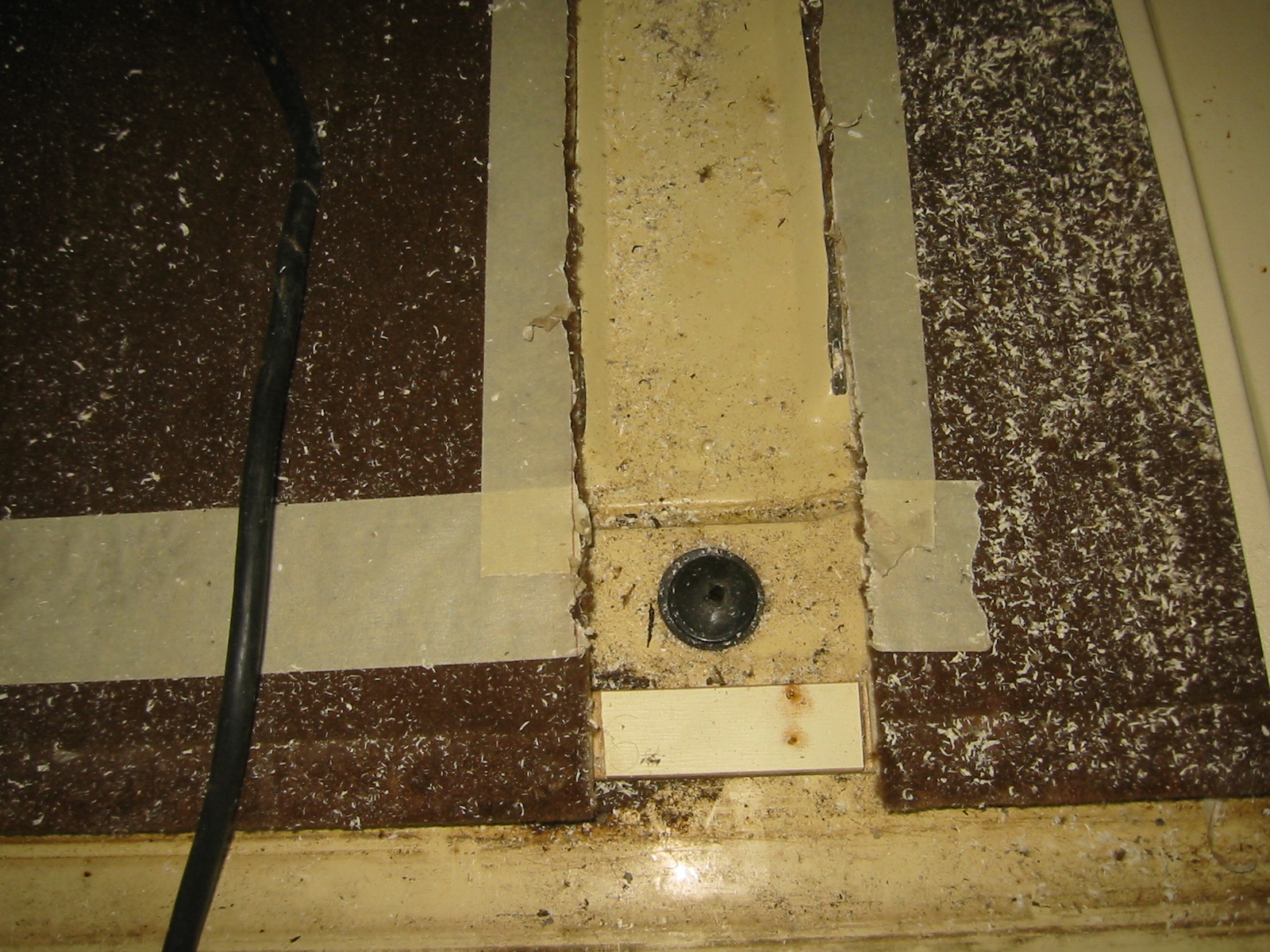
Use the open area between the floorboard and the wall to set the depth of the circular saw to saw through the bottom of the wood without touching the metal and ruining the blade. It can be done. If you are worried about this, leave yourself a 64th or so and get the last with a knife blade. Lift the strips out and you will see all the plastic plugs that can now be removed.
Simply screw in all the track pieces–they will only go in one way–and replace the stove and fridge. Slide the seat in for reference before you do final tightening on the rails.

Replacing power window motor
Jim writes:
Replacing power window motors and regulators in a Vanagon
Once you’ve done this job once or twice, you can get in an out in less than an hour. It’s really not all that hard a job, just that when you don’t know how to twist the motor on the cables to get the assembly to slip out, you end up doing a lot of unneccessary tugging and pulling and scraping. The longer you keep a vanagon, the faster you get at this.
Instead of using a clamp to hold the window up, you might try cutting a couple of small wooden wedges to jam the window to the rubber so it won’t drop.
Here’s the sequence of events, best I can remember, The only tools you’ll need besides the wedges are a phillips head screwdriver, a small knife to pry with, a 10mm socket and a 10mm combination wrench. Maybe something else, but basically that’s it. When you get the motor out, you’ll need a good sized soldering iron to remove the short harness and connectors from the old motor and put them on the new motor. Make a sketch of how the wires connect to the weird little terminals on the motor or the window might work in reverse. Ask me how I know.
First, take the small bladed knife and pop the end covers out of the pull handle. You’ll see what I mean if you look closely. Pry out the molded-in end covers, working on the “inside” end closer to the center of the handle, as the outside edge (adjacent to the upholstered panel) is a plastic hinge. When pried open, the screws are revealed. Remove them and keep them organized, they are of two different sizes.
Next go after the door latch plate. Pull up the handle and pry out the plastic insert from the little slot at the front. This will reveal a phillips head screw, remove this and lay the parts aside.
Next comes the vent in the lower rear corner of the panel. There are two screws facing you when you look at the panel.
Now the panel will pop off with a tape-covered screwdriver. Try to find a fastener and pry near it rather than in the middle between two fasteners. When you can get your hand in, continue around until the panel is loose.
Carefully remove the plastic wind seal, you will either need to reattach or replace it with contact cement or tape.
If you have speakers, make a note of how they are connected and disconnect them.
Unplug the window switch from the main harness and the motor. Cut any cable ties you find fastening the motor.
The window needs to be all the way up to do the next steps easily. Now is the time to take a look as to how they will be accomplished.
The window glass sits in a metal rail that is bolted to a mechanism that is part of the window raiser. This part is the same for crank-up or electric windows. The trouble is that you will need to get to the two 10mm bolts that fasten the window to the raiser. If the window is not all the way up, this may be your biggest challenge but since mine isn’t apart, I cant’ describe the situtation further. But this is what you have to do next.
Following that, raise the now-loose window to the top and jam or clamp it to keep it out of the way. You will see a vertical galvanized metal track that the raiser slides in. If I recall correctly, a bolt in the side near the top and a bolt in the bottom of the door–yes, you have to look underneath the edge of the door–hold this track in. Remove these, don’t confuse the bolts with the two shorter ones that hold the window to the raiser.
The vertical track is loose, but it is connected to the motor by two cables in housings. If the housings are broken, bent or rusted, go ahead and order them too right now.
Now all that needs to be done is to remove the three 10mm bolts that hold the motor in.
Once that is done, the motor can be twisted with one hand about 90 degrees to make the cables align together as the other hand moves the vertical track, bottom first, toward the motor.
If you’ve done your twisting right, the whole thing will slide out the motor hole. When the motor is released, the whole thing will spring back to its arrangement in the car.
Two 13mm bolts hold the motor on to the mechanism. As I said, you may have to transfer a plastic mounting collar and a short piece of harness to the new motor, but other than that, it all twists up and slides right back in the way it came out.
Replacing transmission driveshaft seals
Posted by albell in syncro specific repairs, vanagon on August 19, 2010
Jim writes:
Tools: nothing special in a modestly-equipped shop. Assumes you have a small cheap inertial puller set.
Do one side and then the other. In both cases:
1. Jack up the first side, chock the other. release the emergency brake and then put in neutral. You’ll need to lock up either the wheel and other times turn it (to remove and tighten the CV joint bolts) or the flange itself (for circlip removal/refitting) at various stages of this procedure.
2. remove the allen-head bolts holding the inner CV joint to the transmission flange. Clean out first with a small pick, then tap in allen wrench with a small hammer to ensure seating in the fastener. Otherwise, you risk rounding out a bolt.
3. Drop and bag the CV joint for cleanliness. Have some good moly greasy on hand if it needs repacking.
4. You’re looking at the flange. Talk a hammer and a sharp tool and drive it into the plastic plug in the center of the flange and pry out.
5. Remove the C-clip with two screwdrivers, better a screwdriver and a hook tool like a spark plug boot remover.
6. Use a 3-jaw puller to remove the flange.
7. Remove the two phillips screws that hold the plastic dirt shield to the transmission.
8. Clean everything you removed by soaking in gasoline, be sure you get the spring washer from inside the flange. Now you can see the seal in it’s aluminum housing.
9. Use a sharp-pointed tool east and west positions on the seal itself and punch holes.
10. Use the screw tool with the puller to screw into the holes you punched in the seal. There’s a big old ball bearing behind the seal, don’t worry about it. Keep turning the puller screw into the seal housing until the pressure of the screw point against the bearing rides the seal out of its home. When you tighten the puller screw with a wrench, you’re stopping the screw point against the bearing and riding the seal up the threads and out of its seat.
11. Oil up a new seal with transmission grease and tap home with a stick, dowel or rod about 1/2 inch diameter and about 8 inches long.
12. Tap flush with seal housing, keeping tapping constant while moving rod or dowel constantly around seal housing.
13. Remove soaking parts from gasoline and clean.
14. Refit plastic dust cover and screws and then refit flange. Protect with section of 2 x 4 and wail away with hammer until seated.
15. Refit spring washer cup out (center part the closest to you).
16. Refit clip ring with two medium flat screwdrivers. The first time you do this, it will take about ten minutes. The second time, about 30 seconds. There is a technique.
17. After fitting clip on axle stub, tap clip into place with small flat punch and hammer to make sure it is seated in the groove against the pressure of the spring washer.
18. Tap in new seal, smear joint with RTV adhesive.
19. Refit CV joint, packing with grease if necessary.
20. Repeat from step 1 for next side.
21. Drop shift rod by removing upper and lower 13mm bolts and nuts.
22. Remove transmission filler plug with 17mm internal socket.
23. Fill transmission per Bentley.
24. Replace filler plug.
25. Lube shift cup and shift bushing with moly grease, replace bad rubber as necessary.
26. Rehang rear shift assembly as reverse of removal in step 21.
27. It’s over

Some info from Jim Felder
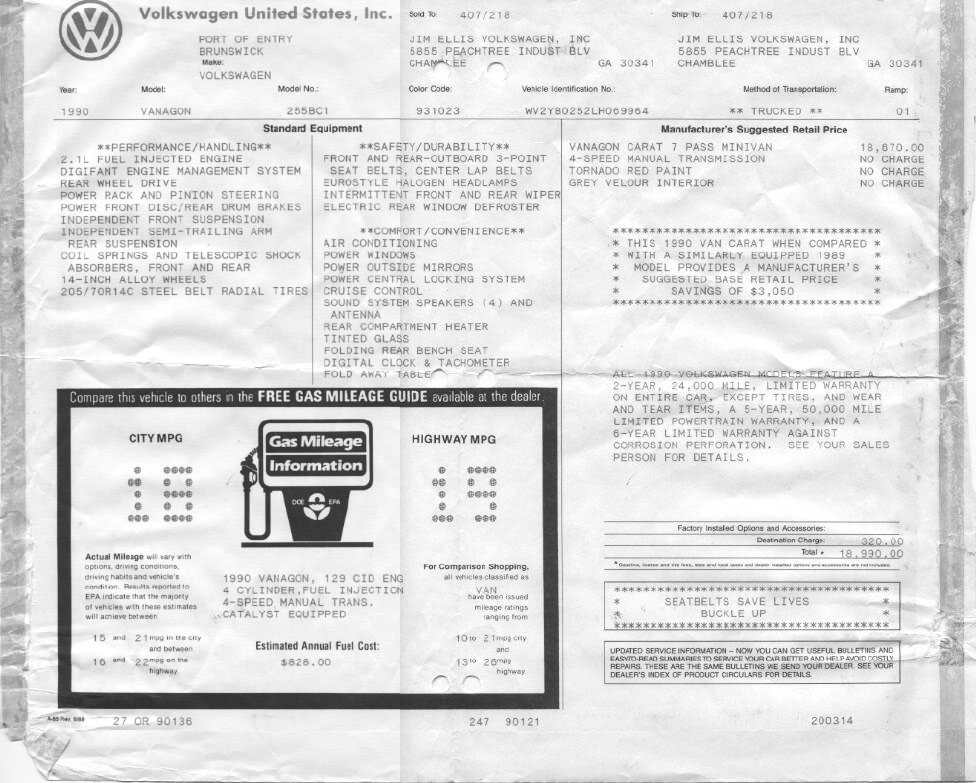
Jim very kindly sent me a package of info files: dipstick tube replacement, heater valve replacement. middle seat rails in a westy, replace vanagon transmission seals, replacing power window motor, a sawhorse engine lift, 1990 sales brochure, and a 1990 window sticker (sales). I’ll post each as separate entries.

Viscous coupling rebuild
Posted by albell in syncro, syncro specific repairs, vanagon on August 16, 2010
In German, on this site http://www.2wd-goes-syncro.de/. Videos showing a VC being taken apart, cleaned, and new fluid added. Well worth a look.
Westy water tank install
Posted by albell in vanagon, vanagon mods on August 14, 2010
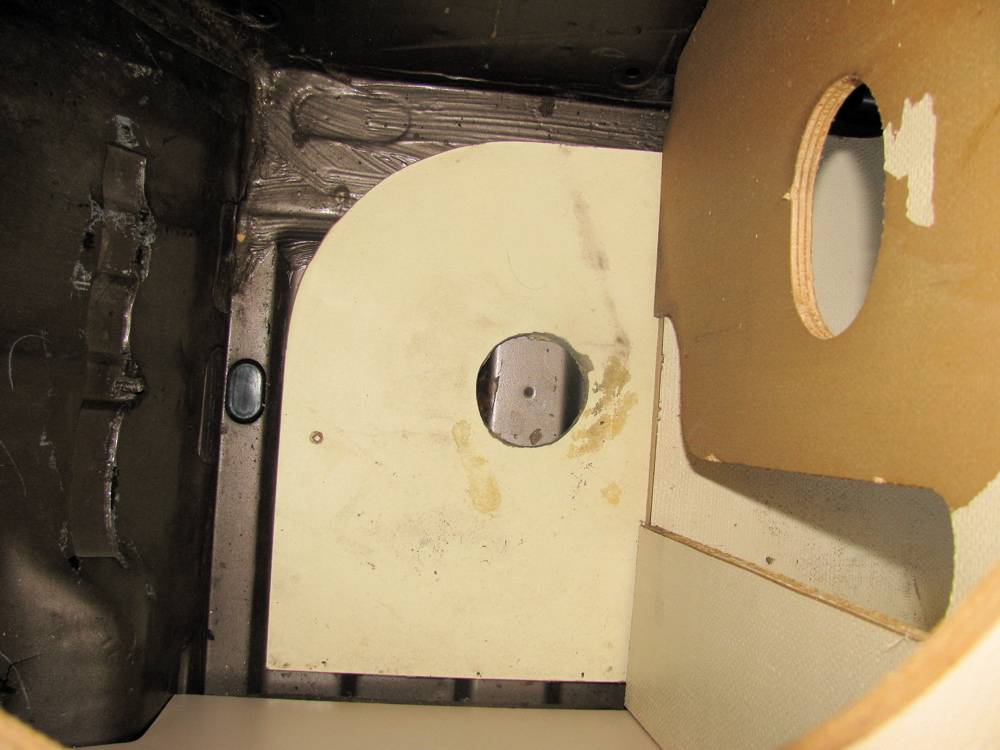
Hot day today, for Lower Vancouver Island, in the low 30’s. All I felt like doing after the overhead cabinet install was installing the fresh water tank. It sits against the angled back wall on the drivers side, and the drain pokes through hole in the floor. I measured where that hole is in my ’82 Westy , but crikey, there was a dimple on the Syncro’s floor right where the hole is supposed to be. And same thing further forward for the sink drain hole.
Water tank area:
And sink drain area:
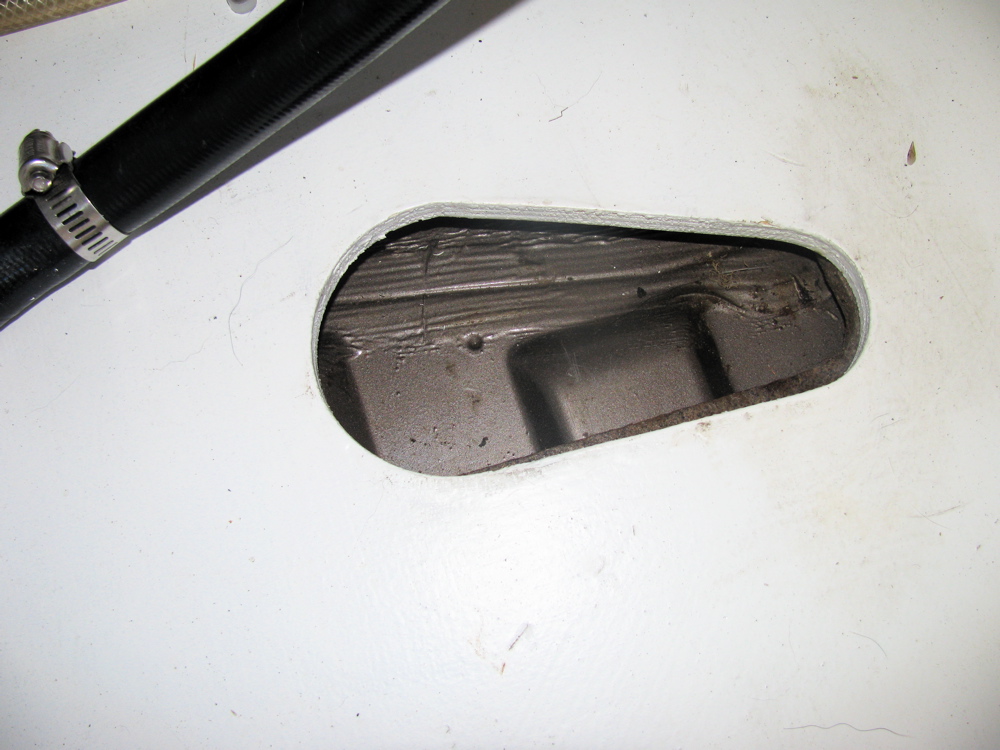
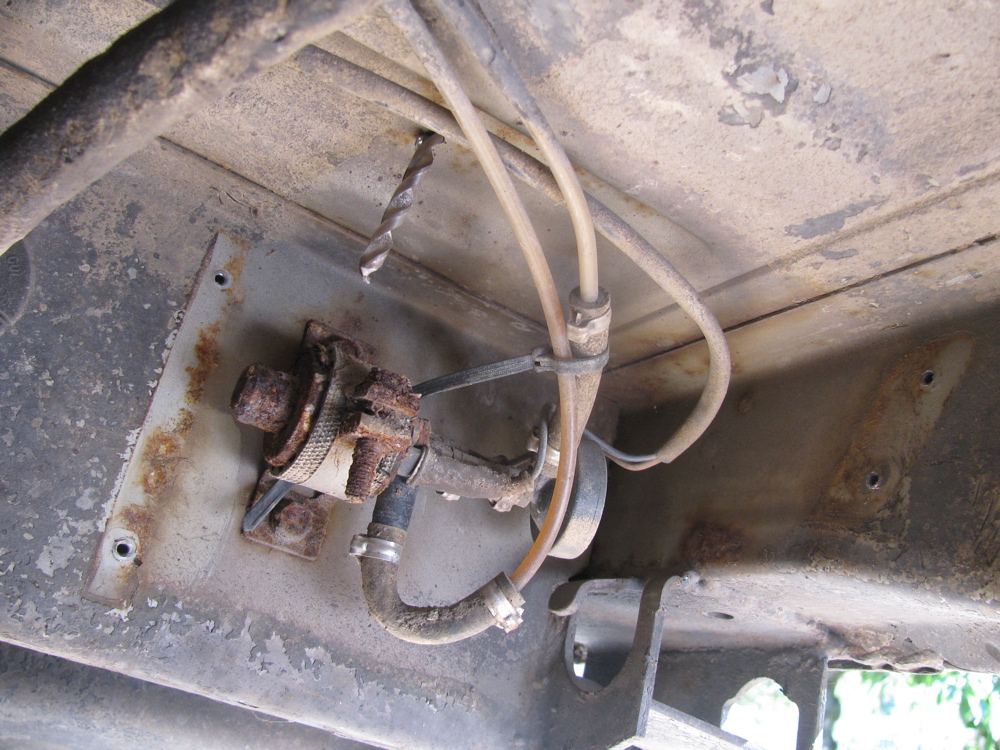
Drilled on the dimple and went under van to realise hole was right where the old Webasto heater fuel pump is. The heater is not working, and wont be anytime soon, so I removed the pump.

Using that hole as pilot, I punched out bigger hole with Greenlee punch.

And then a bigger Greenlee punch.
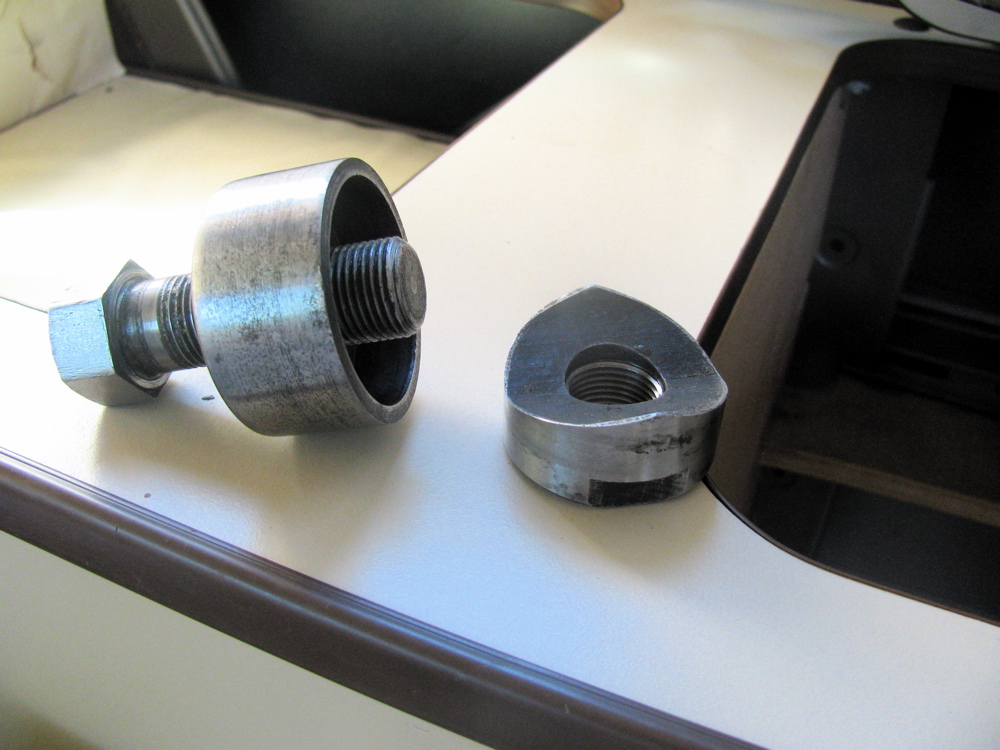
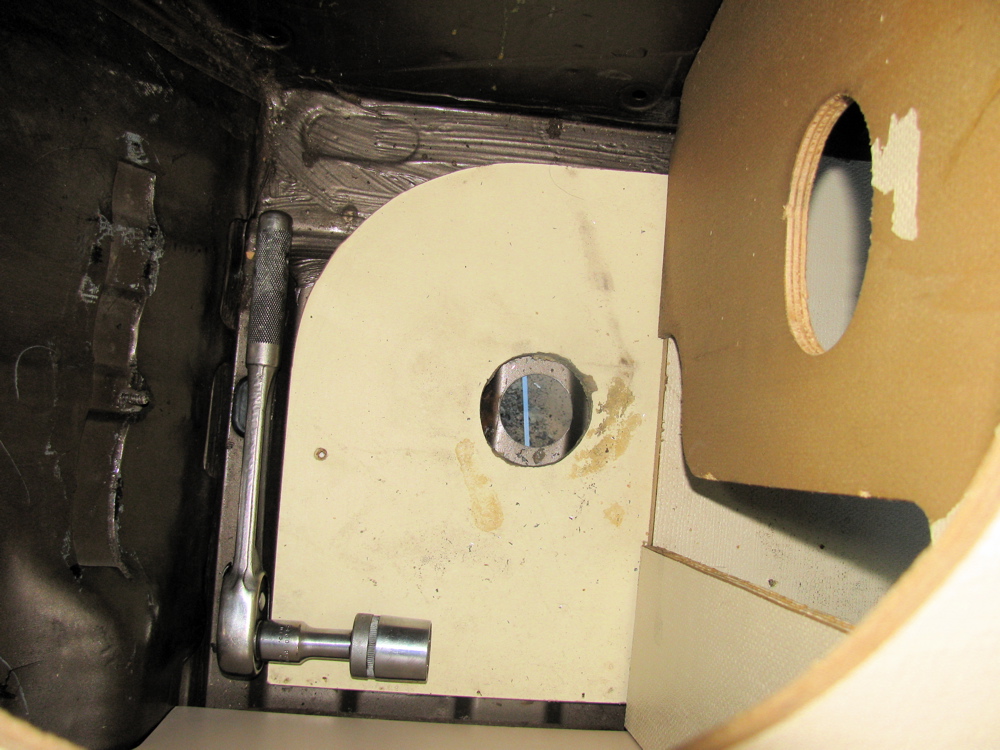
So much nicer than using a hole saw. At this point I wondered why the heck was I working with the cabinet in place? Out it comes and a trial fit of tank.
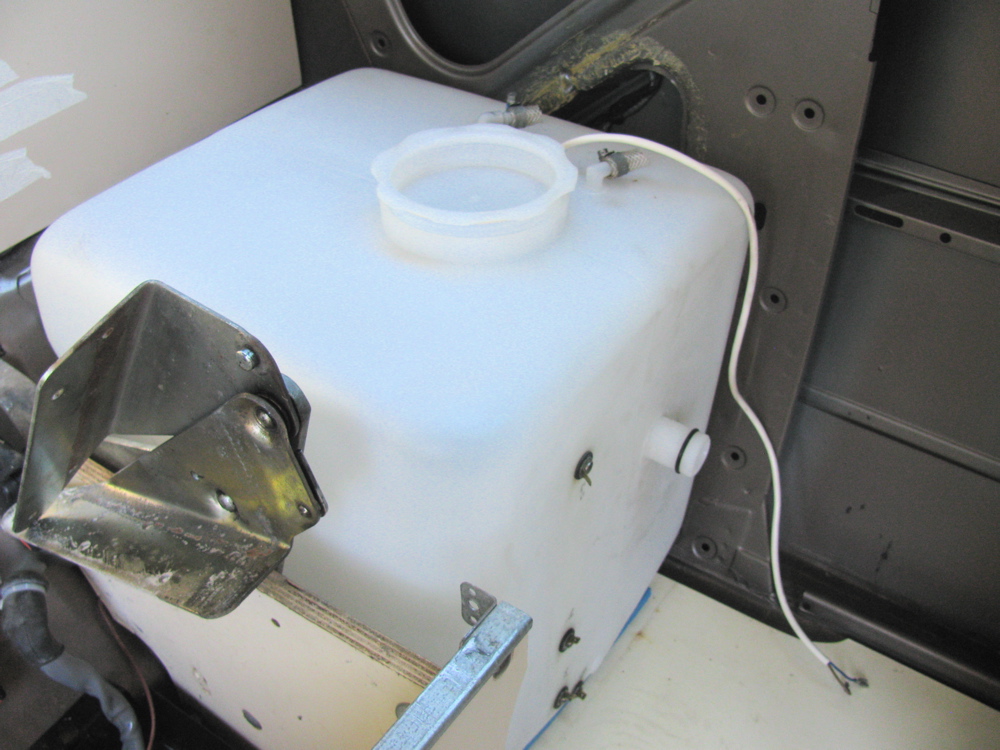
I stuck some closed cell foam on bottom and back of tank for cushioning and maybe reduce any sweating. Westfalia jams in fibreglass insulation on the back, against the angled wall. Then caulk the opening (I had painted cut surface) and the tank goes into the cabinet and the cabinet lowered into place.


Tomorrow I’ll fit up some sort of gasket plate or just caulk the area on the underside of van where drain emerges.
Rear overhead cabinet install
Posted by albell in vanagon, vanagon mods on August 14, 2010
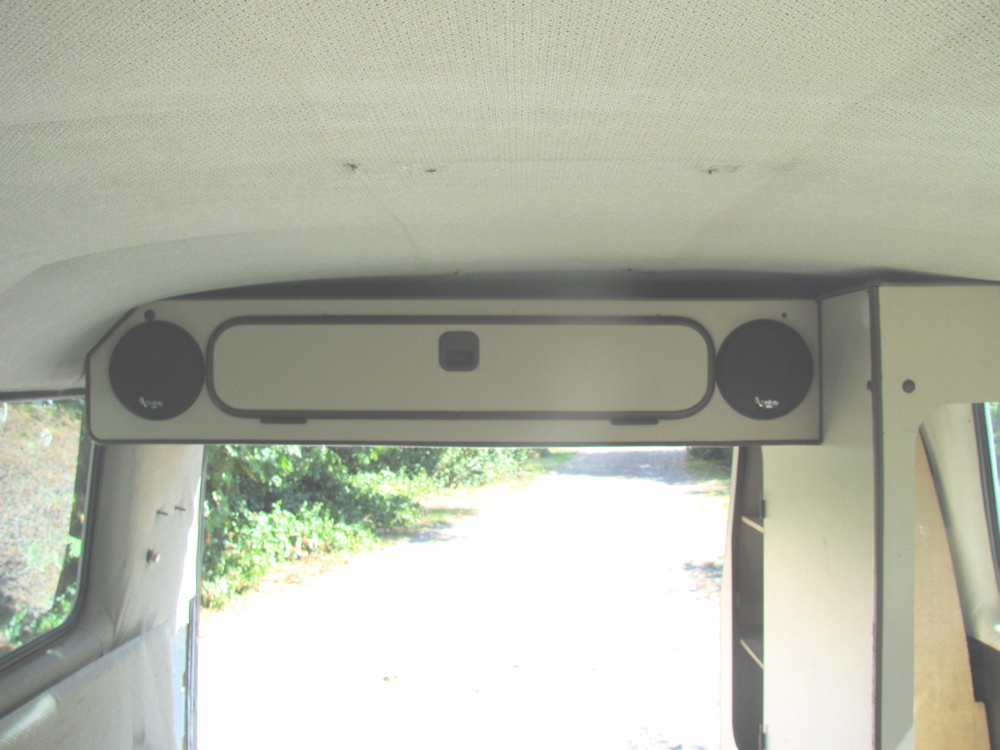
With the way I am camperising my Syncro, ie just cutting sunroof sized hole, it means that there is no flat ceiling where the rear overhead cabinet goes. In the regular Westy, the flat ceiling is the plywood upped bunk surface, and the rear overhead cabinet bolts securely up to it as well as being bolted at the side to the wardrobe.
Having a headliner covered curved steel roof back there makes it a little harder for me to install the cabinet, and because the ceiling is not flat, my cabinet will have a space between it and ceiling. The Westfali Mosaik kit solved this problem by having a curved front face on the cabinet to match the curve of the ceiling, and uses rod like hangers to mount the cabinet to the van. Here is a diagram.
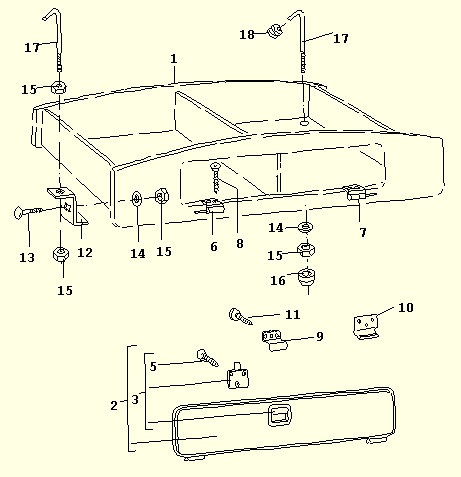
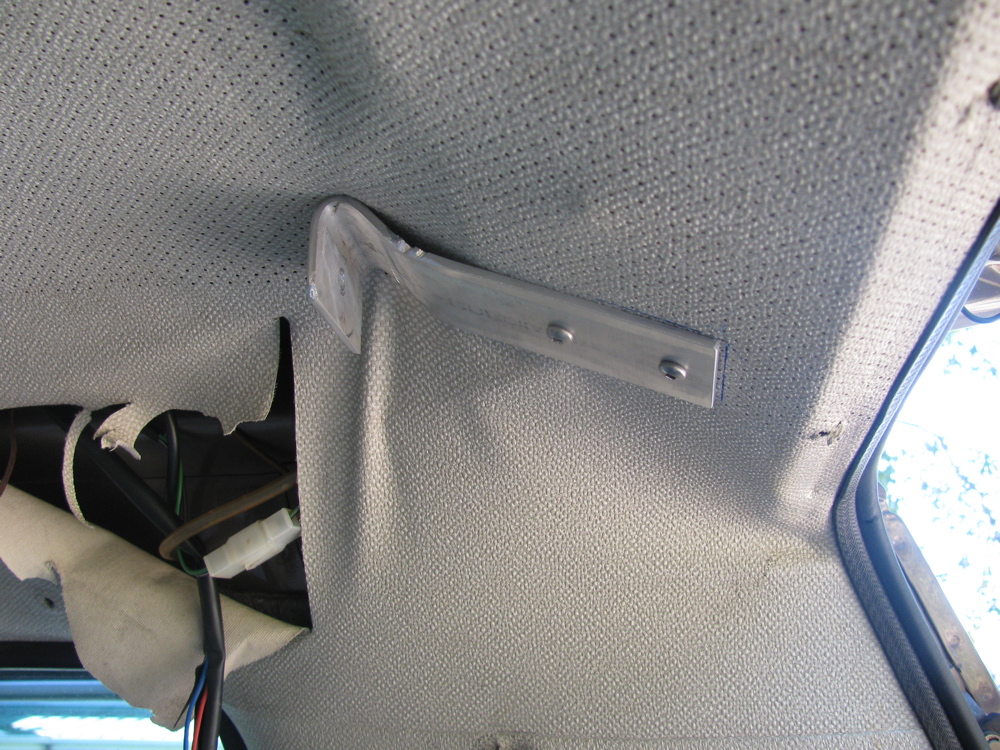
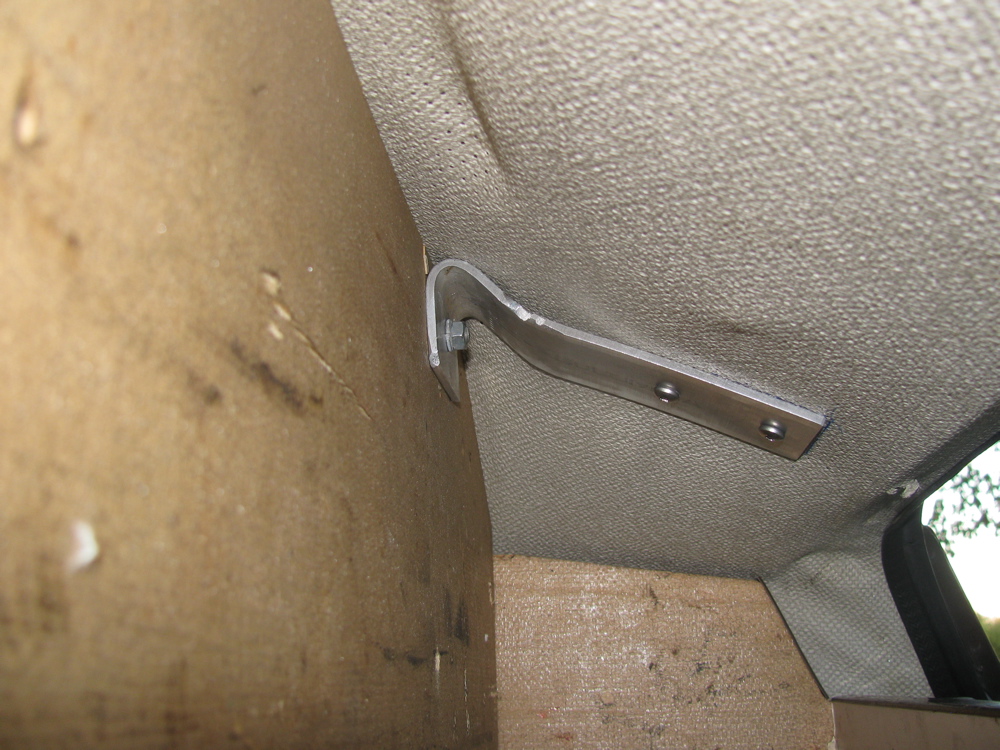
But, like and idiot, I couldn’t find the diagram above when I went to install the cabinet. I fussed over how to mount it securely – it was held on the wardrobe side by two bolts into top of wardrobe, but the other end was unsupported. I solved that partially by making a rather feeble bracket at the rear, right hand side. Its made from a ratty scrap bit of aluminium which had a tight bend in it, close enough to the angle needed. It was very awkward to fit and did not fully support that end of the cabinet.
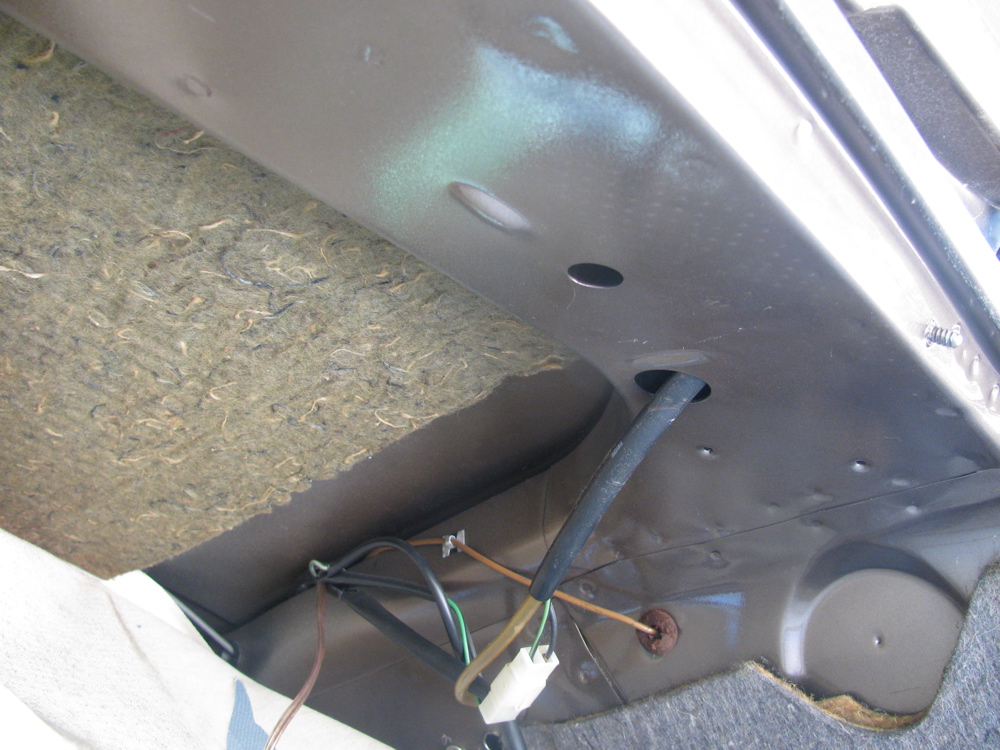
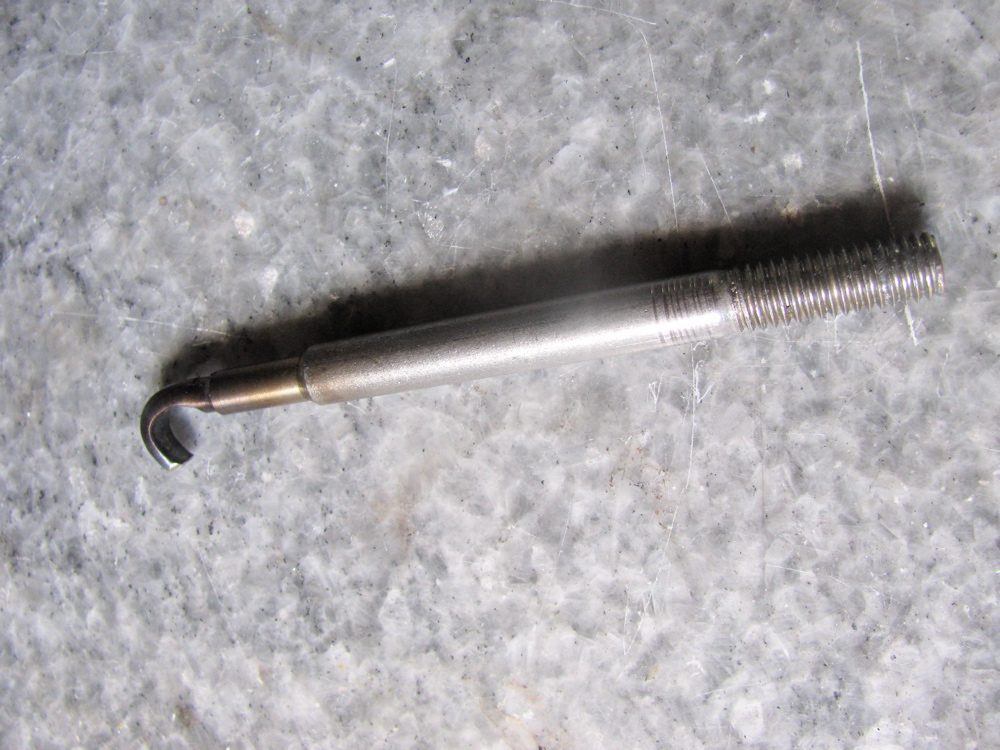
Later I found the diagram and made a hanger from a 3/8″ stainless bolt, and one of the brackets used in the rear AC electronics. The hanger hooks up and onto the box section reinforcing part of where the wall meets the roof. I may have to adjust things a little, I detect a slight misalignment, but all in all this worked well, the cabinet its fully supported.

Westy rear view mirror mod
Posted by albell in vanagon, vanagon mods on August 12, 2010
The rear overhead cabinet or AC unit in the Westfalia reduces your rear view (huh? you know what I mean) and that bugs a lot of folk, including me. There was a Samba thread on this subject with some good solutions. One was to use a baywindow van mirror stalk, there were some that had extended stalks and this is the hot ticket. I have a ’72 westy gathering moss with regular sized stalk, so I removed the rear view mirror – clockwise twist on stalk – and tried it our with the Vanagon mirror (why on earth had I not bothered to do this before you ask? I guess I’m slow).
The ball joint between the mirror and the stalk are the same on both, and the mirror comes off with a little bit of twisting.
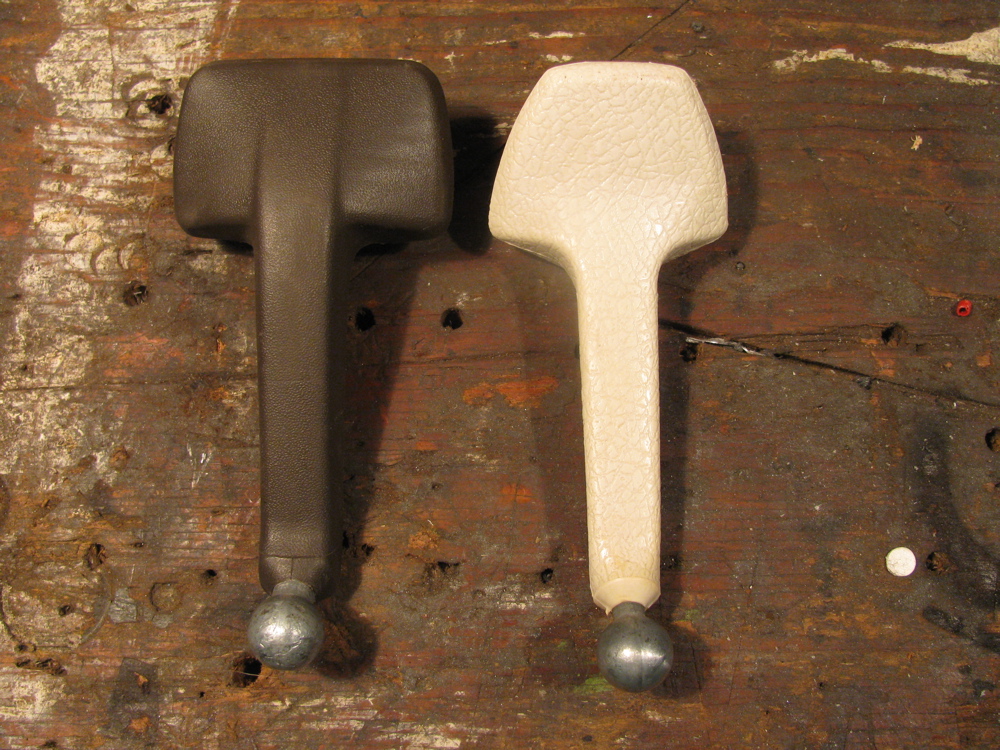
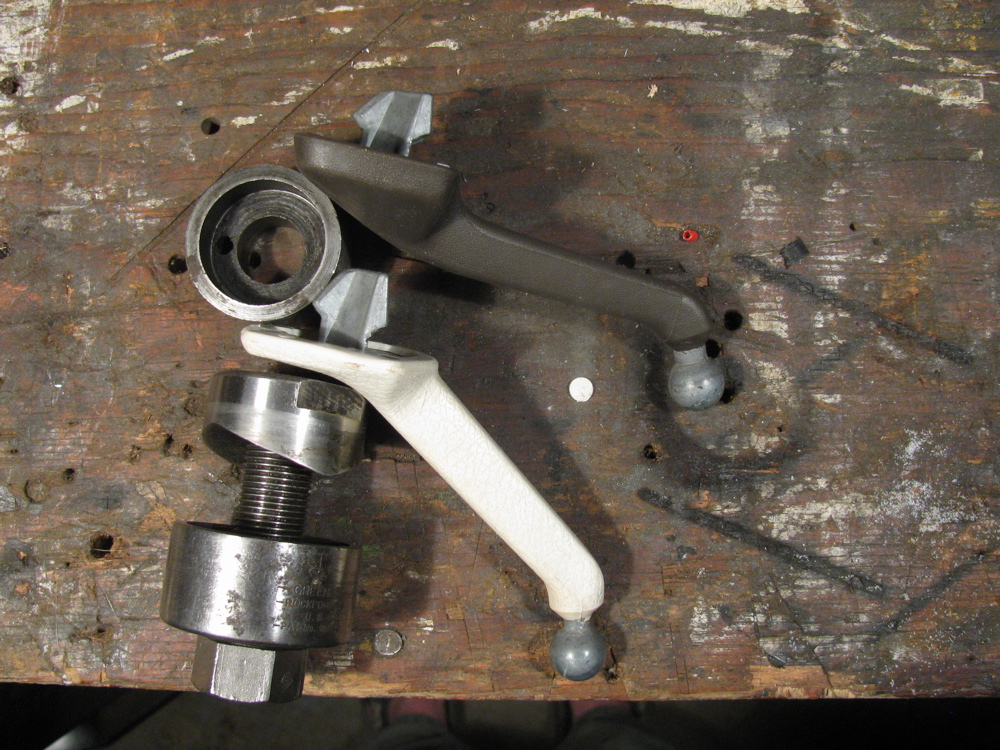
The baywindow stalk is perhaps a tad longer than the vanagon’s, but the attachment angle is different. The upshot is it may provide a bit better rear view. Pictures to prove this assertion to come, but for now some pics of the stalks. The baywindow stalk in off white, the Vanagon in brown.
Update: took pictures of both stalks (same mirror) in van. The shots from drivers point of view, showing rear visibility are crap, sorry. Don’t know if you can tell that there is improved viewing angle, but I think there is. The side views show clearly the different angles of the stalks. If you have a spare baywindow stalk lying around its worth trying it out.




Westy new old floor
Posted by albell in vanagon, vanagon mods on August 11, 2010
I couldn’t help myself, this evening I put the floor tracks and the old floor I made for my ’82 Westy (original “82 Westy floor, cut into 3 strips, faced with luan door skin plywood, and shellacked) into the Syncro. The floor has weathered pretty well, mind you it has been covered by foam and carpet, but still its 10 years old.
I need to do some minor fitting to get it just right but now the camperisation is really coming together.
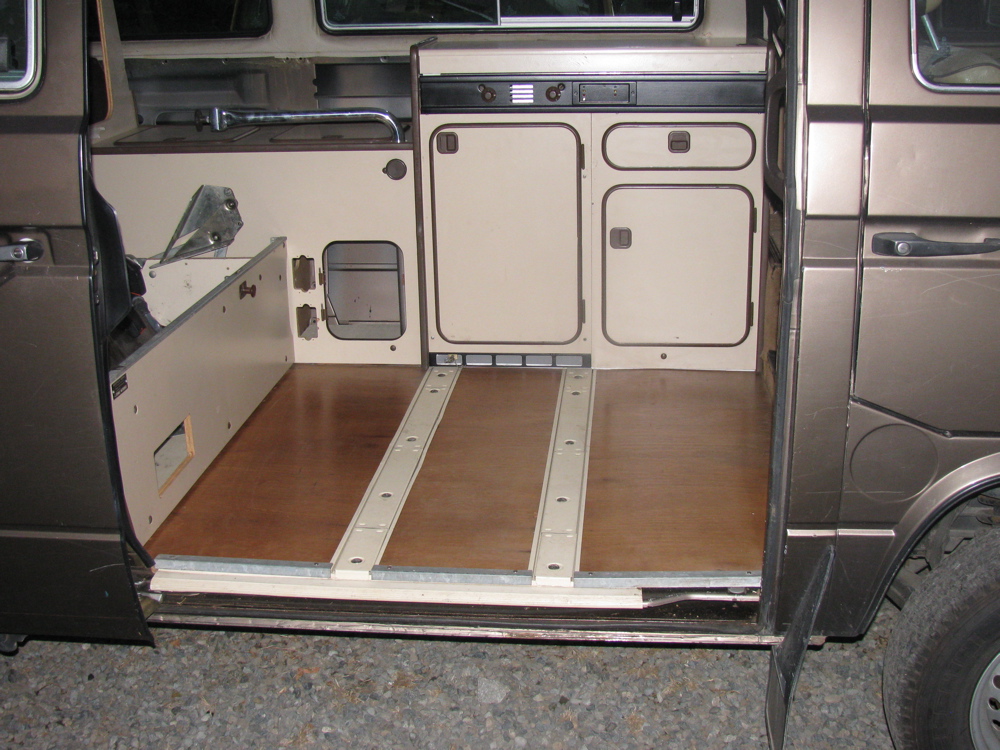
Here’s what I wrote in my old web site about the floor in the old “82 Westy:
“Back in ’00, when I reno’ed the interior of my van, I replaced the foor.
Early Westies (like my ’82) had a floor made from carpet covered plywood. Later vanagons had a “floor track system” that I thought was useful as it allowed the installation of a stand-alone seat, or a second bench seat.
So I got the tracks from a wrecker (they are bolted to the steel floor of the van) I ripped the original (awful quality) plywood into three sections, faced them with luan plywood (3mm doorskins) and installed the whole shebang. The luan ply is finished with shellac and wax. I trimmed the original carpet to lay on top of the new floor.
The shellac and wax finish has held up surprisingly well but is quite slippery, doh! The carpet would slip around on it until I installed a foam flooring material discovered at the local Home Depot (I had originally wanted to face the ply with some cork flooring – still will someday).
The foam is about 3/4″ thick and the edges interlock together. I don’t know what kind of plastic it is made from, but it is like a beefed up version of those foam jigsaw puzzles for kids.
One package (around Ca$19) makes a square about 4 feet by 4 feet, not quite large enough to do the Westy floor perfectly, but it works fine.
The foam just lays on the ply, trimmed a little to fit the cabinet projections and stops the carpet from slipping as well as providng a very nice feel to the floor. Also, it comes right out with no fuss and can be used as a seating/lying/playing pad when camping.”


Camperisation Part 2
Posted by albell in syncro, vanagon, vanagon mods on August 11, 2010
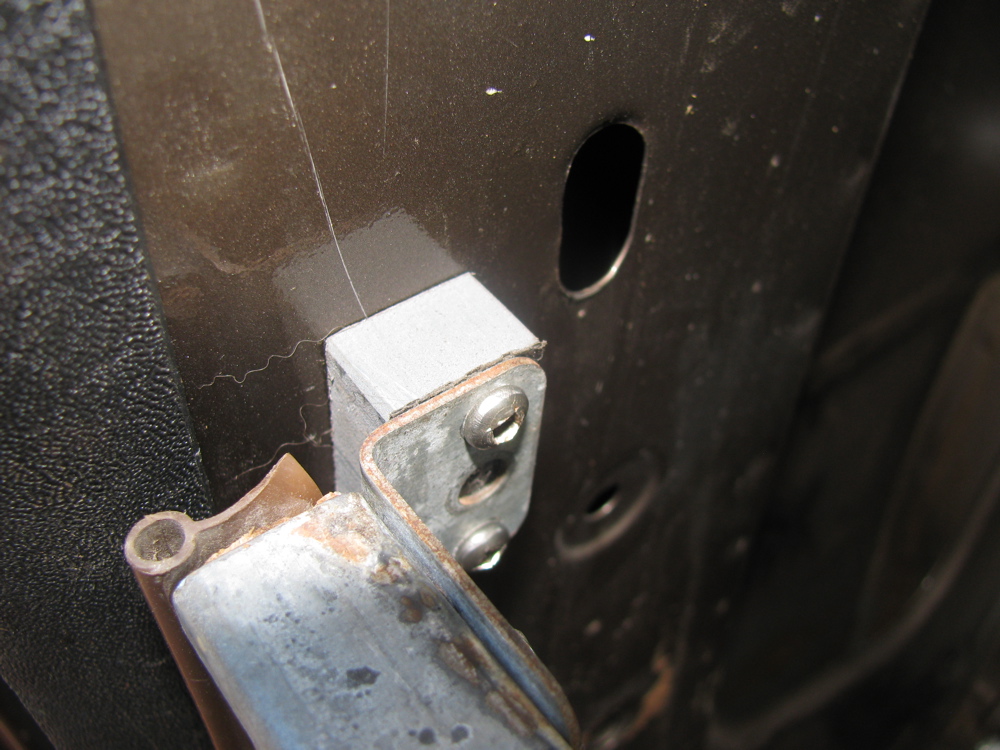
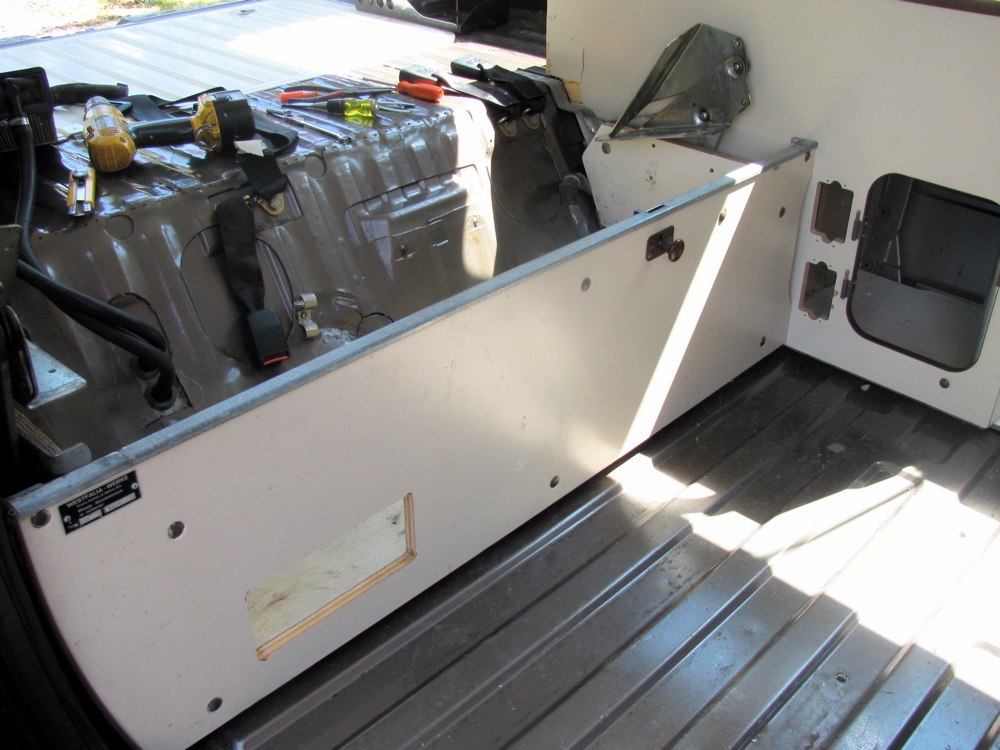
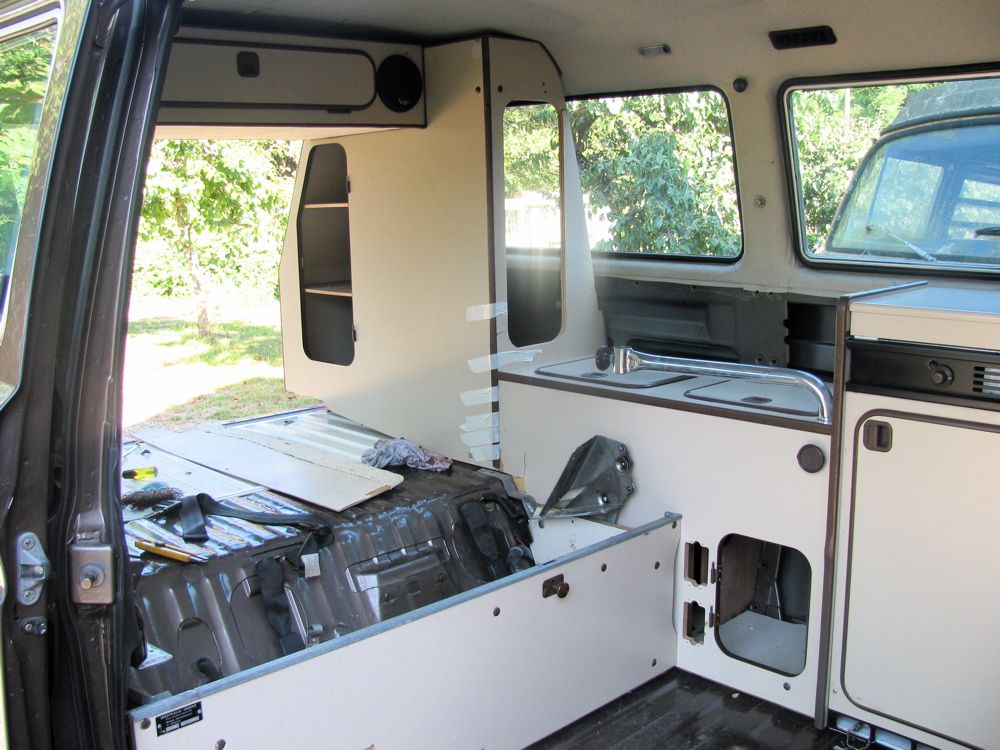
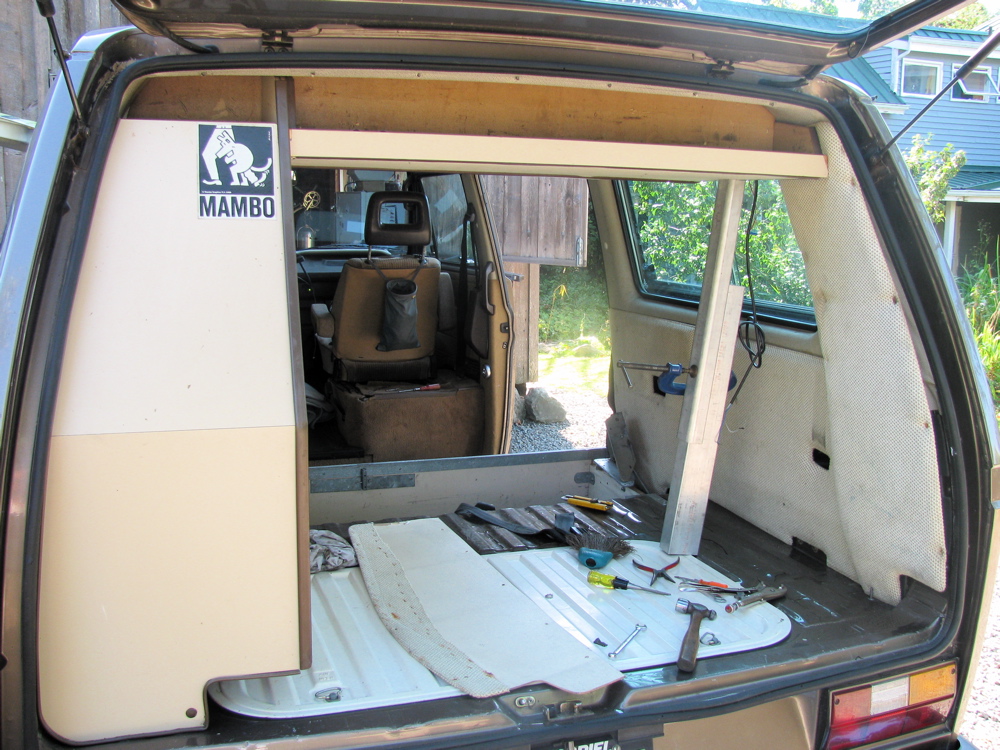
I did some trial fittings and screwed down some cabinets in final positions. Made a spacer for bracket that holds pass. side of rear bench to wall of van. I mentioned in “the start of camperisation” post that the rear bench did not fit as tight to the wall in the syncro as it did in the ’82 Westy. The spacer allows the bracket to be used and bolts the bench tight to the wall.
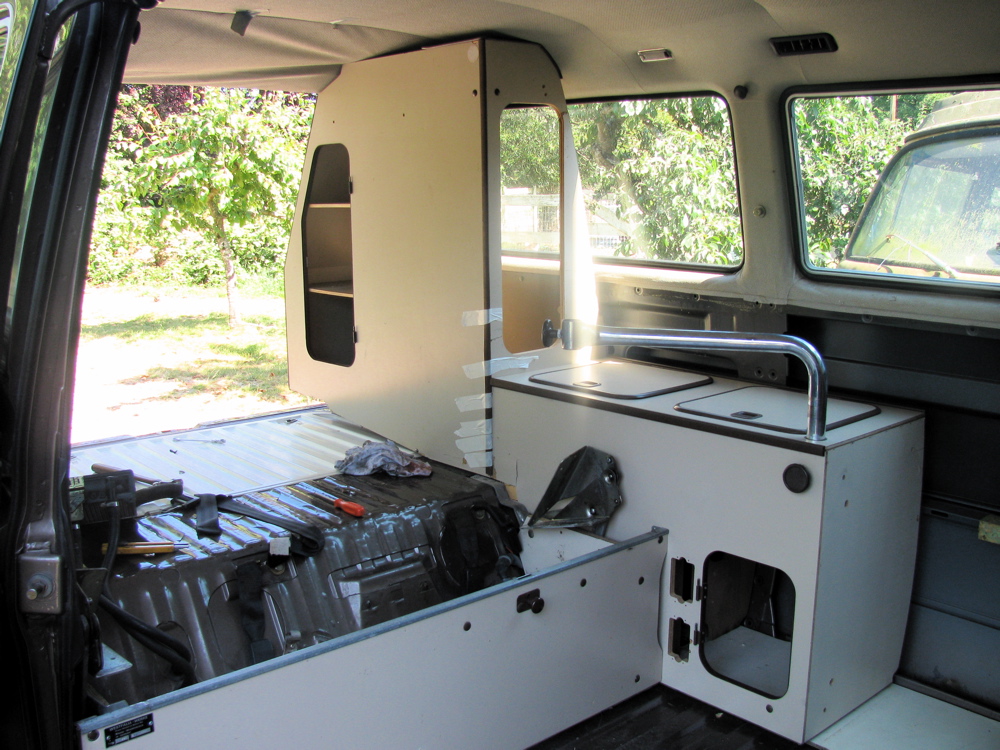
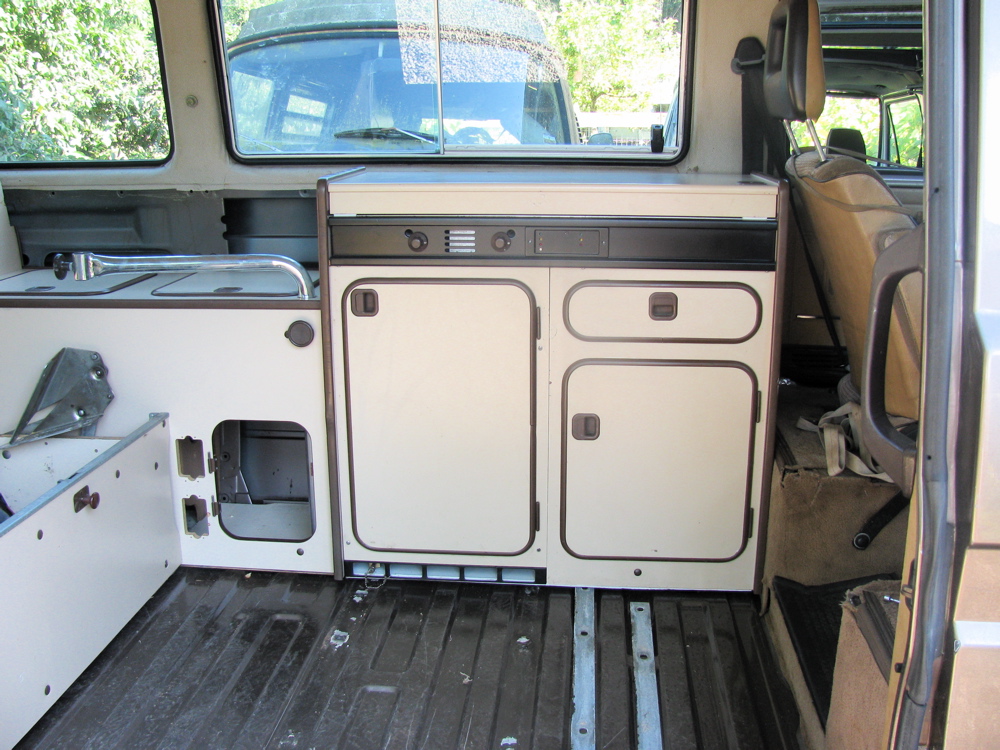
Wardrobe actually fit in without cutting headliner. Bracket at back on engine deck is fixed in place, and wardrobe is bolted to next cabinet and that cabinet is bolted to rear bench. Its alll pretty secure even though low cabinet not attched to van wall yet and also the rear bench is not bolted down to floor yet.
Overhead cabinet bolted to wardrobe and held up on other end by prop until I figure out a support bracket to hold it to ceiling and to pass. side wall. In the Westy, its bolted to flat ceiling (plywood) which is the upper bunk. You can see how the ceilings differ in that there is a space between overhead cabinet and the ceiling. The Mosaik “kit” has a differently shaped cabinet face to account for ceiling difference. (I can’t seem to find a pic of that modified cabinet right a the moment) I will have to do something to fill gap between cabinet and ceiling.
Apart from little fitment issues, the cabinets went in pretty easily. Next step is making holes for propane lines and watertank and sink drains.
 shooftie